
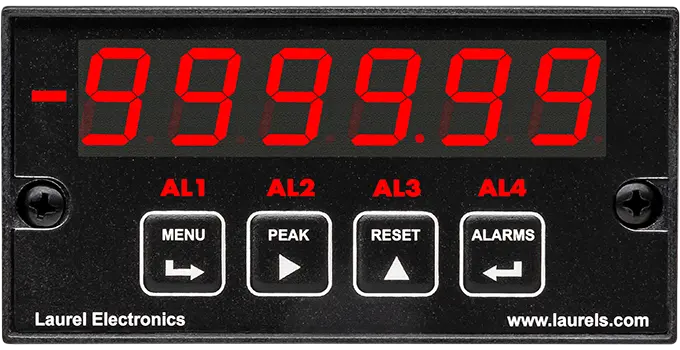
Frequency, Rate, or Period
Time Base Crystal calibrated to ±2 ppm
Span tempco ±1 ppm/°C (typ)
Long-term Drift ±5 ppm/year (typ)
Frequency, Rate, or Period
Time Base Crystal calibrated to ±2 ppm
Span tempco ±1 ppm/°C (typ)
Long-term Drift ±5 ppm/year (typ)
Rate, Totalizer with Functions
Time Base Crystal calibrated to ±2 ppm
Span tempco ±1 ppm/°C (typ)
Long-term Drift ±5 ppm/year (typ)
Pulse Input Totalizer
Time Base Crystal calibrated to ±2 ppm
Span tempco ±1 ppm/°C (typ)
Long-term Drift ±5 ppm/year (typ)
Analog Input Totalizer and Process
Time Base Crystal calibrated to ±2 ppm
Span tempco ±1 ppm/°C (typ)
Long-term Drift ±5 ppm/year (typ)
Batch Controller Pulse Input
Time Base Crystal calibrated to ±2 ppm
Span tempco ±1 ppm/°C (typ)
Long-term Drift ±5 ppm/year (typ)
Batch Controller Analog Input
Time Base Crystal calibrated to ±2 ppm
Span tempco ±1 ppm/°C (typ)
Long-term Drift ±5 ppm/year (typ)
Phase, Angle, and Power Factor
Time Base Crystal calibrated to ±2 ppm
Span tempco ±1 ppm/°C (typ)
Long-term Drift ±5 ppm/year (typ)
Quadrature Encoder Input
Time Base Crystal calibrated to ±2 ppm
Span tempco ±1 ppm/°C (typ)
Long-term Drift ±5 ppm/year (typ)
An electronic counter is a Digital Panel Meter built to count events rather than read a continuous signal — pulses from a proximity switch, a flow meter, a rotary encoder, or an AC line frequency input. Instead of converting a steady voltage or current into a number, a counting Digital Panel Meter watches for individual pulses, tallies them, and shows the running count, rate, or elapsed time on its display. Because the underlying hardware is the same modular 1/8 DIN platform used across Laurel's meter line, a counter-configured Digital Panel Meter can be scaled to engineering units (feet, gallons, RPM, parts per minute), totalized over time, and combined with a second input channel for ratio or rate-and-total functions — all without the bulk of a dedicated PLC.
A standard Digital Panel Meter reads a continuous analog signal and converts it to a number. A counting Digital Panel Meter instead watches for discrete pulses — from a switch, encoder, or flow sensor — and accumulates or rates them. The input electronics, not the display, is what differs between the two.
A totalizer adds up every pulse it sees and keeps a running sum — useful for tracking total production or total flow over time. A rate meter instead measures how fast pulses are arriving right now and displays that as a speed, RPM, or flow rate. Many Digital Panel Meter counter models can show both at once, on two channels.
Yes, on extended counter models. Functions like A+B, A-B, A×B, and A/B let the meter combine two pulse channels — for example, calculating net flow as the difference between an inlet and outlet meter, or a mixing ratio between two ingredient feeds — and display the result directly rather than requiring an external calculation.
A batch controller counts incoming pulses (from a flow meter, for example) toward a preset target value. Once that target is reached, it switches a relay output to close a valve, stop a pump, or otherwise end the cycle — then it can reset and repeat for the next batch, all without operator intervention.
Most counting Digital Panel Meters accept NPN/PNP proximity switches, dry contact closures, TTL/CMOS logic levels, magnetic pickups, and AC voltage inputs up to a few hundred volts. The right choice depends on what's generating the pulse in your application — match the meter's input spec to your sensor's output type.
Laurel's frequency, rate, and counter-style Digital Panel Meters use a crystal time base calibrated to ± 2 ppm, with span tempco around ± 1 ppm/°C and long-term drift around ± 5 ppm/year. That stability holds up well for production counting, billing-grade totalizing, and precise rate display over the life of the instrument.
A 1/8 DIN digital panel meter is a versatile and precise instrument used in various industrial and engineering applications to measure and display frequency, rate, and period. The term "1/8 DIN" refers to the physical size of the panel meter, conforming to a standardized dimension, making it easy to integrate into control panels and enclosures. This article delves into the key aspects of 1/8 DIN digital panel meters, focusing on their application in measuring frequency, rate, and period.
DIN stands for "Deutsches Institut für Normung," which is the German Institute for Standardization. The DIN standards are used globally to ensure compatibility and uniformity of components in industrial and electronic equipment. The "1/8 DIN" specification indicates the size of the panel meter, with dimensions typically around 96 x 48 mm (3.78 x 1.89 inches). This compact size makes it a popular choice for applications where space is limited.
1/8 DIN digital panel meters are used in a wide range of applications, from simple monitoring tasks to complex process control systems. They are particularly valuable in industries such as:
A 1/8 DIN digital panel meter designed for frequency, rate, and period measurement performs three critical functions:
1/8 DIN digital panel meters offer several features and benefits that make them ideal for industrial use:
Compact Size: The standardized 1/8 DIN size ensures that the meter can be easily integrated into existing panels and systems without requiring significant modifications.
High Accuracy and Precision: These meters are designed to provide accurate and reliable measurements, which are essential in critical applications where precision is paramount.
Easy-to-Read Display: Most 1/8 DIN meters come with bright LED or LCD displays that provide clear, real-time readings, making it easy for operators to monitor the system status at a glance.
Versatile Input Options: They can accept a variety of input signals, including analog and digital signals, making them adaptable to different types of sensors and transducers.
Configurable Outputs: Many models offer configurable output options, such as alarms or analog outputs, which can be used to trigger other processes or alert operators to out-of-range conditions.
Durability: Designed to withstand harsh industrial environments, these meters are typically rugged and durable, ensuring long-term reliability.
A 1/8 DIN digital panel meter for frequency, rate, and period measurement is a versatile instrument widely used in various industries and applications. These meters provide precise measurements of frequency, rate, and period, which are critical in many processes. Below, we'll explore some of the primary areas where these devices are commonly employed.
In industrial automation, controlling and monitoring the speed, frequency, and timing of various processes are essential for maintaining efficiency and safety. A 1/8 DIN digital panel meter is used to monitor the frequency of electrical signals, the rate of motor rotations, or the timing between events in automated processes.
For example, in a manufacturing plant, these meters can monitor conveyor belt speeds, ensuring that materials are moved at the correct rate to prevent bottlenecks or overloading. In packaging lines, they help ensure that products are processed and packaged at consistent speeds, improving overall efficiency.
Power plants and electrical substations rely heavily on accurate frequency measurement to ensure the stability of the power grid. The 1/8 DIN digital panel meter is often used to monitor the frequency of alternating current (AC) signals, which is crucial in maintaining the synchronization of generators and the grid.
A stable frequency ensures that electrical equipment operates correctly and safely. Any deviation from the standard frequency (e.g., 50 Hz or 60 Hz) can indicate issues such as generator malfunctions or grid instability, which require immediate attention.
In telecommunications, accurate frequency measurement is critical for the proper functioning of communication systems. The 1/8 DIN digital panel meter is used to measure and monitor the frequency of signals in communication networks, ensuring that data transmission is reliable and free from interference.
For instance, in radio broadcasting, these meters help in maintaining the correct frequency of transmitted signals, preventing overlaps or distortions in the broadcast. In cellular networks, they ensure that communication signals are transmitted and received at the correct frequencies, which is vital for maintaining clear and stable connections.
The automotive industry uses 1/8 DIN digital panel meters to test and diagnose various aspects of vehicle performance. These meters are used to measure the frequency and rate of signals in engines, transmissions, and other critical systems.
For example, during engine testing, these meters can monitor the ignition frequency, ensuring that the engine fires at the correct intervals for optimal performance. They are also used to measure the rate of sensor signals, such as those from wheel speed sensors or fuel injectors, providing valuable data for diagnostics and tuning.
In laboratories and research facilities, accurate measurements of frequency, rate, and period are often required for experiments and data collection. A 1/8 DIN digital panel meter is a reliable tool for these applications, providing precise and consistent measurements.
Researchers might use these meters to measure the frequency of oscillating signals in electronic circuits or to monitor the timing of events in a controlled experiment. Their compact size and versatility make them a popular choice for bench-top setups where space is limited.
Heating, ventilation, and air conditioning (HVAC) systems often require precise control of fan speeds, air flow rates, and other parameters to maintain desired environmental conditions. A 1/8 DIN digital panel meter can be used to monitor and control these parameters, ensuring that the HVAC system operates efficiently.
For example, these meters can measure the frequency of fan motor signals, helping to regulate the speed of the fans based on the temperature or air quality requirements. This ensures that the environment remains comfortable and energy-efficient.
A 1/8 DIN digital panel meter for frequency, rate, and period measurement is a versatile and essential tool across a wide range of industries. Its ability to provide accurate and reliable measurements makes it invaluable for ensuring the smooth operation of industrial processes, power generation, telecommunications, automotive systems, and more. Whether used in a manufacturing plant, a power station, or a research lab, this compact and precise instrument plays a critical role in modern technology and industry.
In the world of industrial automation, measurement, and control, precision and reliability are paramount. Among the many tools that professionals rely on, the 1/8 DIN Digital Panel Meter is a crucial component, particularly when it comes to measuring rates, totals, and performing various mathematical functions. But what exactly is a 1/8 DIN Digital Panel Meter, and how does it serve these specific purposes?
A 1/8 DIN Digital Panel Meter is an electronic instrument used for displaying measurements in a digital format. The term "1/8 DIN" refers to the size of the panel meter, where "DIN" stands for "Deutsches Institut für Normung," a German standards organization. The "1/8" designation indicates that the panel meter occupies one-eighth of a standard DIN enclosure, making it a compact yet versatile option for various applications.
These panel meters are commonly used in industrial settings to monitor and display a wide range of parameters, such as voltage, current, temperature, pressure, and more. However, when it comes to measuring rate and totalizer functions, as well as performing specific mathematical operations, the 1/8 DIN Digital Panel Meter becomes an even more powerful tool.
In industrial processes, rate measurement is crucial for monitoring the speed at which something occurs, such as the flow rate of a liquid or the speed of a conveyor belt. A 1/8 DIN Digital Panel Meter designed for rate measurement can accurately display the rate at which an event is occurring in real-time, providing operators with critical data to ensure that processes are running smoothly and efficiently.
The totalizer function of a 1/8 DIN Digital Panel Meter allows it to accumulate a total value over time. For example, in a production line, the totalizer can keep track of the total number of items produced or the total volume of a liquid that has flowed through a system. This function is essential for keeping records, generating reports, and ensuring that production targets are met.
One of the standout features of advanced 1/8 DIN Digital Panel Meters is their ability to perform mathematical operations on the inputs they receive. These operations include:
A+B: The meter can sum two input values, providing a total that may represent the combined flow of two separate sources, for example.
A-B: This function allows the meter to calculate the difference between two input values, which could be used to monitor the net flow rate between an input and output.
A×B: The meter can multiply two input values together, which might be used to calculate the power consumption by multiplying current and voltage.
A/B: Division of two input values is possible, which can be useful for determining ratios, such as the ratio of two different flow rates.
A/B-1: This more complex function allows the meter to calculate a percentage difference or deviation between two input values, providing insights into variations in process conditions.
Digital panel meters (DPMs) have become essential tools in modern industrial and process control environments. Among the various types available, the 1/8 DIN digital panel meter stands out for its compact size, versatility, and ability to perform complex functions such as rate measurement, totalizing, and mathematical operations like A+B, A-B, AxB, A/B, and A/B-1. But where exactly are these devices used? This article explores the various applications of 1/8 DIN digital panel meters in different industries.
In manufacturing plants, accurate measurement and control of various parameters like flow rate, temperature, pressure, and volume are crucial. A 1/8 DIN digital panel meter can be integrated into control panels to monitor these parameters. The device's ability to perform functions such as totalizing (adding up flow rates over time) and rate calculation (measuring flow or production speed) makes it invaluable for ensuring consistent product quality and process efficiency.
For instance, in a chemical processing plant, the digital panel meter can be used to measure and display the flow rate of different chemicals into a reactor. The A+B function can sum the flow rates from multiple sources, while the A-B function can calculate the difference between input and output flows, helping to detect leaks or inefficiencies.
Water and wastewater treatment facilities rely heavily on precise measurements for flow, pH, and chemical dosing. A 1/8 DIN digital panel meter is often used in these facilities to monitor and control the flow rate of water through various stages of treatment. The totalizer function helps operators track the total volume of water processed over time, which is crucial for regulatory reporting and system performance analysis.
In these settings, the ability to perform mathematical operations is also beneficial. For example, the AxB function can be used to multiply the flow rate by a correction factor, which might be necessary when adjusting for sensor calibration errors or environmental conditions.
In energy management, particularly in monitoring and optimizing the performance of HVAC systems, power generation, and distribution networks, the 1/8 DIN digital panel meter plays a significant role. It can measure parameters like voltage, current, and power consumption in real time. By using the A/B function, the meter can calculate efficiency ratios, such as energy produced versus energy consumed, helping to identify areas for improvement and cost savings.
Totalizing the energy used over a period is essential for billing and energy audits, while the A/B-1 function can be used to calculate percentage deviations or losses in energy conversion processes.
In automotive and aerospace industries, testing and quality control are rigorous and demand high precision. 1/8 DIN digital panel meters are often employed in test rigs to monitor various parameters such as pressure, torque, rotational speed, and temperature. The rate and totalizer functions allow engineers to analyze the performance over time, ensuring that the components meet the required standards.
The meter's ability to perform complex mathematical functions enables real-time calculations during tests, such as the power output (using AxB) or efficiency comparisons (using A/B). These capabilities are crucial for optimizing design and ensuring safety in critical applications.
In the food and beverage industry, maintaining accurate control over ingredients and processes is vital for product quality and consistency. 1/8 DIN digital panel meters are used to monitor and control the flow of ingredients like liquids, gases, and granules. The totalizer function is especially important for batching processes, where precise quantities of ingredients must be measured and recorded.
Moreover, the ability to perform functions like A+B and A/B allows for precise blending and mixing operations. For example, the meter can calculate the ratio of two ingredients being mixed, ensuring the final product meets the desired specifications.
Pharmaceutical manufacturing requires precise control over numerous variables to ensure product safety and efficacy. 1/8 DIN digital panel meters are used to monitor flow rates, temperatures, and pressures within the production environment. The totalizer function helps in tracking the cumulative volume of fluids or gases used in a batch, ensuring compliance with stringent regulatory requirements.
In this industry, the meter's mathematical functions are also utilized to adjust and fine-tune processes. For example, the A-B function can be used to monitor the difference in pressure before and after a filter, indicating when maintenance is needed.
A 1/8 DIN digital panel meter is a versatile and powerful tool used across a wide range of industries. Its compact size allows it to be easily integrated into control panels, while its ability to perform complex mathematical functions makes it invaluable for real-time monitoring, control, and analysis. Whether in manufacturing, energy management, or food processing, these meters play a crucial role in ensuring efficiency, safety, and quality. As technology continues to advance, the applications for these devices will only expand, further solidifying their importance in industrial and process control environments.
In industrial and process control environments, precision and accuracy are critical. Instruments that can reliably monitor, display, and control various parameters are indispensable for ensuring the smooth operation of systems. Among these, digital panel meters play a crucial role, especially when it comes to monitoring pulse inputs and totaling counts in various applications. One specific type of digital panel meter that stands out is the 1/8 DIN Digital Panel Meter Dual-Channel Pulse Input Totalizer. This device is designed for specific applications where dual-channel pulse input monitoring is essential.
Before diving into the specifics of a dual-channel pulse input totalizer, it's essential to understand what "1/8 DIN" refers to. DIN stands for "Deutsches Institut für Normung," a German organization responsible for setting standards. In this context, the term "1/8 DIN" refers to the size of the panel meter. A 1/8 DIN panel meter typically measures 96mm x 48mm, making it compact yet large enough to display critical data clearly. The 1/8 DIN standard ensures that these devices fit into standardized cutouts, making them easy to integrate into control panels.
A dual-channel pulse input totalizer is a specialized type of digital panel meter designed to count and display pulse inputs from two separate channels. These devices are widely used in applications where monitoring two independent pulse signals is necessary. For instance, in a manufacturing process, it may be crucial to count the number of items produced on two separate production lines simultaneously.
Dual-Channel Monitoring: As the name suggests, these totalizers can handle two pulse input channels. Each channel operates independently, allowing for simultaneous monitoring of two different sources.
Pulse Counting and Totalization: The primary function of this device is to count pulses from the input sources. Pulses are generated by sensors such as proximity switches, rotary encoders, or flow meters. The totalizer keeps a running total of these pulses, which can be displayed on the panel.
Scalability and Flexibility: Many models offer configurable scaling options, meaning that the pulse counts can be converted into meaningful engineering units, such as liters, meters, or units produced. This makes the totalizer adaptable to various industrial applications.
Display Options: The digital display on a 1/8 DIN totalizer typically provides clear and concise information. Depending on the model, it may feature LED or LCD displays, with options for backlighting, which ensures visibility even in low-light environments.
Alarm and Relay Outputs: Some advanced models are equipped with alarm and relay outputs. These can be configured to trigger specific actions when a preset count or threshold is reached, providing an additional layer of control and automation in a process.
Ease of Integration: Thanks to the 1/8 DIN standard size, these totalizers are easy to install and integrate into existing panels. They often come with a variety of input and output options, including analog and digital signals, making them versatile and easy to connect to other systems.
A 1/8 DIN Digital Panel Meter with Dual-Channel Pulse Input Totalizer is a specialized instrument widely used in various industrial and commercial applications. These devices are designed to measure and display pulse signals, typically from flow meters, counters, and other devices that generate pulse outputs. Here's an overview of where these devices are commonly employed and their significance in different sectors.
A 1/8 DIN Digital Panel Meter with Dual-Channel Pulse Input Totalizer is a versatile tool used across various industries for accurate pulse measurement and totalization. From industrial automation and energy monitoring to manufacturing and environmental monitoring, these devices play a crucial role in ensuring operational efficiency, safety, and compliance. Their ability to accurately measure, display, and totalize pulse inputs makes them indispensable in applications where precision and reliability are paramount.
In the realm of industrial automation and process control, precision measurement is crucial. Whether you're monitoring temperature, pressure, flow rate, or other vital parameters, accurate data ensures optimal performance and safety. One of the key devices used in these applications is the 1/8 DIN Digital Panel Meter for 6-Digit Analog Input Totalizer & Process Meter.
This specialized device is engineered to offer a versatile and accurate way to measure, display, and totalize analog input signals in various industrial environments.
A 1/8 DIN Digital Panel Meter refers to the size and standard dimensions of the device. "DIN" stands for Deutsches Institut für Normung, a German standards organization that has set specific sizing standards for industrial devices. The 1/8 DIN size typically measures around 96 mm x 48 mm, making it compact yet sufficiently large for clear display and easy integration into control panels.
The 6-digit display on this panel meter is crucial for applications that require precise measurement and readability. With six digits, the meter can display numbers up to 999,999, offering a high level of precision and making it suitable for processes where detailed measurement is essential.
An analog input totalizer is a feature that allows the panel meter to sum the values of an analog signal over time. This is particularly useful in applications where cumulative measurement is important, such as tracking total flow in a pipeline or total energy consumption in a facility. The totalizer function can work with various analog input signals, including current (mA) or voltage (V) inputs, allowing for flexibility in monitoring different parameters.
As a process meter, this device can measure and display a wide range of process variables. Process meters are commonly used to monitor parameters such as temperature, pressure, flow, and more. The 1/8 DIN Digital Panel Meter is equipped with the capability to handle analog inputs and convert these signals into meaningful data that can be displayed in real-time.
High Precision: The 6-digit display ensures that even the smallest changes in the analog input are captured and displayed accurately.
Versatility: This panel meter can be used in various industries, including manufacturing, energy, water treatment, and more. It supports multiple types of analog inputs, making it adaptable to different applications.
Compact Size: The 1/8 DIN standard size allows for easy integration into existing control panels without taking up too much space.
Totalization Functionality: The built-in totalizer is ideal for applications requiring the accumulation of analog input values over time, providing valuable data for analysis and reporting.
User-Friendly Interface: With a clear and intuitive display, operators can easily monitor and understand the process data, leading to more efficient decision-making.
A 1/8 DIN Digital Panel Meter for 6-Digit Analog Input Totalizer & Process Meter is a specialized instrument commonly used in industrial settings for monitoring, controlling, and displaying various process variables. This article explores the typical applications and environments where such a device is used.
A 1/8 DIN Digital Panel Meter for 6-Digit Analog Input Totalizer & Process Meter is a versatile tool used across various industries for precise monitoring, control, and data accumulation. Its applications range from manufacturing and energy management to water treatment and research, making it an essential component in any environment where process accuracy and reliability are paramount.
A 1/8 DIN digital panel meter is a compact, standardized instrument used primarily for displaying and controlling various process variables in industrial and commercial applications. The term "1/8 DIN" refers to the meter's size, which is standardized by the Deutsches Institut für Normung (DIN), the German Institute for Standardization. The 1/8 DIN size corresponds to a front panel dimension of 96mm x 48mm (3.78 inches x 1.89 inches), making it a versatile choice for panel installations where space is at a premium.
When this digital panel meter is designed for batch controller pulse input, it means the device is specifically engineered to work with pulse signals for controlling batch processes. Here's a deeper dive into what this entails:
A digital panel meter is an electronic device that receives input signals from various sensors, transducers, or process equipment and displays the corresponding measurements on a digital screen. These inputs can be in the form of voltage, current, resistance, temperature, frequency, or pulses, depending on the specific application.
Batch controllers are specialized devices used in process automation to precisely control the amount of material, such as liquids, powders, or granules, that is dispensed into a container or process. The process typically involves filling, dosing, or mixing operations. A batch controller ensures that the correct quantity of material is delivered in each batch, helping to maintain consistency, reduce waste, and improve overall efficiency.
Pulse input refers to the method by which the digital panel meter receives information. In a pulse input system, the signal is provided in the form of pulses, where each pulse represents a specific quantity or event. For example:
The 1/8 DIN digital panel meter interprets these pulses and displays the corresponding value, such as total volume, flow rate, or batch count.
Compact Design: The 1/8 DIN size is ideal for applications where space is limited but precise control is required.
Pulse Signal Compatibility: These meters are designed to work with pulse signals, making them suitable for applications like flow measurement, counting operations, and speed monitoring.
Accurate Measurement: The digital panel meter converts the pulse input into a digital readout, ensuring accurate measurement and control of the batch process.
Programmable Functions: Many models come with programmable setpoints, alarms, and output relays, allowing for flexible control over batch processes.
User-Friendly Interface: With a clear digital display and intuitive controls, operators can easily monitor and adjust batch parameters.
Industrial-Grade Durability: Built to withstand harsh industrial environments, these meters are rugged and reliable.
A 1/8 DIN digital panel meter is a versatile and compact instrument often employed in various industrial and commercial applications. When equipped with a batch controller and pulse input, this device becomes a powerful tool for process automation and control. In this article, we will explore the typical environments and use cases where a 1/8 DIN digital panel meter with a batch controller and pulse input is utilized.
In manufacturing environments, precise control over the production process is crucial. A 1/8 DIN digital panel meter with batch controller and pulse input is often used to monitor and control the dispensing of raw materials, liquids, or components. For example, in a bottling plant, the device can be programmed to release a specific volume of liquid into each bottle. The pulse input allows the meter to count the number of pulses generated by flow meters or other sensors, ensuring accuracy in the batching process.
Chemical plants require precise measurement and control of ingredients to maintain product consistency and safety. The 1/8 DIN digital panel meter can be integrated into a system where it controls the release of chemicals based on pulse inputs from flow sensors. This ensures that the correct quantity of each chemical is mixed, preventing costly errors and enhancing product quality.
In water treatment facilities, the accurate measurement and control of chemical additives are essential for maintaining water quality. A 1/8 DIN digital panel meter with batch controller pulse input can be used to regulate the dosing of chemicals like chlorine or fluoride. The pulse input feature allows the meter to receive signals from flow sensors, ensuring that the correct amount of chemical is dispensed in relation to the water flow.
The food and beverage industry relies heavily on precision to maintain quality and compliance with health regulations. In this sector, a 1/8 DIN digital panel meter can be used for tasks such as portion control, where it ensures that the exact quantity of ingredients is added during production. For example, in a bakery, the meter can control the release of dough, ensuring consistency in product size and weight.
Pharmaceutical manufacturing demands exact measurements to ensure the efficacy and safety of medicines. The 1/8 DIN digital panel meter is often used in the production of drugs to control the quantity of ingredients added to each batch. With pulse input capabilities, the meter can receive signals from precise flow meters or other sensors, ensuring that each batch is consistent with the required specifications.
In the petrochemical industry, where the handling of volatile and expensive materials is common, precision is paramount. A 1/8 DIN digital panel meter can be used to control the batching of fuels, lubricants, or other chemicals. The pulse input feature allows the meter to count pulses from flow sensors, enabling accurate measurement and control in the distribution of these materials.
The packaging industry often requires precise control over the quantity of product dispensed into containers. A 1/8 DIN digital panel meter with batch controller and pulse input is ideal for applications such as filling machines, where it can control the amount of liquid or solid product dispensed based on the pulse signals received from sensors. This ensures that each package contains the correct amount of product, reducing waste and ensuring customer satisfaction.
In energy management systems, particularly those dealing with the distribution of electrical power or other forms of energy, accurate measurement is critical. A 1/8 DIN digital panel meter can be used to monitor and control the distribution of energy by counting pulses from energy meters or sensors. This ensures that energy is distributed efficiently and according to the requirements of the system.
A 1/8 DIN digital panel meter with batch controller and pulse input is a highly versatile tool used in various industries that require precise control and measurement. From manufacturing and chemical processing to water treatment and the food industry, this device plays a critical role in ensuring product quality, safety, and efficiency. Its ability to interface with pulse inputs makes it ideal for applications where accurate measurement and control are essential.
In industrial settings, precise measurement and control of processes are crucial for efficiency and safety. One of the tools commonly used in these environments is the 1/8 DIN Digital Panel Meter. This compact device plays a critical role in monitoring and controlling various process parameters, particularly in batch control applications. This article will explore what a 1/8 DIN Digital Panel Meter is, its role in batch control, and how it interfaces with analog inputs.
A 1/8 DIN Digital Panel Meter is a type of instrument used to display, measure, and sometimes control process variables such as temperature, pressure, voltage, or current. The "1/8 DIN" refers to the size of the device, which conforms to the DIN (Deutsches Institut für Normung) standard for panel cutouts. Specifically, 1/8 DIN meters typically measure 96mm x 48mm, making them compact and suitable for integration into control panels with limited space.
These meters are equipped with a digital display, usually an LED or LCD screen, that provides real-time data to operators. The digital panel meter can be connected to various types of sensors or transducers that convert physical parameters into electrical signals, allowing for accurate monitoring and control.
Batch control refers to the automated process of managing the various stages of production in discrete steps or "batches." This is common in industries like pharmaceuticals, food and beverage, and chemical processing, where precise control over quantities and processing times is essential.
A 1/8 DIN Digital Panel Meter in a batch control system serves several purposes:
Monitoring Process Variables: The meter continuously monitors crucial process variables such as flow rate, temperature, or pressure. Accurate real-time data is essential for maintaining process integrity and ensuring that each batch meets the required specifications.
Triggering Control Actions: In batch control, certain conditions must be met before advancing to the next stage of the process. The digital panel meter can be programmed to trigger specific actions (e.g., opening or closing valves, starting or stopping pumps) when predefined conditions are met.
Data Logging: Some advanced digital panel meters have data logging capabilities, allowing operators to track process variables over time. This is particularly useful for maintaining quality control and ensuring compliance with industry standards.
The analog input functionality of a 1/8 DIN Digital Panel Meter allows it to interface with a wide range of sensors and transducers. These devices convert physical parameters (like temperature, pressure, or flow rate) into an analog electrical signal, usually a voltage (e.g., 0-10V) or current (e.g., 4-20mA) signal.
Here’s how the process typically works:
Sensor/Transducer Output: The sensor or transducer measures a physical parameter and outputs an analog signal proportional to the measured value.
Analog Input: The digital panel meter receives this analog signal through its input terminals.
Signal Conversion: The meter converts the analog signal into a digital value using an Analog-to-Digital Converter (ADC). This digital value is then displayed on the screen, allowing operators to monitor the parameter in real-time.
Control and Output: Based on the analog input, the digital panel meter can trigger control actions or alarms if the process variable deviates from a set point. It can also provide output signals to other devices or systems in the control loop.
Digital panel meters are vital components in industrial and manufacturing processes, providing precise measurement and control of various parameters. One such type is the 1/8 DIN digital panel meter, which is often used in conjunction with batch controllers to handle analog input signals. This article explores where and how these devices are used, and why they are essential in specific applications.
Before delving into its applications, it's essential to understand what a 1/8 DIN digital panel meter is. The term "1/8 DIN" refers to the size of the panel meter. DIN (Deutsches Institut für Normung) is a German standard that specifies the dimensions of industrial control components. A 1/8 DIN panel meter typically measures 48mm x 96mm, making it a compact and standardized device that can be easily integrated into various control panels.
A digital panel meter is an instrument that displays measurement values from an input signal in a digital format. These devices can measure parameters like voltage, current, temperature, or other process variables, and are often designed to accept both analog and digital inputs.
Batch controllers are used in processes where a specific quantity of a product needs to be produced or mixed. These controllers manage the timing, flow rates, and sequencing required to produce a batch with consistent quality and quantity. In many industries, such as food processing, chemical manufacturing, or water treatment, batch controllers ensure that the right amount of ingredients or materials are mixed or processed to create the final product.
1/8 DIN digital panel meters play a crucial role in batch control systems, particularly when dealing with analog inputs. Here’s where and how they are typically used:
Process Monitoring and Display:
Analog Signal Conversion:
Alarm and Control Functions:
Integration with Supervisory Systems:
1/8 DIN digital panel meters are used across various industries where precise measurement and control of process variables are essential. Some of these industries include:
Food and Beverage Manufacturing:
Pharmaceuticals:
Chemical Processing:
Water Treatment:
1/8 DIN digital panel meters for batch controllers with analog input are indispensable tools in industries that require precise measurement and control of process variables. Their ability to monitor, display, and control these variables in real-time ensures that batch processes are consistent, efficient, and safe. Whether in food production, pharmaceuticals, chemical processing, or water treatment, these devices play a critical role in maintaining the quality and reliability of batch operations.
In industrial and commercial electrical systems, monitoring and controlling various parameters is crucial for efficient operation. Among these parameters, AC phase angle and power factor are key indicators of the electrical system's health and efficiency. A 1/8 DIN digital panel meter is a compact and versatile tool that helps in monitoring these critical parameters.
DIN stands for "Deutsches Institut für Normung," which is the German Institute for Standardization. DIN standards are widely used across the world to specify dimensions and formats for industrial products. In the context of digital panel meters, DIN sizes refer to the dimensions of the meter's front panel. A 1/8 DIN digital panel meter has a front panel size of 96 mm x 48 mm, making it a popular choice for space-constrained applications.
The AC phase angle is a measure of the phase difference between the voltage and current in an AC electrical system. It is an essential parameter because it directly affects the power factor, which is a measure of how effectively electrical power is being used.
When the voltage and current are in phase (i.e., the phase angle is zero), the power factor is at its maximum (usually 1 or 100%), meaning all the electrical power is being effectively converted into useful work. However, if there is a phase difference, not all the power is used effectively, which can lead to inefficiencies and increased operational costs.
The power factor is a dimensionless number between 0 and 1 that indicates how effectively electrical power is being used in a system. A power factor of 1 means all the power is being used effectively, while a lower power factor indicates inefficiency, where some power is wasted as reactive power.
Power factor can be lagging or leading, depending on whether the current lags or leads the voltage. A lagging power factor (current lags voltage) is common in systems with inductive loads like motors and transformers, while a leading power factor (current leads voltage) is found in systems with capacitive loads.
Maintaining a high power factor is essential for reducing energy consumption and lowering electricity costs. Utilities often charge additional fees for low power factors, making it critical to monitor and correct the power factor in industrial settings.
A 1/8 DIN digital panel meter for AC phase angle and AC power factor is designed to provide accurate real-time measurements of these parameters. This compact meter is typically installed on control panels or switchboards, offering a clear digital display that allows operators to monitor the system's performance at a glance.
Key Features:
Compact Size: The 1/8 DIN format ensures that the meter takes up minimal space on control panels, making it ideal for applications where space is limited.
Accurate Measurement: These meters provide precise measurements of AC phase angle and power factor, helping operators maintain optimal system performance.
Real-Time Monitoring: The digital display allows for continuous monitoring, enabling quick identification and correction of any issues that may arise.
Ease of Installation: The standard DIN size makes it easy to install these meters into pre-existing panels, ensuring compatibility with a wide range of industrial systems.
Versatility: Some models of 1/8 DIN digital panel meters can also measure other electrical parameters like voltage, current, and frequency, offering a comprehensive monitoring solution.
A 1/8 DIN digital panel meter for AC phase angle and AC power factor is a specialized instrument used to monitor and display key electrical parameters in various industrial and commercial settings. These compact devices are essential for maintaining power quality, optimizing energy consumption, and ensuring the safe operation of electrical systems. Below, we'll explore some common applications and scenarios where these digital panel meters are typically used.
In industrial automation, precision in monitoring and controlling electrical parameters is crucial. A 1/8 DIN digital panel meter is often used in control panels to measure the phase angle and power factor of AC motors, generators, and other equipment. By monitoring these parameters, engineers can optimize the efficiency of machines, reduce energy consumption, and minimize downtime due to electrical faults.
Power generation facilities, such as thermal, hydroelectric, and wind power plants, rely on accurate measurements of phase angle and power factor to ensure that electrical energy is being generated and distributed efficiently. These meters are installed in control rooms and substation panels to provide real-time data, which helps in adjusting generator outputs, synchronizing phases, and maintaining grid stability.
In commercial buildings and industrial complexes, energy management systems are implemented to monitor and control energy usage. A 1/8 DIN digital panel meter is a critical component in these systems, providing data on phase angle and power factor, which are essential for load balancing, reducing power losses, and avoiding penalties from utility companies for poor power factor.
UPS systems are used in data centers, hospitals, and other critical facilities to provide a reliable power supply during outages. Monitoring the AC phase angle and power factor using a digital panel meter helps in maintaining the quality of power supplied by the UPS, ensuring that sensitive equipment operates smoothly without interruptions.
Heating, ventilation, and air conditioning (HVAC) systems are significant consumers of electrical power in buildings. By using a 1/8 DIN digital panel meter, facility managers can monitor the power factor and phase angle of these systems, optimizing their operation to reduce energy consumption and enhance performance.
In renewable energy systems, such as solar photovoltaic (PV) and wind energy systems, maintaining the correct phase angle and power factor is essential for efficient power conversion and grid integration. Digital panel meters are used to monitor these parameters, ensuring that the energy generated is efficiently converted and utilized.
In electrical testing and research laboratories, precise measurement of electrical parameters is required for experiments, product development, and quality control. A 1/8 DIN digital panel meter provides accurate readings of phase angle and power factor, making it an essential tool for engineers and researchers working on electrical equipment and systems.
A 1/8 DIN digital panel meter for AC phase angle and AC power factor is a versatile instrument that plays a vital role in various applications, from industrial automation to power generation and energy management. By providing accurate and real-time data on critical electrical parameters, these meters help in optimizing energy efficiency, ensuring system reliability, and reducing operational costs in a wide range of industries.
A 1/8 DIN Digital Panel Meter for Quadrature Encoder Input and Bidirectional Position or Rate measurement is a specialized instrument used in various industrial and automation applications. This device offers precise monitoring and display of position, speed, or rate of movement in systems that use quadrature encoders. Let's break down the key components of this instrument to understand its functionality and applications.
The term DIN refers to the Deutsches Institut für Normung, a German standards organization. In the context of panel meters, DIN size indicates the dimensions of the panel meter's front panel. The "1/8 DIN" size means that the panel meter has dimensions of approximately 96mm x 48mm (3.78" x 1.89"). This compact size makes it suitable for various control panels where space is a concern.
A Digital Panel Meter (DPM) is an electronic device that displays an input signal in a digital format. These meters are used to monitor parameters such as voltage, current, temperature, and in this case, position or rate derived from a quadrature encoder. The digital readout provides an easy-to-read and precise indication of the measured parameter, which is crucial for monitoring and control in industrial settings.
A quadrature encoder is a type of incremental encoder used to measure the position and direction of a rotating shaft. It generates two output signals (A and B), which are 90 degrees out of phase with each other. By interpreting these signals, the direction of rotation (clockwise or counterclockwise) can be determined.
The Quadrature Encoder Input capability of a panel meter allows it to read these signals and accurately determine the position or rate of movement. The panel meter decodes the pulses from the encoder to calculate the position of the shaft or object. This functionality is crucial in applications requiring precise motion control, such as in CNC machines, robotic arms, and conveyor systems.
The Bidirectional Position capability refers to the panel meter's ability to track the movement in both directions, typically forward and backward. This is essential in applications where the movement is not unidirectional, and accurate position tracking in both directions is required.
Similarly, Bidirectional Rate Measurement allows the device to measure the speed or rate of movement in both directions. This can be critical in applications like motor control, where the speed and direction of rotation need to be monitored and controlled accurately.
A 1/8 DIN Digital Panel Meter for Quadrature Encoder Input typically offers several features that enhance its functionality:
A 1/8 DIN digital panel meter designed for quadrature encoder input and bidirectional position or rate measurement is a specialized instrument widely used across various industries for precise monitoring, control, and feedback in motion and position control systems. Below, we explore its primary applications and industries where this type of panel meter is essential.
In industrial automation, accuracy and reliability are paramount. 1/8 DIN digital panel meters with quadrature encoder input are often used to monitor and control the position and speed of machinery components. These meters provide real-time data, enabling precise adjustments to ensure the smooth operation of automated systems. Typical applications include:
Motion control systems, particularly in the manufacturing and automotive industries, rely heavily on quadrature encoders for accurate position and speed feedback. The 1/8 DIN digital panel meter plays a crucial role in these systems by converting the quadrature encoder signals into readable position or rate data. Key applications include:
In process control applications, particularly in the chemical and pharmaceutical sectors, precise measurement and control of the position and speed of pumps, mixers, and other critical equipment are essential. The 1/8 DIN digital panel meter is used to provide accurate feedback, enabling operators to maintain the desired process parameters, ensuring product quality and consistency.
In the renewable energy sector, particularly in wind and solar power generation, 1/8 DIN digital panel meters are used to monitor and control the position of components like solar panels or wind turbine blades. These meters help in optimizing the orientation of panels or blades for maximum energy capture.
In laboratories and test environments, 1/8 DIN digital panel meters are used to monitor the position or speed of various components in test rigs, ensuring accurate and reliable measurements. These meters are often used in:
The 1/8 DIN digital panel meter for quadrature encoder input and bidirectional position or rate measurement is a versatile tool used across multiple industries. Its ability to provide precise, real-time data on position and speed makes it indispensable in applications ranging from industrial automation to renewable energy. As technology advances and the demand for precise control grows, the use of these panel meters is likely to expand further, cementing their role in modern industrial and process control systems.
Less Information.