DC Voltage & Current Input Signal
Accuracy of 0.01% of reading ± 2 counts. High read rates at up to 60 or 50 conversions per second.
DC Voltage & Current Input Signal
Accuracy of 0.01% of reading ± 2 counts. High read rates at up to 60 or 50 conversions per second.
Load Cell Strain Gauge and Microvolt
Accuracy of 0.01% of reading ± 2 counts. High read rates at up to 60 or 50 conversions per second.
Scale Meter for Weighing
Accuracy of 0.01% of reading ± 2 counts. High read rates at up to 60 or 50 conversions per second.
Process and Ratiometric
Accuracy of 0.01% of reading ± 2 counts. High read rates at up to 60 or 50 conversions per second.
True RMS AC Voltage & Current
Accuracy of 0.01% of reading ± 2 counts. High read rates at up to 60 or 50 conversions per second.
Thermocouple Temperature
Accuracy of 0.01% of reading ± 2 counts. High read rates at up to 60 or 50 conversions per second.
RTD Temperature
Accuracy of 0.01% of reading ± 2 counts. High read rates at up to 60 or 50 conversions per second.
Ohmmeter for Resistance in Ohms
Accuracy of 0.01% of reading ± 2 counts. High read rates at up to 60 or 50 conversions per second.
Frequency, Rate, or Period
Time Base Crystal calibrated to ±2 ppm
Span tempco ±1 ppm/°C (typ)
Long-term Drift ±5 ppm/year (typ)
Rate, Totalizer with Functions
Time Base Crystal calibrated to ±2 ppm
Span tempco ±1 ppm/°C (typ)
Long-term Drift ±5 ppm/year (typ)
Pulse Input Totalizer
Time Base Crystal calibrated to ±2 ppm
Span tempco ±1 ppm/°C (typ)
Long-term Drift ±5 ppm/year (typ)
Analog Input Totalizer
Time Base Crystal calibrated to ±2 ppm
Span tempco ±1 ppm/°C (typ)
Long-term Drift ±5 ppm/year (typ)
Batch Controller Pulse Input
Time Base Crystal calibrated to ±2 ppm
Span tempco ±1 ppm/°C (typ)
Long-term Drift ±5 ppm/year (typ)
Batch Controller Analog Input
Time Base Crystal calibrated to ±2 ppm
Span tempco ±1 ppm/°C (typ)
Long-term Drift ±5 ppm/year (typ)
AC Phase, Angle, and Power Factor
Time Base Crystal calibrated to ±2 ppm
Span tempco ±1 ppm/°C (typ)
Long-term Drift ±5 ppm/year (typ)
Quadrature Encoder Input
Time Base Crystal calibrated to ±2 ppm
Span tempco ±1 ppm/°C (typ)
Long-term Drift ±5 ppm/year (typ)
6-Digit Digital Stopwatch and Timer
Time Base Crystal calibrated to ±2 ppm Span tempco ±1 ppm/°C (typ)
Long-term Drift ±5 ppm/year (typ)
Time Interval of Periodic Events
Time Base Crystal calibrated to ±2 ppmSpan tempco ±1 ppm/°C (typ)
Long-term Drift ±5 ppm/year (typ)
Duty Cycle and (PWM)
Time Base Crystal calibrated to ±2 ppmSpan tempco ±1 ppm/°C (typ)
Long-term Drift ±5 ppm/year (typ)
Serial Input 6-Digit Remote Display
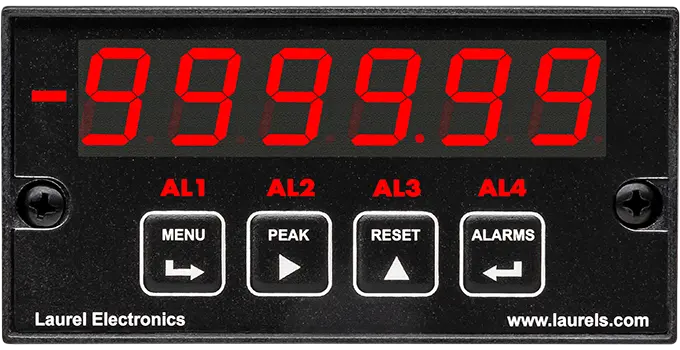
Display from -999,999 to +999,999
High read rates at up to 60 or 50 conversions per second.
Industrial digital panel meters with analog inputs convert a continuously variable electrical or process signal into a precise numeric display, built for mounting directly in a control panel. The "analog input" side covers DC voltage and current, true-RMS AC, load cell and strain gauge output, 4-20 mA and 0-10 V process loops, thermocouple and RTD temperature, and resistance — every one of them a signal that varies smoothly rather than arriving as pulses. Laurel builds all eight configurations on one modular 1/8 DIN platform, so the same main module, power supply board, and setup software carry across the entire line; only the signal conditioner board changes to match the input being measured.
A higher digit count allows a finer-resolution readout of the same signal — a 6-digit display can show more decimal places or a wider full-scale range than a 5-digit display without losing resolution. The underlying measurement accuracy is set by the signal conditioner board itself; the digit count determines how precisely that measurement can be displayed.
Start with the physical signal you're measuring: DC voltage or current calls for the DC configuration, a load cell calls for the load cell configuration (or scale/weighing for a dedicated scale application), a 4-20 mA or 0-10 V loop calls for the process configuration, AC power monitoring calls for true-RMS, and temperature sensing calls for thermocouple or RTD depending on the sensor type already installed.
Solar inverters and wind turbines often produce AC output with switching-related harmonic content rather than a clean sine wave. An average-responding meter misreads that kind of waveform, while a true-RMS meter reports the actual heating-equivalent value regardless of waveform shape, which is why true-RMS configurations are specified for this application.
Generally yes — since the signal conditioner board determines the input type on this modular platform, reconfiguring typically means swapping that board rather than replacing the whole meter, though the correct replacement board depends on which input type it's being changed to.
Both start from the same low-level microvolt input stage, but the scale/weighing configuration adds tare and zero functions purpose-built for an operator running a scale, while the load cell/strain gauge configuration is the more general-purpose version suited to force and material-testing measurement.
It still matters, since isolation protects the meter's own signal integrity from noise on the power or ground system even with a single instrument installed; its benefit becomes more pronounced as more instruments share a panel and a common ground, where isolation prevents one device's noise or fault from affecting another.
Yes, with the appropriate option board. A meter can retransmit its reading as a scaled analog output, trigger relay outputs from configurable setpoints, and communicate digitally over RS-232, RS-485, Modbus RTU, Modbus TCP/IP, or Ethernet.
Confirming the meter's input range and scaling configuration match the actual connected sensor or signal source is the first step, since a mismatch between the configured range and the real signal produces a plausible-looking but incorrect reading rather than an obvious fault.
Confirming the board's exact model and part number matches what the meter was originally configured for is the first step, since boards for different analog input types are physically similar but not interchangeable, and an incorrect type will power up and display something without producing a correct reading.
This can happen when the two instruments measure at different points in the circuit, or when one of them isn't a true-RMS device; confirming both measurement points and both instruments' measurement method (true-RMS vs. average-responding) is the standard first check before assuming either reading is wrong.
Gradual drift is commonly linked to temperature affecting the load cell itself or its cabling rather than the meter; checking for thermal exposure at the load cell and confirming cable shielding and connections are intact is the standard first step.
Confirming the setpoint value, hysteresis, and relay mode (normally open vs. normally closed) are configured as intended is the first step, since a relay that appears not to trigger is often configured correctly but for a different condition than expected.
This typically points to the analog output's own scaling being configured independently from the display scaling, since the two are set up separately; verifying the analog output's high and low endpoints match the intended range is the standard first check.
Verifying the communication protocol, baud rate, and address settings configured in the meter match what the PLC or SCADA system expects is the standard first check, since a mismatch in any one of these will prevent communication even when the physical wiring is correct.
1/8 DIN Digital Panel Meter for DC voltage input signals are widely used in numerous industrial and commercial applications due to their reliability and ease of use. Some of the common areas where this digital panel meters is employed include:
Digital Panel Meter for DC voltage input signals are versatile instruments that find applications across a wide range of industries. Their ability to provide accurate, real-time voltage monitoring makes them indispensable in settings where electrical performance is critical to safety, efficiency, and reliability. From industrial automation to renewable energy, transportation, and beyond, these meters play a key role in ensuring that electrical systems operate within safe and optimal parameters. As technology continues to evolve, the demand for precise and reliable voltage monitoring will only increase, further solidifying the importance of Digital Panel Meter in modern industry.
A 1/8 DIN Digital Panel Meter** is a specialized electronic device used for monitoring and displaying various electrical parameters, particularly direct current (DC) signals. The term "1/8 DIN" refers to the standardized size of the Panel Meter. DIN stands for "Deutsches Institut für Normung," a German standardization body, and in this context, it relates to the physical dimensions of the device. Specifically, a 1/8 DIN meter measures approximately 96 x 48 mm (3.78 x 1.89 inches), making it a compact and widely adaptable option for Panel Meter installations.
A 1/8 DIN Digital Panel Meter designed for DC current input operates by directly interfacing with a DC electrical circuit to measure and display the current flowing through that circuit. Here's how it typically works:
In various industrial, commercial, and scientific settings, monitoring electrical signals accurately is crucial for maintaining efficient and safe operations. One of the tools commonly employed for this purpose is the 1/8 DIN Digital Panel Meter designed for DC current input signals. Despite its compact size, this device provides precise and reliable measurements, making it invaluable in a range of applications. Here’s a closer look at where and why these Digital Panel Meter are used.
1/8 DIN Digital Panel Meter for DC current input signals are versatile tools used across a wide range of applications. Their compact size does not compromise their functionality, making them ideal for environments where space is limited but accurate measurement is essential. Whether in industrial automation, power distribution, laboratories, energy management, HVAC systems, EV charging stations, or high-stakes marine and aerospace applications, these Digital Panel Meter provide reliable performance that supports safe and efficient operations, and Digital Panel Meter continue to be a vital part of modern industrial instrumentation.
In the world of precision measurement and data acquisition, a 1/8 DIN Digital Panel Meter is a critical instrument used for displaying and monitoring various types of electrical signals. Specifically designed to interface with load cells, strain gauges, and measurements in the microvolt range, these devices are indispensable in industrial, laboratory, and scientific applications.
The term "1/8 DIN" refers to the size of the Digital Panel Meter, which is standardized to fit in a panel cutout that is 1/8th the size of a standard DIN (Deutsches Institut für Normung) enclosure. This compact size makes it an excellent choice for applications where space is limited but precise measurements are essential.
Digital Panel Meter of this size are designed for ease of use and accuracy. They convert analog signals from various sensors into a readable digital format, providing clear and precise measurements. Their compact design ensures they can be integrated into control panels or instrumentation setups without occupying too much space, and a Digital Panel Meter is a preferred solution in space-constrained environments.
A 1/8 DIN Digital Panel Meter operates by receiving an analog signal from a sensor or transducer, such as a load cell, strain gauge, or a microvolt signal source. Here’s a step-by-step overview of how these Digital Panel Meter function:
A Digital Panel Meter (DPM) is crucial in various industries for monitoring and displaying measurements from different sensors. Among these, the 1/8 DIN Digital Panel Meter is widely used due to their compact size and versatility. When paired with load cells, strain gauges, or microvolt sensors, these meters play an essential role in many applications. This article will explore the primary areas where an 1/8 DIN Digital Panel Meter is used in conjunction with these sensors.
Our 1/8 DIN Digital Panel Meter is versatile and essential tools in various industries where load cells, strain gauges, and microvolt sensors are used. From industrial weighing systems and automation to aerospace and medical applications, these compact meters provide precise and reliable measurement, ensuring that critical processes and systems operate efficiently and safely, and Digital Panel Meter continue to be a cornerstone of precision measurement technologies.
A 1/8 DIN Digital Panel Meter is a measurement device that fits into a standard 1/8 DIN cutout, which typically measures 1.75 inches by 3.62 inches (44.5 mm by 92 mm). The term "DIN" refers to the Deutsches Institut für Normung, a German standards organization, and is used to define the standard sizes for various types of instrumentation, including Digital Panel Meter. The 1/8 DIN size is one of the most common standards used for Digital Panel Meter due to its compact size, allowing it to fit into limited spaces while providing essential measurement capabilities.
In scale and weighing applications, accuracy and reliability are paramount. The 1/8 DIN Digital Panel Meter is designed to interface with load cells and other sensors to provide real-time weight measurements. These meters are often used in various industries, including manufacturing, food processing, logistics, and pharmaceuticals, where precise weight measurements are critical.
Measurement Display: The primary function of an 1/8 DIN Digital Panel Meter in weighing applications is to display the weight measured by the connected load cell. The display is typically large, bright, and easy to read, even in challenging environments, and a Digital Panel Meter is favored for their clear visibility in industrial settings.
Signal Conditioning: The Digital Panel Meter often includes built-in signal conditioning features, such as amplification and filtering, to ensure accurate and stable weight readings. This is particularly important in environments where electrical noise or other interference could affect the measurement, and a Digital Panel Meter is designed to handle such challenges effectively.
Tare and Zero Functions: These meters usually include tare and zero functions, which are essential in weighing applications. The tare function allows the user to subtract the weight of a container or packaging, while the zero function ensures that the meter starts from a true zero, providing accurate weight measurements, and Digital Panel Meter with these features are widely used in weighing operations.
Data Output: Many 1/8 DIN Digital Panel Meter come equipped with data output capabilities, such as serial communication (RS-232/RS-485) or analog outputs. This allows the meter to interface with other systems, such as data loggers, PLCs, or remote displays, enabling further processing or recording of the weight data, and the Digital Panel Meter is valued for their connectivity in integrated systems.
Alarms and Setpoints: In many weighing applications, there is a need to monitor weight against predefined limits. 1/8 DIN Digital Panel Meter often include programmable alarms and setpoints, which can trigger alerts or control processes when specific weight thresholds are reached, and Digital Panel Meter with alarm features are increasingly adopted for process safety.
The Digital Panel Meter (DPM) is essential in various industrial applications, providing precise and real-time data display. Among these, 1/8 DIN Digital Panel Meter is a popular choice, particularly in scale and weighing applications. DIN, short for "Deutsches Institut für Normung," refers to a set of standards that define the dimensions and configurations of devices. A 1/8 DIN Digital Panel Meter is a compact device, typically measuring 96 x 48 mm, making it ideal for various settings where space and functionality are key considerations.
In industrial environments, accurate weight measurement is crucial. The 1/8 DIN Digital Panel Meter is commonly integrated into weighing systems used in manufacturing, material handling, and processing industries. These Digital Panel Meter display weight readings from load cells or other weighing sensors, ensuring that operators have precise control over the production process.
For example, in a manufacturing plant where raw materials are mixed in specific ratios, the 1/8 DIN DPM ensures that each component is weighed accurately, maintaining product quality and consistency, and a Digital Panel Meter is a critical asset in production quality control.
Precision is paramount in laboratory settings, where even the smallest measurement error can compromise the results of experiments and tests. The 1/8 DIN Digital Panel Meter is often found in laboratory weighing equipment, providing researchers with accurate and reliable weight data. These Digital Panel Meter can be used in conjunction with analytical balances, moisture analyzers, and other sensitive weighing instruments.
In pharmaceutical labs, where precise measurements of chemical compounds are required, the reliability of the 1/8 DIN DPM is critical for ensuring the safety and efficacy of the products being developed, and the Digital Panel Meter is a trusted tool in pharmaceutical research.
In the food and beverage industry, consistency and compliance with regulatory standards are vital. The 1/8 DIN Digital Panel Meter is employed in weighing systems used for portion control, packaging, and quality assurance. These Digital Panel Meter help ensure that products are consistently packaged with the correct weight, which is essential for customer satisfaction and regulatory compliance.
For instance, in a food processing plant, 1/8 DIN DPMs might be used to monitor the weight of ingredients being mixed to produce a final product, ensuring that the recipe is followed accurately every time, and a Digital Panel Meter is widely utilized in food safety protocols.
Retail environments, such as grocery stores and supermarkets, require accurate and user-friendly weighing scales. A 1/8 DIN Digital Panel Meter is often used in these scales to display the weight of products being sold by weight, such as produce, meat, and bulk items. The clear and easy-to-read display provided by these meters helps ensure that customers are charged accurately for their purchases.
This type of Digital Panel Meter is typically found in point-of-sale systems, integrated into the weighing scales that provide both the customer and the cashier with real-time weight information, and a Digital Panel Meter is a standard feature in retail weighing solutions.
In the transportation and logistics sector, weight measurement is critical for safety, cost control, and regulatory compliance. The 1/8 DIN Digital Panel Meter is used in vehicle weighing systems, such as truck scales, to ensure that vehicles are loaded within safe and legal weight limits. These meters provide accurate weight readings that are essential for preventing overloading and ensuring that transport operations are both safe and efficient.
For example, in a freight terminal, 1/8 DIN DPMs might be used to monitor the weight of cargo being loaded onto trucks, ensuring that the total weight does not exceed legal limits and that the load is balanced correctly, and a Digital Panel Meter is a key element in logistics safety standards.
In agriculture, accurate weight measurement is essential for managing livestock, dosing feed, and monitoring crop yields. The 1/8 DIN Digital Panel Meter is often used in livestock scales, grain elevators, and other agricultural weighing systems. These meters provide farmers with the accurate data they need to make informed decisions about feeding, breeding, and harvesting.
For instance, in a livestock farm, 1/8 DIN DPMs could be used to monitor the weight of animals, helping farmers track growth rates and adjust feeding regimens accordingly, and Digital Panel Meter are widely integrated into agricultural weighing systems.
1/8 DIN Digital Panel Meter are versatile and reliable tools used in a wide range of scale and weighing applications across various industries. Their compact size, precise measurement capabilities, and ease of integration make them an ideal choice for environments where accurate weight data is essential. From industrial manufacturing to retail settings, the Digital Panel Meter will play a critical role in ensuring accuracy, safety, and efficiency in weight measurement processes, and Digital Panel Meter continue to be a vital component in modern weighing technologies.
A 1/8 DIN Serial Input 6-Digit Digital Panel Meter is a digital device used for displaying numerical data. The "6-Digit" part indicates that it can display values up to six digits, offering precision in measurement. The "Serial Input" aspect means that this Panel Meter can receive data via serial communication protocols such as RS-232, RS-485, or Modbus. This makes it highly versatile, allowing it to be connected to various sensors, controllers, or other devices that output data serially.
Key Features
Compact Size: The 1/8 DIN form factor makes it ideal for installations where space is limited, and Digital Panel Meter are often selected for their compact design in tight spaces.
High Precision: With the capability to display up to six digits, this Digital Panel Meter can show detailed and accurate readings, making it a preferred choice for precision tasks, and the Digital Panel Meter is widely recognized for their measurement accuracy.
Serial Communication: The ability to receive data through serial inputs allows integration with a wide range of devices, including PLCs (Programmable Logic Controllers), computers, and other automation equipment, and a Digital Panel Meter is frequently utilized for their connectivity in automation networks.
Customizable Display: Many of these meters offer configurable display options, such as adjustable brightness, color, and digit height, making it easier to read in various lighting conditions, and our precision Digital Panel Meter is often tailored to meet specific visibility needs across industries.
Remote Display: Some models offer a remote display feature, allowing the numerical data to be shown at a different location from the main device. This is particularly useful in large or complex installations, and Digital Panel Meter with remote displays are increasingly adopted for centralized monitoring.
Industrial Process Monitoring
Manufacturing Automation
Energy Management
Remote Monitoring and Control
Conclusion
The 1/8 DIN Serial Input 6-Digit Digital Panel Meter & Remote Display is an essential tool in modern industrial and commercial applications. Its compact size, high precision, and ability to interface with other systems make it ideal for a wide range of uses, from process monitoring to energy management. Whether used in a manufacturing plant, an energy management system, or a hazardous industrial environment, this Digital Panel Meter provides reliable and accurate data to ensure efficient and safe operations, and Digital Panel Meter continue to be a foundational element in industrial automation advancements.
A 1/8 DIN Digital Panel Meter for True RMS AC Voltage is a specialized electronic device used in various industrial and commercial applications to measure and display the true root mean square (RMS) value of an alternating current (AC) voltage. This type of Panel Meter is commonly utilized in situations where accurate measurement of AC voltage is crucial, such as in power systems, electrical equipment, and industrial automation.
The term 1/8 DIN refers to the physical size and mounting style of the Digital Panel Meter. DIN stands for Deutsches Institut für Normung, a German standards organization. DIN sizes are standardized dimensions that ensure compatibility with a variety of mounting systems and enclosures. A 1/8 DIN Digital Panel Meter has a front panel size of 96mm x 48mm (3.78 inches x 1.89 inches), making it compact and suitable for use in control panels where space is limited, and a Digital Panel Meter is a preferred choice for space-efficient designs.
True RMS (Root Mean Square) measurement is a critical feature of this type of Digital Panel Meter. In AC circuits, the voltage waveform can be sinusoidal (pure AC) or non-sinusoidal (with harmonics or distortions). A conventional average-responding meter can give inaccurate readings for non-sinusoidal waveforms because it assumes a pure sine wave. However, a True RMS meter accurately measures the equivalent DC value that would produce the same heating effect in a resistive load, regardless of the waveform's shape.
This accuracy is essential in modern electrical systems, where non-linear loads like variable frequency drives (VFDs), switching power supplies, and other electronic devices generate distorted waveforms. A 1/8 DIN Digital Panel Meter with True RMS capability ensures precise voltage measurement under these conditions, making it invaluable in today’s complex electrical environments, and Digital Panel Meter with this feature are widely adopted for reliable voltage monitoring.
Compact Size: The 1/8 DIN form factor allows easy integration into crowded control panels, optimizing space without compromising on functionality, and a Digital Panel Meter is favored for their efficient design in control systems.
High Accuracy: True RMS measurement ensures accurate voltage readings even with distorted or non-sinusoidal waveforms, which is critical for reliable monitoring and control, with Digital Panel Meter being a top choice for precision applications.
Digital Display: These meters feature a clear, easy-to-read digital display, typically with adjustable brightness for visibility in various lighting conditions, and a Digital Panel Meter is valued for their user-friendly interfaces.
Versatility: Suitable for a wide range of applications, including monitoring power supplies, generators, motor drives, and other AC-powered equipment, with Digital Panel Meter being adaptable across diverse industrial needs.
Ease of Installation: Designed for easy panel mounting, these meters often come with user-friendly interfaces and standard connections, simplifying installation and setup, and a Digital Panel Meter is appreciated for their straightforward integration.
1/8 DIN Digital Panel Meter for True RMS AC Voltage are widely used in industries where precise voltage monitoring is crucial. Common applications include:
Introduction
1/8 DIN Digital Panel Meter are crucial tools in various industries for monitoring and displaying electrical parameters like voltage, current, and frequency. When these meters are designed specifically for True RMS (Root Mean Square) AC voltage measurement, they become even more vital in environments where accuracy is paramount. This article explores the common applications of 1/8 DIN Digital Panel Meter for True RMS AC voltage.
Understanding True RMS Measurement
True RMS is a method of measuring the effective value of an alternating current (AC) or voltage waveform. Unlike average or peak measurement methods, True RMS provides an accurate representation of the power that a waveform can deliver, regardless of its shape. This is particularly important for non-sinusoidal waveforms, where other measurement methods can lead to significant errors.
Key Applications of 1/8 DIN Digital Panel Meter for True RMS AC Voltage
Industrial Automation and Control Systems
In industrial environments, ensuring the correct functioning of machinery and processes is critical. The 1/8 DIN Digital Panel Meter is often integrated into control panels to monitor the AC voltage supplied to equipment. True RMS measurement is essential in these settings because industrial equipment can draw non-linear loads, leading to distorted waveforms. Accurate voltage monitoring helps in maintaining the efficiency and longevity of machinery, and a Digital Panel Meter is a critical component in industrial automation setups.
Power Distribution and Monitoring
Power distribution systems, especially those dealing with complex loads, require precise voltage monitoring to ensure stability and efficiency. 1/8 DIN Digital Panel Meter with True RMS capability are used in switchgear, transformers, and distribution panels to monitor voltage levels and detect any anomalies that could lead to power quality issues or equipment failure, with Digital Panel Meter being widely integrated into power distribution infrastructure.
Renewable Energy Systems
Renewable energy systems, such as solar power inverters and wind turbines, often produce non-sinusoidal waveforms due to the nature of the conversion process from DC to AC. Using 1/8 DIN Digital Panel Meter that measure True RMS AC voltage ensures accurate monitoring of the voltage output, which is crucial for optimizing system performance and ensuring safe operation, and a Digital Panel Meter is a vital tool in renewable energy management.
HVAC Systems
Heating, ventilation, and air conditioning (HVAC) systems rely on precise voltage control for efficient operation. The True RMS Digital Panel Meter is used to monitor the AC voltage supplied to motors and compressors within these systems. Given the potential for voltage fluctuations and waveform distortion in HVAC applications, True RMS measurement is necessary to maintain system reliability, and a Digital Panel Meter is a standard feature in HVAC control systems.
Laboratory and Testing Environments
In laboratory settings, where experiments and equipment testing often require exact voltage measurements, 1/8 DIN Digital Panel Meter with True RMS capabilities are indispensable. These meters ensure that the voltage supplied to sensitive instruments is accurate, reducing the risk of erroneous results or damage to equipment, and a Digital Panel Meter is widely employed in testing labs for precision.
Data Centers and IT Infrastructure
Data centers and IT infrastructure require a stable power supply to avoid disruptions. 1/8 DIN Digital Panel Meter with True RMS AC voltage measurement are used to monitor power supply lines, ensuring that any deviation from the norm is quickly detected and addressed. This helps in preventing downtime and protecting critical IT equipment from voltage-related damage, and a Digital Panel Meter is essential for data center reliability.
Conclusion
1/8 DIN Digital Panel Meter for True RMS AC voltage measurement are versatile instruments used across various industries. Their ability to provide accurate voltage readings, even with distorted waveforms, makes them indispensable in industrial automation, power distribution, renewable energy, HVAC systems, laboratories, and data centers. By ensuring precise monitoring and control of AC voltage, these Digital Panel Meter contribute significantly to the efficiency, safety, and reliability of electrical systems, and Digital Panel Meter remain a cornerstone of modern electrical monitoring technologies.
In industrial and commercial applications, accurately measuring and displaying electrical parameters such as voltage, current, or frequency is crucial for monitoring and controlling various processes. One common tool used for these purposes is the Digital Panel Meter (DPM). Among the different types available, the 1/8 DIN Digital Panel Meter for True RMS AC Current stands out as a specialized instrument designed to measure and display the true RMS (Root Mean Square) value of alternating current (AC).
DIN, which stands for "Deutsches Institut für Normung," refers to a set of standards used for various industrial equipment sizes, including Digital Panel Meter. DIN sizing helps ensure compatibility and interchangeability of components in control panels and other systems. The "1/8 DIN" refers to the physical size of the Digital Panel Meter, meaning it occupies 1/8 of a standard DIN panel space. Specifically, a 1/8 DIN Digital Panel Meter typically measures around 96 mm x 48 mm (3.78 inches x 1.89 inches). This compact size allows for the installation of multiple meters in a single panel, providing efficient use of space, and a Digital Panel Meter is a preferred solution for space optimization in control setups.
To understand the significance of True RMS measurement, it's essential first to grasp the concept of RMS. RMS, or Root Mean Square, is a statistical measure used to calculate the effective value of a varying signal. For AC currents, the RMS value represents the equivalent DC value that would deliver the same power to a load. True RMS measurement is particularly important when dealing with non-sinusoidal waveforms or AC signals with harmonics, which are common in many modern electrical systems.
Traditional RMS meters only provide accurate readings for pure sinusoidal waveforms. However, in real-world scenarios, the presence of harmonics or distorted waveforms can lead to significant inaccuracies in these readings. A True RMS meter, on the other hand, accurately calculates the RMS value regardless of waveform distortions, making it essential for precise current measurement in complex electrical environments, and Digital Panel Meter with True RMS are highly valued for their versatility in such settings.
Accurate Measurement: The primary advantage of using a True RMS Digital Panel Meter is its ability to provide accurate current readings even in the presence of distorted waveforms. This is crucial in environments where electrical noise, non-linear loads, or other factors may affect the AC current's waveform, and a Digital Panel Meter is a top choice for accurate current monitoring.
Compact Size: The 1/8 DIN size offers a compact solution that fits easily into crowded control panels, saving space while still providing essential measurement capabilities, and a Digital Panel Meter is favored for their efficient design in control systems.
Easy-to-Read Display: These Digital Panel Meter typically feature a digital display that clearly shows the measured current value. This makes it easy for operators to monitor and interpret data at a glance, and a Digital Panel Meter is appreciated for their clear readability in industrial settings.
Versatility: An1/8 DIN Digital Panel Meter is designed to handle a wide range of input signals, making them suitable for various applications in industries such as manufacturing, power generation, and automation, with Digital Panel Meter being adaptable across diverse operational needs.
High Reliability: Built for industrial use, these meters are rugged and designed to operate reliably in harsh environments, ensuring continuous monitoring without frequent maintenance, and a Digital Panel Meter is a reliable choice for demanding industrial conditions.
Industrial Automation and Control Panels
Energy Management Systems
HVAC Systems
Laboratory and Test Equipment
Telecommunications and Data Centers
Conclusion
1/8 DIN Digital Panel Meter for True RMS AC current are versatile tools used across various industries to ensure accurate monitoring and control of electrical systems. Their compact size, ease of integration, and True RMS capability make them indispensable in environments where precision and reliability are paramount. Whether in industrial automation, energy management, HVAC systems, laboratory testing, or data centers, a Digital Panel Meter will play a critical role in maintaining the safety, efficiency, and longevity of electrical equipment, and Digital Panel Meter remain a fundamental component in modern electrical infrastructure.
Digital Panel Meter (DPMs) are essential tools in industrial and process control environments, where precise measurement and display of data are crucial. A 1/8 DIN Digital Panel Meter is a compact and versatile instrument that has become a standard in the industry due to its size, reliability, and functionality. When paired with process and ratiometric meter applications, it becomes an even more powerful tool. But what exactly is a 1/8 DIN Digital Panel Meter, and how does it function in process and ratiometric measurement applications? Let’s explore.
DIN, which stands for "Deutsches Institut für Normung," is a set of standards originating from Germany that are now widely used internationally. The "1/8 DIN" refers to the size of the Digital Panel Meter. The term indicates that the meter occupies one-eighth of a full DIN standard panel, which typically measures 192 x 96 mm. Therefore, a 1/8 DIN meter has dimensions of approximately 96 x 48 mm. This compact size allows for easy integration into control panels and enclosures without taking up excessive space, and a Digital Panel Meter is a preferred choice for space-efficient designs.
A Digital Panel Meter is an electronic device used to display digital readings of various types of input signals, including voltage, current, temperature, pressure, and more. These meters are widely used in various industries for monitoring and control purposes. The digital display provides clear and precise readouts, which are easier to interpret than analog meters, and a Digital Panel Meter is a staple in industrial monitoring systems.
Digital Panel Meter often come with features like programmable setpoints, alarms, and outputs, making them versatile tools for various applications, and a Digital Panel Meter is frequently equipped with advanced functionalities to meet diverse needs.
A process meter is a type of Digital Panel Meter specifically designed to measure and display process variables such as temperature, pressure, flow, and level. These meters are integral in maintaining and optimizing industrial processes, ensuring that they run within set parameters for safety and efficiency.
Accuracy: Process meters are designed to provide highly accurate readings, which is crucial for maintaining control over industrial processes. Even slight deviations can lead to significant inefficiencies or safety hazards, and a Digital Panel Meter is valued for their precision in process control.
Programmability: Many 1/8 DIN process meters offer programmable input types, allowing users to customize the meter according to the specific needs of their application. For instance, a single meter could be used to measure temperature in one application and pressure in another, and a Digital Panel Meter is widely appreciated for their adaptability.
Alarms and Outputs: These meters often include programmable alarms that trigger when the process variable exceeds or falls below set thresholds. Additionally, they can provide outputs to control other devices or systems based on the measured values, with Digital Panel Meter being a key component in automated control systems.
A ratiometric meter is another type of Digital Panel Meter, but it specializes in displaying ratios between two input signals. This type of measurement is particularly useful in applications where relative changes are more important than absolute values, such as in strain gauges, potentiometers, or other sensors that provide ratiometric output.
Application: Ratiometric meters are often used in situations where two or more variables are compared, and the relationship between them is more critical than their individual values. For example, in a pressure measurement system, comparing the pressure between two points can be more informative than knowing the absolute pressure at each point, and a Digital Panel Meter is a go-to solution for ratiometric applications.
Stability: Ratiometric meters tend to offer enhanced stability, as they reduce the influence of fluctuations in the power supply or environmental conditions by focusing on the ratio of inputs, with Digital Panel Meter providing consistent performance in variable conditions.
In some industrial applications, there is a need to monitor both absolute process variables and relative changes simultaneously. A 1/8 DIN Digital Panel Meter that can handle both process and ratiometric inputs becomes a valuable tool in these scenarios. For example, it could be used to measure the absolute temperature in a reactor while also monitoring the ratio of temperatures between two different points within the system.
This dual functionality allows for greater flexibility and precision in control systems, leading to improved process efficiency and product quality, and a Digital Panel Meter is increasingly favored for their dual-purpose capabilities in complex setups.
Compact Size: The 1/8 DIN size makes these meters easy to install in crowded panels or enclosures, maximizing space efficiency, and a Digital Panel Meter is a preferred option for space-constrained installations.
Versatility: With the ability to handle both process and ratiometric measurements, these meters can be used across a wide range of applications, reducing the need for multiple types of instruments, and a Digital Panel Meter is highly adaptable across industries.
Customization: Many 1/8 DIN meters offer customizable display options, inputs, and outputs, allowing them to be tailored to specific applications, with Digital Panel Meter being customizable to meet unique operational demands.
Ease of Use: The digital display provides clear, precise readings that are easy to interpret, reducing the potential for human error, and a Digital Panel Meter is appreciated for their user-friendly design.
Process Monitoring:
Ratiometric Measurement:
The 1/8 DIN Digital Panel Meter for process and ratiometric measurement is a versatile and powerful tool used across a wide range of industries. Its ability to monitor both absolute process variables and relative changes simultaneously, combined with its compact size and customization options, makes it an indispensable component in industrial control systems. As industries continue to demand greater precision and efficiency, the role of Digital Panel Meter in these applications will only grow, solidifying their importance in modern industrial processes, and Digital Panel Meter remain a cornerstone of advanced control technologies.
In various industrial and laboratory settings, precise temperature measurement is crucial. One of the key tools used for this purpose is the 1/8 DIN Digital Panel Meter designed for thermocouples. But what exactly is a 1/8 DIN Digital Panel Meter, and how does it relate to thermocouple temperature measurements? Let’s break it down.
A Panel Meter is an electronic device used to measure and display various parameters such as voltage, current, or temperature. The term "1/8 DIN" refers to the physical size of the Digital Panel Meter. DIN stands for Deutsches Institut für Normung, the German Institute for Standardization, which sets standards for electronic equipment dimensions.
The "1/8 DIN" designation means that the Digital Panel Meter is compact, typically measuring about 48 x 24 mm (1.89 x 0.94 inches). This small size allows for easy integration into control panels or equipment displays, making it ideal for applications where space is limited, and a Digital Panel Meter is a preferred choice for space-efficient installations.
Thermocouples are temperature sensors that measure temperature based on the voltage generated at the junction of two different metals. They are widely used because of their wide temperature range, durability, and relatively low cost.
A Digital Panel Meter designed for thermocouples is specifically calibrated to interpret the voltage generated by these sensors and convert it into a readable temperature display. This Digital Panel Meter is equipped with input channels that can accept thermocouple signals and provide accurate temperature readings in real-time, and a Digital Panel Meter is a standard tool for thermocouple monitoring in industrial settings.
Compact Size: The 1/8 DIN size is particularly useful for situations where panel space is at a premium. Despite their small size, these meters offer precise measurements without sacrificing readability, and a Digital Panel Meter is widely appreciated for their compact yet effective design.
High Accuracy: This Digital Panel Meter is designed to provide accurate and reliable temperature readings, which is critical for maintaining control and ensuring quality in industrial processes, with Digital Panel Meter being a trusted choice for temperature accuracy.
Wide Temperature Range: Depending on the type of thermocouple used (such as Type J, K, T, or E), these meters can measure a broad range of temperatures. This versatility makes them suitable for various applications, from simple home appliances to complex industrial systems, and a Digital Panel Meter is highly versatile across temperature monitoring needs.
Ease of Integration: The compact size and standardized DIN mounting make it easy to integrate these meters into existing systems or new installations. They can often be configured to fit into standard panel cutouts with minimal modifications, and a Digital Panel Meter is valued for their seamless integration capabilities.
User-Friendly Interface: Many 1/8 DIN Digital Panel Meter feature clear digital displays, making it easy to read temperature data at a glance. They may also offer features such as alarm functions, programmable setpoints, and data logging capabilities, with Digital Panel Meter being a user-friendly solution for temperature management.
A 1/8 DIN Digital Panel Meter for thermocouple temperature measurement is a specialized device used across various industries to monitor and control temperature with precision. Its compact size, high accuracy, and ease of integration make it a versatile tool in numerous applications. Here’s a closer look at where and why these devices are used:
In aerospace and defense industries, where precision and reliability are paramount, The 1/8 DIN Digital Panel Meter is used to monitor temperatures in various systems, including avionics, propulsion systems, and environmental controls. The ability to provide accurate readings in demanding conditions is crucial for maintaining operational safety and performance.
The 1/8 DIN Digital Panel Meter for thermocouple temperature measurement is a versatile tool with applications spanning across many industries. Its compact size, accuracy, and ease of integration make it ideal for situations where precise temperature control and monitoring are essential. Whether in industrial automation, manufacturing, laboratories, HVAC systems, automotive testing, energy production, or aerospace, this device plays a critical role in ensuring operational efficiency and safety, and Digital Panel Meter remain a vital part of temperature management solutions.
In various industrial and laboratory settings, precise temperature measurement and control are critical. A 1/8 DIN Digital Panel Meter for RTD (Resistance Temperature Detector) temperature is a specialized instrument designed to deliver accurate temperature readings from RTD sensors. This article provides an overview of what a 1/8 DIN Digital Panel Meter is, how it works, and its applications in temperature measurement.
DIN Size: The term “1/8 DIN” refers to the physical size of the panel meter, based on the Deutsches Institut für Normung (DIN) standard. The DIN standard is a set of guidelines used in Europe for designing and manufacturing panels and controls. In this context, "1/8 DIN" indicates a compact meter with a panel cutout size of approximately 22.5 x 45 mm, making it suitable for small or crowded panel spaces.
Panel Meter: This type of meter displays numerical values digitally, which provides clear and precise readings compared to analog meters. The digital format reduces the likelihood of reading errors and allows for quick and easy interpretation of the data.
RTD Sensors: RTDs are temperature sensors that measure temperature by correlating the resistance of the RTD element with temperature. Typically made from pure platinum, RTDs provide highly accurate and stable temperature measurements over a wide range. The most common type of RTD is the PT100, which has a resistance of 100 ohms at 0°C.
How RTDs Work: As the temperature changes, the electrical resistance of the RTD element also changes. This resistance change is measured and converted into a temperature reading. RTDs are known for their precision and are often used in applications where accuracy is paramount.
Input and Signal Processing: A 1/8 DIN Digital Panel Meter for RTD temperature is designed to interface directly with RTD sensors. It processes the resistance signal from the RTD and converts it into a readable temperature value. The meter's electronics handle the signal conditioning, amplification, and conversion necessary to provide an accurate digital readout.
Display and Output: These meters come with a digital display that shows the temperature in various units such as Celsius or Fahrenheit. Many models also offer features like programmable alarms, analog output signals, and communication interfaces for integration with other control systems.
Calibration and Accuracy: To ensure accurate readings, these meters need to be calibrated. Many models allow for calibration adjustments to account for sensor deviations and environmental factors. The accuracy of a 1/8 DIN Digital Panel Meter is typically high, making it suitable for precision applications.
In the world of industrial automation and control systems, accurate temperature measurement and monitoring are critical. The 1/8 DIN Digital Panel Meter for RTD temperature is a specialized instrument designed to meet these needs. Compact and efficient, it is widely used across various industries. Let’s explore where and why these devices are used.
The 1/8 DIN Digital Panel Meter for RTD temperature is a versatile instrument with applications spanning across multiple industries. Its compact size, accuracy, and reliability make it an ideal choice for monitoring and controlling temperature in a wide range of environments. Whether it’s in manufacturing, HVAC, food processing, laboratories, energy management, automotive, or aerospace, this device plays a crucial role in ensuring operational efficiency and safety.
A 1/8 DIN Digital Panel Meter Ohmmeter is a specialized instrument used for measuring electrical resistance, expressed in ohms (Ω). The "1/8 DIN" specification refers to the physical dimensions of the panel meter, ensuring that it fits into a standard industrial panel cutout size. The DIN (Deutsches Institut für Normung) standard is a widely accepted format that defines the size of Digital Panel Meter and other industrial equipment, making it easier to integrate these devices into control panels.
A 1/8 DIN digital panel meter ohmmeter is a specialized instrument designed to measure resistance in ohms, commonly used in a wide range of industrial, laboratory, and commercial applications. Its compact size, precision, and ease of integration into various systems make it an essential tool for monitoring and controlling electrical resistance in different environments. Below are some of the primary applications where a 1/8 DIN digital panel meter ohmmeter is used.
A 1/8 DIN digital panel meter ohmmeter for resistance measurement is a versatile and reliable tool used across various industries and applications. Its compact size and ability to provide accurate, real-time resistance measurements make it an essential component in systems where electrical resistance plays a critical role in performance and safety. Whether in industrial process control, quality assurance, or research laboratories, these ohmmeters contribute significantly to the effective monitoring and management of electrical systems.
A 1/8 DIN digital panel meter is a versatile and precise instrument used in various industrial and engineering applications to measure and display frequency, rate, and period. The term "1/8 DIN" refers to the physical size of the panel meter, conforming to a standardized dimension, making it easy to integrate into control panels and enclosures. This article delves into the key aspects of 1/8 DIN Digital Panel Meter, focusing on their application in measuring frequency, rate, and period.
DIN stands for "Deutsches Institut für Normung," which is the German Institute for Standardization. The DIN standards are used globally to ensure compatibility and uniformity of components in industrial and electronic equipment. The "1/8 DIN" specification indicates the size of the panel meter, with dimensions typically around 96 x 48 mm (3.78 x 1.89 inches). This compact size makes it a popular choice for applications where space is limited.
1/8 DIN Digital Panel Meter are used in a wide range of applications, from simple monitoring tasks to complex process control systems. They are particularly valuable in industries such as:
A 1/8 DIN digital panel meter designed for frequency, rate, and period measurement performs three critical functions:
1/8 DIN Digital Panel Meter offer several features and benefits that make them ideal for industrial use:
Compact Size: The standardized 1/8 DIN size ensures that the meter can be easily integrated into existing panels and systems without requiring significant modifications.
High Accuracy and Precision: This Digital Panel Meter is designed to provide accurate and reliable measurements, which are essential in critical applications where precision is paramount.
Easy-to-Read Display: Most 1/8 DIN meters come with bright LED or LCD displays that provide clear, real-time readings, making it easy for operators to monitor the system status at a glance.
Versatile Input Options: They can accept a variety of input signals, including analog and digital signals, making them adaptable to different types of sensors and transducers.
Configurable Outputs: Many models offer configurable output options, such as alarms or analog outputs, which can be used to trigger other processes or alert operators to out-of-range conditions.
Durability: Designed to withstand harsh industrial environments, This Digital Panel Meter is typically rugged and durable, ensuring long-term reliability.
A 1/8 DIN digital panel meter for frequency, rate, and period measurement is a versatile instrument widely used in various industries and applications. These meters provide precise measurements of frequency, rate, and period, which are critical in many processes. Below, we'll explore some of the primary areas where these devices are commonly employed.
In industrial automation, controlling and monitoring the speed, frequency, and timing of various processes are essential for maintaining efficiency and safety. A 1/8 DIN digital panel meter is used to monitor the frequency of electrical signals, the rate of motor rotations, or the timing between events in automated processes.
For example, in a manufacturing plant, these meters can monitor conveyor belt speeds, ensuring that materials are moved at the correct rate to prevent bottlenecks or overloading. In packaging lines, they help ensure that products are processed and packaged at consistent speeds, improving overall efficiency.
Power plants and electrical substations rely heavily on accurate frequency measurement to ensure the stability of the power grid. The 1/8 DIN digital panel meter is often used to monitor the frequency of alternating current (AC) signals, which is crucial in maintaining the synchronization of generators and the grid.
A stable frequency ensures that electrical equipment operates correctly and safely. Any deviation from the standard frequency (e.g., 50 Hz or 60 Hz) can indicate issues such as generator malfunctions or grid instability, which require immediate attention.
In telecommunications, accurate frequency measurement is critical for the proper functioning of communication systems. The 1/8 DIN digital panel meter is used to measure and monitor the frequency of signals in communication networks, ensuring that data transmission is reliable and free from interference.
For instance, in radio broadcasting, these meters help in maintaining the correct frequency of transmitted signals, preventing overlaps or distortions in the broadcast. In cellular networks, they ensure that communication signals are transmitted and received at the correct frequencies, which is vital for maintaining clear and stable connections.
The automotive industry uses 1/8 DIN Digital Panel Meter to test and diagnose various aspects of vehicle performance. This Digital Panel Meter is used to measure the frequency and rate of signals in engines, transmissions, and other critical systems.
For example, during engine testing, these meters can monitor the ignition frequency, ensuring that the engine fires at the correct intervals for optimal performance. They are also used to measure the rate of sensor signals, such as those from wheel speed sensors or fuel injectors, providing valuable data for diagnostics and tuning.
In laboratories and research facilities, accurate measurements of frequency, rate, and period are often required for experiments and data collection. A 1/8 DIN digital panel meter is a reliable tool for these applications, providing precise and consistent measurements.
Researchers might use these meters to measure the frequency of oscillating signals in electronic circuits or to monitor the timing of events in a controlled experiment. Their compact size and versatility make them a popular choice for bench-top setups where space is limited.
Heating, ventilation, and air conditioning (HVAC) systems often require precise control of fan speeds, air flow rates, and other parameters to maintain desired environmental conditions. A 1/8 DIN digital panel meter can be used to monitor and control these parameters, ensuring that the HVAC system operates efficiently.
For example, these meters can measure the frequency of fan motor signals, helping to regulate the speed of the fans based on the temperature or air quality requirements. This ensures that the environment remains comfortable and energy-efficient.
A 1/8 DIN digital panel meter for frequency, rate, and period measurement is a versatile and essential tool across a wide range of industries. Its ability to provide accurate and reliable measurements makes it invaluable for ensuring the smooth operation of industrial processes, power generation, telecommunications, automotive systems, and more. Whether used in a manufacturing plant, a power station, or a research lab, this compact and precise instrument plays a critical role in modern technology and industry.
In the world of industrial automation, measurement, and control, precision and reliability are paramount. Among the many tools that professionals rely on, the 1/8 DIN Digital Panel Meter is a crucial component, particularly when it comes to measuring rates, totals, and performing various mathematical functions. But what exactly is a 1/8 DIN Digital Panel Meter, and how does it serve these specific purposes?
A 1/8 DIN Digital Panel Meter is an electronic instrument used for displaying measurements in a digital format. The term "1/8 DIN" refers to the size of the panel meter, where "DIN" stands for "Deutsches Institut für Normung," a German standards organization. The "1/8" designation indicates that the panel meter occupies one-eighth of a standard DIN enclosure, making it a compact yet versatile option for various applications.
These Digital Panel Meter are commonly used in industrial settings to monitor and display a wide range of parameters, such as voltage, current, temperature, pressure, and more. However, when it comes to measuring rate and totalizer functions, as well as performing specific mathematical operations, the 1/8 DIN Digital Panel Meter becomes an even more powerful tool.
In industrial processes, rate measurement is crucial for monitoring the speed at which something occurs, such as the flow rate of a liquid or the speed of a conveyor belt. A 1/8 DIN Digital Panel Meter designed for rate measurement can accurately display the rate at which an event is occurring in real-time, providing operators with critical data to ensure that processes are running smoothly and efficiently.
The totalizer function of a 1/8 DIN Digital Panel Meter allows it to accumulate a total value over time. For example, in a production line, the totalizer can keep track of the total number of items produced or the total volume of a liquid that has flowed through a system. This function is essential for keeping records, generating reports, and ensuring that production targets are met.
One of the standout features of advanced 1/8 DIN Digital Panel Meter is their ability to perform mathematical operations on the inputs they receive. These operations include:
A+B: The meter can sum two input values, providing a total that may represent the combined flow of two separate sources, for example.
A-B: This function allows the meter to calculate the difference between two input values, which could be used to monitor the net flow rate between an input and output.
A×B: The meter can multiply two input values together, which might be used to calculate the power consumption by multiplying current and voltage.
A/B: Division of two input values is possible, which can be useful for determining ratios, such as the ratio of two different flow rates.
A/B-1: This more complex function allows the meter to calculate a percentage difference or deviation between two input values, providing insights into variations in process conditions.
Digital Panel Meter (DPMs) have become essential tools in modern industrial and process control environments. Among the various types available, the 1/8 DIN Digital Panel Meter stands out for its compact size, versatility, and ability to perform complex functions such as rate measurement, totalizing, and mathematical operations like A+B, A-B, AxB, A/B, and A/B-1. But where exactly are these devices used? This article explores the various applications of 1/8 DIN Digital Panel Meter in different industries.
In manufacturing plants, accurate measurement and control of various parameters like flow rate, temperature, pressure, and volume are crucial. A 1/8 DIN Digital Panel Meter can be integrated into control panels to monitor these parameters. The device's ability to perform functions such as totalizing (adding up flow rates over time) and rate calculation (measuring flow or production speed) makes it invaluable for ensuring consistent product quality and process efficiency.
For instance, in a chemical processing plant, the Digital Panel Meter can be used to measure and display the flow rate of different chemicals into a reactor. The A+B function can sum the flow rates from multiple sources, while the A-B function can calculate the difference between input and output flows, helping to detect leaks or inefficiencies.
Water and wastewater treatment facilities rely heavily on precise measurements for flow, pH, and chemical dosing. A 1/8 DIN Digital Panel Meter is often used in these facilities to monitor and control the flow rate of water through various stages of treatment. The totalizer function helps operators track the total volume of water processed over time, which is crucial for regulatory reporting and system performance analysis.
In these settings, the ability to perform mathematical operations is also beneficial. For example, the AxB function can be used to multiply the flow rate by a correction factor, which might be necessary when adjusting for sensor calibration errors or environmental conditions.
In energy management, particularly in monitoring and optimizing the performance of HVAC systems, power generation, and distribution networks, the 1/8 DIN Digital Panel Meter will play a significant role. It can measure parameters like voltage, current, and power consumption in real time. By using the A/B function, the meter can calculate efficiency ratios, such as energy produced versus energy consumed, helping to identify areas for improvement and cost savings.
Totalizing the energy used over a period is essential for billing and energy audits, while the A/B-1 function can be used to calculate percentage deviations or losses in energy conversion processes.
In automotive and aerospace industries, testing and quality control are rigorous and demand high precision. The 1/8 DIN Digital Panel Meter is often employed in test rigs to monitor various parameters such as pressure, torque, rotational speed, and temperature. The rate and totalizer functions allow engineers to analyze the performance over time, ensuring that the components meet the required standards.
The meter's ability to perform complex mathematical functions enables real-time calculations during tests, such as the power output (using AxB) or efficiency comparisons (using A/B). These capabilities are crucial for optimizing design and ensuring safety in critical applications.
In the food and beverage industry, maintaining accurate control over ingredients and processes is vital for product quality and consistency. The 1/8 DIN Digital Panel Meter is used to monitor and control the flow of ingredients like liquids, gases, and granules. The totalizer function is especially important for batching processes, where precise quantities of ingredients must be measured and recorded.
Moreover, the ability to perform functions like A+B and A/B allows for precise blending and mixing operations. For example, the meter can calculate the ratio of two ingredients being mixed, ensuring the final product meets the desired specifications.
Pharmaceutical manufacturing requires precise control over numerous variables to ensure product safety and efficacy. The 1/8 DIN Digital Panel Meter is used to monitor flow rates, temperatures, and pressures within the production environment. The totalizer function helps in tracking the cumulative volume of fluids or gases used in a batch, ensuring compliance with stringent regulatory requirements.
In this industry, the meter's mathematical functions are also utilized to adjust and fine-tune processes. For example, the A-B function can be used to monitor the difference in pressure before and after a filter, indicating when maintenance is needed.
A 1/8 DIN Digital Panel Meter is a versatile and powerful tool used across a wide range of industries. Its compact size allows it to be easily integrated into control panels, while its ability to perform complex mathematical functions makes it invaluable for real-time monitoring, control, and analysis. Whether in manufacturing, energy management, or food processing, these meters play a crucial role in ensuring efficiency, safety, and quality. As technology continues to advance, the applications for these devices will only expand, further solidifying their importance in industrial and process control environments.
In industrial and process control environments, precision and accuracy are critical. Instruments that can reliably monitor, display, and control various parameters are indispensable for ensuring the smooth operation of systems. Among these, the Digital Panel Meter plays a crucial role, especially when it comes to monitoring pulse inputs and totaling counts in various applications. One specific type of panel meter that stands out is the 1/8 DIN Digital Panel Meter Dual-Channel Pulse Input Totalizer. This device is designed for specific applications where dual-channel pulse input monitoring is essential.
Before diving into the specifics of a dual-channel pulse input totalizer, it's essential to understand what "1/8 DIN" refers to. DIN stands for "Deutsches Institut für Normung," a German organization responsible for setting standards. In this context, the term "1/8 DIN" refers to the size of the panel meter. A 1/8 DIN panel meter typically measures 96mm x 48mm, making it compact yet large enough to display critical data clearly. The 1/8 DIN standard ensures that these devices fit into standardized cutouts, making them easy to integrate into control panels.
A dual-channel pulse input totalizer is a specialized type of panel meter designed to count and display pulse inputs from two separate channels. These devices are widely used in applications where monitoring two independent pulse signals is necessary. For instance, in a manufacturing process, it may be crucial to count the number of items produced on two separate production lines simultaneously.
Dual-Channel Monitoring: As the name suggests, these totalizers can handle two pulse input channels. Each channel operates independently, allowing for simultaneous monitoring of two different sources.
Pulse Counting and Totalization: The primary function of this device is to count pulses from the input sources. Pulses are generated by sensors such as proximity switches, rotary encoders, or flow meters. The totalizer keeps a running total of these pulses, which can be displayed on the panel.
Scalability and Flexibility: Many models offer configurable scaling options, meaning that the pulse counts can be converted into meaningful engineering units, such as liters, meters, or units produced. This makes the totalizer adaptable to various industrial applications.
Display Options: The digital display on a 1/8 DIN totalizer typically provides clear and concise information. Depending on the model, it may feature LED or LCD displays, with options for backlighting, which ensures visibility even in low-light environments.
Alarm and Relay Outputs: Some advanced models are equipped with alarm and relay outputs. These can be configured to trigger specific actions when a preset count or threshold is reached, providing an additional layer of control and automation in a process.
Ease of Integration: Thanks to the 1/8 DIN standard size, these totalizers are easy to install and integrate into existing panels. They often come with a variety of input and output options, including analog and digital signals, making them versatile and easy to connect to other systems.
A 1/8 DIN Digital Panel Meter with Dual-Channel Pulse Input Totalizer is a specialized instrument widely used in various industrial and commercial applications. These devices are designed to measure and display pulse signals, typically from flow meters, counters, and other devices that generate pulse outputs. Here's an overview of where these devices are commonly employed and their significance in different sectors.
A 1/8 DIN Digital Panel Meter with Dual-Channel Pulse Input Totalizer is a versatile tool used across various industries for accurate pulse measurement and totalization. From industrial automation and energy monitoring to manufacturing and environmental monitoring, these devices play a crucial role in ensuring operational efficiency, safety, and compliance. Their ability to accurately measure, display, and totalize pulse inputs makes them indispensable in applications where precision and reliability are paramount.
In the realm of industrial automation and process control, precision measurement is crucial. Whether you're monitoring temperature, pressure, flow rate, or other vital parameters, accurate data ensures optimal performance and safety. One of the key devices used in these applications is the 1/8 DIN Digital Panel Meter for 6-Digit Analog Input Totalizer & Process Meter.
This specialized device is engineered to offer a versatile and accurate way to measure, display, and totalize analog input signals in various industrial environments.
A 1/8 DIN Digital Panel Meter refers to the size and standard dimensions of the device. "DIN" stands for Deutsches Institut für Normung, a German standards organization that has set specific sizing standards for industrial devices. The 1/8 DIN size typically measures around 96 mm x 48 mm, making it compact yet sufficiently large for clear display and easy integration into control panels.
The 6-digit display on this panel meter is crucial for applications that require precise measurement and readability. With six digits, the meter can display numbers up to 999,999, offering a high level of precision and making it suitable for processes where detailed measurement is essential.
An analog input totalizer is a feature that allows the panel meter to sum the values of an analog signal over time. This is particularly useful in applications where cumulative measurement is important, such as tracking total flow in a pipeline or total energy consumption in a facility. The totalizer function can work with various analog input signals, including current (mA) or voltage (V) inputs, allowing for flexibility in monitoring different parameters.
As a process meter, this device can measure and display a wide range of process variables. Process meters are commonly used to monitor parameters such as temperature, pressure, flow, and more. The 1/8 DIN Digital Panel Meter is equipped with the capability to handle analog inputs and convert these signals into meaningful data that can be displayed in real-time.
High Precision: The 6-digit display ensures that even the smallest changes in the analog input are captured and displayed accurately.
Versatility: This panel meter can be used in various industries, including manufacturing, energy, water treatment, and more. It supports multiple types of analog inputs, making it adaptable to different applications.
Compact Size: The 1/8 DIN standard size allows for easy integration into existing control panels without taking up too much space.
Totalization Functionality: The built-in totalizer is ideal for applications requiring the accumulation of analog input values over time, providing valuable data for analysis and reporting.
User-Friendly Interface: With a clear and intuitive display, operators can easily monitor and understand the process data, leading to more efficient decision-making.
A 1/8 DIN Digital Panel Meter for 6-Digit Analog Input Totalizer & Process Meter is a specialized instrument commonly used in industrial settings for monitoring, controlling, and displaying various process variables. This article explores the typical applications and environments where such a device is used.
A 1/8 DIN Digital Panel Meter for 6-Digit Analog Input Totalizer & Process Meter is a versatile tool used across various industries for precise monitoring, control, and data accumulation. Its applications range from manufacturing and energy management to water treatment and research, making it an essential component in any environment where process accuracy and reliability are paramount.
A 1/8 DIN digital panel meter is a compact, standardized instrument used primarily for displaying and controlling various process variables in industrial and commercial applications. The term "1/8 DIN" refers to the meter's size, which is standardized by the Deutsches Institut für Normung (DIN), the German Institute for Standardization. The 1/8 DIN size corresponds to a front panel dimension of 96mm x 48mm (3.78 inches x 1.89 inches), making it a versatile choice for panel installations where space is at a premium.
When this digital panel meter is designed for batch controller pulse input, it means the device is specifically engineered to work with pulse signals for controlling batch processes. Here's a deeper dive into what this entails:
A digital panel meter is an electronic device that receives input signals from various sensors, transducers, or process equipment and displays the corresponding measurements on a digital screen. These inputs can be in the form of voltage, current, resistance, temperature, frequency, or pulses, depending on the specific application.
Batch controllers are specialized devices used in process automation to precisely control the amount of material, such as liquids, powders, or granules, that is dispensed into a container or process. The process typically involves filling, dosing, or mixing operations. A batch controller ensures that the correct quantity of material is delivered in each batch, helping to maintain consistency, reduce waste, and improve overall efficiency.
Pulse input refers to the method by which the digital panel meter receives information. In a pulse input system, the signal is provided in the form of pulses, where each pulse represents a specific quantity or event. For example:
The 1/8 DIN digital panel meter interprets these pulses and displays the corresponding value, such as total volume, flow rate, or batch count.
Compact Design: The 1/8 DIN size is ideal for applications where space is limited but precise control is required.
Pulse Signal Compatibility: This Digital Panel Meter is designed to work with pulse signals, making them suitable for applications like flow measurement, counting operations, and speed monitoring.
Accurate Measurement: The digital panel meter converts the pulse input into a digital readout, ensuring accurate measurement and control of the batch process.
Programmable Functions: Many models come with programmable setpoints, alarms, and output relays, allowing for flexible control over batch processes.
User-Friendly Interface: With a clear digital display and intuitive controls, operators can easily monitor and adjust batch parameters.
Industrial-Grade Durability: Built to withstand harsh industrial environments, This Digital Panel Meter is rugged and reliable.
A 1/8 DIN digital panel meter is a versatile and compact instrument often employed in various industrial and commercial applications. When equipped with a batch controller and pulse input, this device becomes a powerful tool for process automation and control. In this article, we will explore the typical environments and use cases where a 1/8 DIN digital panel meter with a batch controller and pulse input is utilized.
In manufacturing environments, precise control over the production process is crucial. A 1/8 DIN digital panel meter with batch controller and pulse input is often used to monitor and control the dispensing of raw materials, liquids, or components. For example, in a bottling plant, the device can be programmed to release a specific volume of liquid into each bottle. The pulse input allows the meter to count the number of pulses generated by flow meters or other sensors, ensuring accuracy in the batching process.
Chemical plants require precise measurement and control of ingredients to maintain product consistency and safety. The 1/8 DIN digital panel meter can be integrated into a system where it controls the release of chemicals based on pulse inputs from flow sensors. This ensures that the correct quantity of each chemical is mixed, preventing costly errors and enhancing product quality.
In water treatment facilities, the accurate measurement and control of chemical additives are essential for maintaining water quality. A 1/8 DIN digital panel meter with batch controller pulse input can be used to regulate the dosing of chemicals like chlorine or fluoride. The pulse input feature allows the meter to receive signals from flow sensors, ensuring that the correct amount of chemical is dispensed in relation to the water flow.
The food and beverage industry relies heavily on precision to maintain quality and compliance with health regulations. In this sector, a 1/8 DIN digital panel meter can be used for tasks such as portion control, where it ensures that the exact quantity of ingredients is added during production. For example, in a bakery, the meter can control the release of dough, ensuring consistency in product size and weight.
Pharmaceutical manufacturing demands exact measurements to ensure the efficacy and safety of medicines. The 1/8 DIN digital panel meter is often used in the production of drugs to control the quantity of ingredients added to each batch. With pulse input capabilities, the meter can receive signals from precise flow meters or other sensors, ensuring that each batch is consistent with the required specifications.
In the petrochemical industry, where the handling of volatile and expensive materials is common, precision is paramount. A 1/8 DIN digital panel meter can be used to control the batching of fuels, lubricants, or other chemicals. The pulse input feature allows the meter to count pulses from flow sensors, enabling accurate measurement and control in the distribution of these materials.
The packaging industry often requires precise control over the quantity of product dispensed into containers. A 1/8 DIN digital panel meter with batch controller and pulse input is ideal for applications such as filling machines, where it can control the amount of liquid or solid product dispensed based on the pulse signals received from sensors. This ensures that each package contains the correct amount of product, reducing waste and ensuring customer satisfaction.
In energy management systems, particularly those dealing with the distribution of electrical power or other forms of energy, accurate measurement is critical. A 1/8 DIN digital panel meter can be used to monitor and control the distribution of energy by counting pulses from energy meters or sensors. This ensures that energy is distributed efficiently and according to the requirements of the system.
A 1/8 DIN digital panel meter with batch controller and pulse input is a highly versatile tool used in various industries that require precise control and measurement. From manufacturing and chemical processing to water treatment and the food industry, this device plays a critical role in ensuring product quality, safety, and efficiency. Its ability to interface with pulse inputs makes it ideal for applications where accurate measurement and control are essential.
In industrial settings, precise measurement and control of processes are crucial for efficiency and safety. One of the tools commonly used in these environments is the 1/8 DIN Digital Panel Meter. This compact device plays a critical role in monitoring and controlling various process parameters, particularly in batch control applications. This article will explore what a 1/8 DIN Digital Panel Meter is, its role in batch control, and how it interfaces with analog inputs.
A 1/8 DIN Digital Panel Meter is a type of instrument used to display, measure, and sometimes control process variables such as temperature, pressure, voltage, or current. The "1/8 DIN" refers to the size of the device, which conforms to the DIN (Deutsches Institut für Normung) standard for panel cutouts. Specifically, 1/8 DIN meters typically measure 96mm x 48mm, making them compact and suitable for integration into control panels with limited space.
This Digital Panel Meter is equipped with a digital display, usually an LED or LCD screen, that provides real-time data to operators. The digital panel meter can be connected to various types of sensors or transducers that convert physical parameters into electrical signals, allowing for accurate monitoring and control.
Batch control refers to the automated process of managing the various stages of production in discrete steps or "batches." This is common in industries like pharmaceuticals, food and beverage, and chemical processing, where precise control over quantities and processing times is essential.
A 1/8 DIN Digital Panel Meter in a batch control system serves several purposes:
Monitoring Process Variables: The meter continuously monitors crucial process variables such as flow rate, temperature, or pressure. Accurate real-time data is essential for maintaining process integrity and ensuring that each batch meets the required specifications.
Triggering Control Actions: In batch control, certain conditions must be met before advancing to the next stage of the process. The digital panel meter can be programmed to trigger specific actions (e.g., opening or closing valves, starting or stopping pumps) when predefined conditions are met.
Data Logging: Some advanced Digital Panel Meter have data logging capabilities, allowing operators to track process variables over time. This is particularly useful for maintaining quality control and ensuring compliance with industry standards.
The analog input functionality of a 1/8 DIN Digital Panel Meter allows it to interface with a wide range of sensors and transducers. These devices convert physical parameters (like temperature, pressure, or flow rate) into an analog electrical signal, usually a voltage (e.g., 0-10V) or current (e.g., 4-20mA) signal.
Here’s how the process typically works:
Sensor/Transducer Output: The sensor or transducer measures a physical parameter and outputs an analog signal proportional to the measured value.
Analog Input: The digital panel meter receives this analog signal through its input terminals.
Signal Conversion: The meter converts the analog signal into a digital value using an Analog-to-Digital Converter (ADC). This digital value is then displayed on the screen, allowing operators to monitor the parameter in real-time.
Control and Output: Based on the analog input, the digital panel meter can trigger control actions or alarms if the process variable deviates from a set point. It can also provide output signals to other devices or systems in the control loop.
Digital Panel Meter are vital components in industrial and manufacturing processes, providing precise measurement and control of various parameters. One such type is the 1/8 DIN digital panel meter, which is often used in conjunction with batch controllers to handle analog input signals. This article explores where and how these devices are used, and why they are essential in specific applications.
Before delving into its applications, it's essential to understand what a 1/8 DIN digital panel meter is. The term "1/8 DIN" refers to the size of the panel meter. DIN (Deutsches Institut für Normung) is a German standard that specifies the dimensions of industrial control components. A 1/8 DIN panel meter typically measures 48mm x 96mm, making it a compact and standardized device that can be easily integrated into various control panels.
A digital panel meter is an instrument that displays measurement values from an input signal in a digital format. These devices can measure parameters like voltage, current, temperature, or other process variables, and are often designed to accept both analog and digital inputs.
Batch controllers are used in processes where a specific quantity of a product needs to be produced or mixed. These controllers manage the timing, flow rates, and sequencing required to produce a batch with consistent quality and quantity. In many industries, such as food processing, chemical manufacturing, or water treatment, batch controllers ensure that the right amount of ingredients or materials are mixed or processed to create the final product.
The 1/8 DIN Digital Panel Meter plays a crucial role in batch control systems, particularly when dealing with analog inputs. Here’s where and how they are typically used:
Process Monitoring and Display:
Analog Signal Conversion:
Alarm and Control Functions:
Integration with Supervisory Systems:
The 1/8 DIN Digital Panel Meter is used across various industries where precise measurement and control of process variables are essential. Some of these industries include:
Food and Beverage Manufacturing:
Pharmaceuticals:
Chemical Processing:
Water Treatment:
1/8 DIN Digital Panel Meter for batch controllers with analog input are indispensable tools in industries that require precise measurement and control of process variables. Their ability to monitor, display, and control these variables in real-time ensures that batch processes are consistent, efficient, and safe. Whether in food production, pharmaceuticals, chemical processing, or water treatment, these devices play a critical role in maintaining the quality and reliability of batch operations.
In industrial and commercial electrical systems, monitoring and controlling various parameters is crucial for efficient operation. Among these parameters, AC phase angle and power factor are key indicators of the electrical system's health and efficiency. A 1/8 DIN digital panel meter is a compact and versatile tool that helps in monitoring these critical parameters.
DIN stands for "Deutsches Institut für Normung," which is the German Institute for Standardization. DIN standards are widely used across the world to specify dimensions and formats for industrial products. In the context of Digital Panel Meter, DIN sizes refer to the dimensions of the meter's front panel. A 1/8 DIN digital panel meter has a front panel size of 96 mm x 48 mm, making it a popular choice for space-constrained applications.
The AC phase angle is a measure of the phase difference between the voltage and current in an AC electrical system. It is an essential parameter because it directly affects the power factor, which is a measure of how effectively electrical power is being used.
When the voltage and current are in phase (i.e., the phase angle is zero), the power factor is at its maximum (usually 1 or 100%), meaning all the electrical power is being effectively converted into useful work. However, if there is a phase difference, not all the power is used effectively, which can lead to inefficiencies and increased operational costs.
The power factor is a dimensionless number between 0 and 1 that indicates how effectively electrical power is being used in a system. A power factor of 1 means all the power is being used effectively, while a lower power factor indicates inefficiency, where some power is wasted as reactive power.
Power factor can be lagging or leading, depending on whether the current lags or leads the voltage. A lagging power factor (current lags voltage) is common in systems with inductive loads like motors and transformers, while a leading power factor (current leads voltage) is found in systems with capacitive loads.
Maintaining a high power factor is essential for reducing energy consumption and lowering electricity costs. Utilities often charge additional fees for low power factors, making it critical to monitor and correct the power factor in industrial settings.
A 1/8 DIN digital panel meter for AC phase angle and AC power factor is designed to provide accurate real-time measurements of these parameters. This compact meter is typically installed on control panels or switchboards, offering a clear digital display that allows operators to monitor the system's performance at a glance.
Key Features:
Compact Size: The 1/8 DIN format ensures that the meter takes up minimal space on control panels, making it ideal for applications where space is limited.
Accurate Measurement: These meters provide precise measurements of AC phase angle and power factor, helping operators maintain optimal system performance.
Real-Time Monitoring: The digital display allows for continuous monitoring, enabling quick identification and correction of any issues that may arise.
Ease of Installation: The standard DIN size makes it easy to install these meters into pre-existing panels, ensuring compatibility with a wide range of industrial systems.
Versatility: Some models of 1/8 DIN Digital Panel Meter can also measure other electrical parameters like voltage, current, and frequency, offering a comprehensive monitoring solution.
A 1/8 DIN Digital Panel Meter for AC phase angle and AC power factor is a specialized instrument used to monitor and display key electrical parameters in various industrial and commercial settings. These compact devices are essential for maintaining power quality, optimizing energy consumption, and ensuring the safe operation of electrical systems. Below, we'll explore some common applications and scenarios where these Digital Panel Meter are typically used.
In industrial automation, precision in monitoring and controlling electrical parameters is crucial. A 1/8 DIN Digital Panel Meter is often used in control panels to measure the phase angle and power factor of AC motors, generators, and other equipment. By monitoring these parameters, engineers can optimize the efficiency of machines, reduce energy consumption, and minimize downtime due to electrical faults. Digital Panel Meter are a standard choice in automation control rooms.
Power generation facilities, such as thermal, hydroelectric, and wind power plants, rely on accurate measurements of phase angle and power factor to ensure that electrical energy is being generated and distributed efficiently. These Digital Panel Meter are installed in control rooms and substation panels to provide real-time data, which helps in adjusting generator outputs, synchronizing phases, and maintaining grid stability. Digital Panel Meter are widely integrated into power distribution networks.
In commercial buildings and industrial complexes, energy management systems are implemented to monitor and control energy usage. A 1/8 DIN Digital Panel Meter is a critical component in these systems, providing data on phase angle and power factor, which are essential for load balancing, reducing power losses, and avoiding penalties from utility companies for poor power factor. Digital Panel Meter are frequently deployed in energy management solutions.
UPS systems are used in data centers, hospitals, and other critical facilities to provide a reliable power supply during outages. Monitoring the AC phase angle and power factor using a Digital Panel Meter helps in maintaining the quality of power supplied by the UPS, ensuring that sensitive equipment operates smoothly without interruptions.
Heating, ventilation, and air conditioning (HVAC) systems are significant consumers of electrical power in buildings. By using a 1/8 DIN Digital Panel Meter, facility managers can monitor the power factor and phase angle of these systems, optimizing their operation to reduce energy consumption and enhance performance. Digital Panel Meter are a common feature in HVAC control setups.
In renewable energy systems, such as solar photovoltaic (PV) and wind energy systems, maintaining the correct phase angle and power factor is essential for efficient power conversion and grid integration. Digital Panel Meter are used to monitor these parameters, ensuring that the energy generated is efficiently converted and utilized, and they are a vital tool in renewable energy management.
In electrical testing and research laboratories, precise measurement of electrical parameters is required for experiments, product development, and quality control. A 1/8 DIN Digital Panel Meter provides accurate readings of phase angle and power factor, making it an essential tool for engineers and researchers working on electrical equipment and systems. Digital Panel Meter are widely employed in testing labs for precision.
A 1/8 DIN Digital Panel Meter for AC phase angle and AC power factor is a versatile instrument that plays a vital role in various applications, from industrial automation to power generation and energy management. By providing accurate and real-time data on critical electrical parameters, these meters help in optimizing energy efficiency, ensuring system reliability, and reducing operational costs in a wide range of industries.
A 1/8 DIN Digital Panel Meter for Quadrature Encoder Input and Bidirectional Position or Rate measurement is a specialized instrument used in various industrial and automation applications. This device offers precise monitoring and display of position, speed, or rate of movement in systems that use quadrature encoders. Let's break down the key components of this instrument to understand its functionality and applications.
The term DIN refers to the Deutsches Institut für Normung, a German standards organization. In the context of Digital Panel Meter, DIN size indicates the dimensions of the panel meter's front panel. The "1/8 DIN" size means that the panel meter has dimensions of approximately 96mm x 48mm (3.78" x 1.89"). This compact size makes it suitable for various control panels where space is a concern.
A Panel Meter (DPM) is an electronic device that displays an input signal in a digital format. This Digital Panel Meter is used to monitor parameters such as voltage, current, temperature, and in this case, position or rate derived from a quadrature encoder. The digital readout provides an easy-to-read and precise indication of the measured parameter, which is crucial for monitoring and control in industrial settings.
A quadrature encoder is a type of incremental encoder used to measure the position and direction of a rotating shaft. It generates two output signals (A and B), which are 90 degrees out of phase with each other. By interpreting these signals, the direction of rotation (clockwise or counterclockwise) can be determined.
The Quadrature Encoder Input capability of a panel meter allows it to read these signals and accurately determine the position or rate of movement. The panel meter decodes the pulses from the encoder to calculate the position of the shaft or object. This functionality is crucial in applications requiring precise motion control, such as in CNC machines, robotic arms, and conveyor systems.
The Bidirectional Position capability refers to the panel meter's ability to track the movement in both directions, typically forward and backward. This is essential in applications where the movement is not unidirectional, and accurate position tracking in both directions is required.
Similarly, Bidirectional Rate Measurement allows the device to measure the speed or rate of movement in both directions. This can be critical in applications like motor control, where the speed and direction of rotation need to be monitored and controlled accurately.
A 1/8 DIN Digital Panel Meter for Quadrature Encoder Input typically offers several features that enhance its functionality:
A 1/8 DIN Digital Panel Meter designed for quadrature encoder input and bidirectional position or rate measurement is a specialized instrument widely used across various industries for precise monitoring, control, and feedback in motion and position control systems. Below, we explore its primary applications and industries where this type of Panel Meter is essential.
In industrial automation, accuracy and reliability are paramount. 1/8 DIN Digital Panel Meter with quadrature encoder input are often used to monitor and control the position and speed of machinery components. These meters provide real-time data, enabling precise adjustments to ensure the smooth operation of automated systems. Typical applications include:
Motion control systems, particularly in the manufacturing and automotive industries, rely heavily on quadrature encoders for accurate position and speed feedback. The 1/8 DIN Digital Panel Meter plays a crucial role in these systems by converting the quadrature encoder signals into readable position or rate data. Key applications include:
In process control applications, particularly in the chemical and pharmaceutical sectors, precise measurement and control of the position and speed of pumps, mixers, and other critical equipment are essential. The 1/8 DIN Digital Panel Meter is used to provide accurate feedback, enabling operators to maintain the desired process parameters, ensuring product quality and consistency.
In the renewable energy sector, particularly in wind and solar power generation, the 1/8 DIN Digital Panel Meter is used to monitor and control the position of components like solar panels or wind turbine blades. These meters help in optimizing the orientation of panels or blades for maximum energy capture.
In laboratories and test environments, the 1/8 DIN Digital Panel Meter is used to monitor the position or speed of various components in test rigs, ensuring accurate and reliable measurements. This Digital Panel Meter is often used in:
The 1/8 DIN Digital Panel Meter for quadrature encoder input and bidirectional position or rate measurement is a versatile tool used across multiple industries. Its ability to provide precise, real-time data on position and speed makes it indispensable in applications ranging from industrial automation to renewable energy. As technology advances and the demand for precise control grows, the use of these Digital Panel Meter is likely to expand further, cementing their role in modern industrial and process control systems.
In industrial and laboratory environments, precision and reliability are paramount. The Precision Digital Panel Meter play a crucial role in providing accurate readings and real-time monitoring of various parameters. Among these devices, the 1/8 DIN digital panel meter stands out for its compact size and versatility. When paired with a 6-digit digital stopwatch and timer, this panel meter offers a powerful solution for time-based measurements. But what exactly is a 1/8 DIN digital panel meter, and how does it function in conjunction with a 6-digit digital stopwatch and timer? Let’s explore.
An 1/8 DIN digital panel meter is a type of instrument used for displaying numerical data in a variety of settings, including industrial, laboratory, and commercial environments. The term "1/8 DIN" refers to the meter's size, which complies with the DIN (Deutsches Institut für Normung) standard for panel-mounted instruments. Specifically, 1/8 DIN Digital Panel Meter have dimensions of 96mm x 48mm, making them compact and easy to integrate into control panels.
This Digital Panel Meter is designed to display various types of measurements such as voltage, current, temperature, pressure, or, in this case, time. The digital aspect signifies that the readings are shown in numerical form on an LED or LCD display, offering precision and ease of reading.
A 6-digit digital stopwatch and timer is an instrument designed to measure and display time intervals with high precision. The six-digit display allows the timer to show time in a format that could range from hours, minutes, and seconds to fractions of a second, depending on the application. This high resolution makes it ideal for applications where precise timing is essential, such as in laboratories, testing facilities, or industrial processes.
These stopwatches and timers are often used in scenarios that require strict time tracking, like testing the response time of systems, measuring elapsed time during production processes, or monitoring time intervals in research experiments.
When these two devices are combined, they create a powerful tool for time measurement and monitoring. The 1/8 DIN digital panel meter acts as the display and control interface for the 6-digit digital stopwatch and timer. This integration allows users to view real-time data and control time-related functions directly from the panel meter.
Key Features and Benefits:
Compact Design: The 1/8 DIN size allows for easy integration into existing control panels without requiring significant space, making it ideal for environments where space is at a premium.
High Precision: The 6-digit display provides high-resolution time measurement, crucial for applications where even a fraction of a second can make a difference.
Versatility: This setup can be used across a variety of industries, from manufacturing and quality control to research and development, providing reliable and precise timing solutions.
Ease of Use: The digital interface allows for easy reading and operation, ensuring that users can quickly set, start, stop, and reset the timer as needed.
Customization: Many 1/8 DIN Digital Panel Meter offer programmable options, allowing users to customize the display and functionality to match their specific requirements.
A 1/8 DIN Digital Panel Meter designed for a 6-digit digital stopwatch and timer is a specialized device commonly used in various industrial and commercial settings. Its primary function is to display time measurements with high precision, making it a crucial component in processes where accurate timing is essential. Here's an overview of where and how this device is typically used:
In manufacturing environments, timing is critical for ensuring the efficiency and accuracy of production processes. A 1/8 DIN Digital Panel Meter integrated with a stopwatch and timer is often used to:
In laboratory settings, precise time measurement is crucial for experiments, testing, and calibration tasks. The 1/8 DIN Digital Panel Meter is often used to:
Automation systems in various industries, including manufacturing, pharmaceuticals, and food processing, rely heavily on timing for efficient operations. The Digital Panel Meter is used to:
In energy management systems, timing is crucial for monitoring and controlling energy usage. The panel meter is often used to:
In the transportation and logistics sectors, timing is essential for tracking and managing the movement of goods and vehicles. The 1/8 DIN Digital Panel Meter is used to:
In healthcare settings, precise timing is critical for various procedures and the operation of medical equipment. The Digital Panel Meter is used to:
An 1/8 DIN Digital Panel Meter for a 6-digit digital stopwatch and timer is a versatile device used across multiple industries. Its ability to provide accurate and reliable time measurement makes it indispensable in environments where timing is critical to operations, safety, and quality control. Whether in manufacturing, laboratories, automation systems, energy management, transportation, or healthcare, this panel meter ensures that processes run smoothly, efficiently, and within the required time constraints.
High Accuracy: 1/8 DIN Time Interval Meters offer high-resolution measurement capabilities, often down to milliseconds or microseconds. This accuracy is vital in environments where even minor deviations in timing can affect the overall performance or outcome of a process.
Digital Display: The digital display provides a clear, easy-to-read output of the measured time interval. This feature eliminates the need for manual calculations and reduces the likelihood of human error.
Compact Size: The 1/8 DIN size is particularly advantageous for installations where space is limited. Despite its small size, it offers robust functionality and fits into standard panel cutouts.
Versatility: These meters can be used in a variety of applications, from simple time measurements in laboratory experiments to complex timing tasks in industrial automation.
Programmable Features: Many 1/8 DIN Time Interval Meters come with programmable settings that allow users to customize measurement parameters, such as range and display format, according to their specific needs.
In the realm of industrial automation and measurement, precision is paramount. One tool that embodies this precision is the 1/8 DIN digital panel meter for time interval measurement. This compact device plays a crucial role in various applications, offering reliable and accurate time interval readings in a variety of settings. Let’s explore where and how these Digital Panel Meter are utilized.
In industrial environments, the 1/8 DIN digital panel meter is widely used for monitoring and controlling processes that rely on precise timing. These meters can measure the time intervals between events or processes, ensuring that machinery and automated systems operate within optimal timeframes. This is crucial for applications such as:
Cycle Time Measurement: In manufacturing, the time between cycles or operations can be monitored to ensure efficiency and to detect any deviations that might indicate potential issues or the need for adjustments.
Process Timing: For processes requiring exact timing, such as in packaging or assembly lines, these meters help maintain accuracy and consistency.
Quality control processes often involve measuring the time between events to ensure that products meet specific standards. The 1/8 DIN digital panel meter is used to:
Test Equipment: Measure the performance and reliability of various testing equipment by providing accurate time interval measurements between tests or operations.
Monitor Product Performance: Track the time intervals in product manufacturing to ensure each unit meets quality standards, especially in high-precision industries like electronics or aerospace.
In laboratory settings, precise time measurement is essential for experiments and research. These Digital Panel Meter are used to:
Conduct Experiments: Measure reaction times, intervals between different stages of an experiment, or the time taken for certain reactions to occur.
Data Collection: Provide accurate time interval data that can be analyzed for research purposes or to validate experimental results.
In automotive and aerospace industries, where timing can be critical to performance and safety, the 1/8 DIN digital panel meter helps in:
Engine Testing: Measure the time intervals between different engine operations or cycles to assess performance and efficiency.
System Monitoring: Monitor timing in complex aerospace systems where precise intervals can impact overall functionality and safety.
In building and facility management, this digital panel meter is used for:
HVAC Systems: Monitor and control time intervals related to the operation of heating, ventilation, and air conditioning systems to ensure they function properly and efficiently.
Maintenance Scheduling: Track time intervals for maintenance activities, ensuring that equipment and systems are serviced at the right times to prevent failures.
The 1/8 DIN Digital Panel Meter for time interval measurement is a versatile and essential tool in various fields, from industrial automation and quality control to research and facility management. Its compact size, combined with its precise timing capabilities, makes it an invaluable asset for ensuring accuracy and efficiency in numerous applications. By understanding where and how This Digital Panel Meter is used, organizations can better appreciate their role in enhancing performance, safety, and reliability across different industries.
In the world of electronics and industrial automation, precision and real-time monitoring are crucial. One of the tools designed to meet these needs is the panel meter (DPM) for duty cycle and pulse width modulation (PWM). This Digital Panel Meter is essential for accurately measuring and displaying the characteristics of PWM signals, which are widely used in various applications ranging from motor control to power supply regulation. This article explores what a panel meter for duty cycle and PWM is, how it works, and its applications.
A digital panel meter is an electronic device used to measure and display various electrical parameters such as voltage, current, resistance, frequency, and more. It features a digital display that provides a clear and precise readout of the measured value, making it easier for operators to monitor and control their systems. Digital Panel Meter come in various types, each designed for specific measurement needs.
Before diving into the role of a panel meter in measuring duty cycle and PWM, it’s essential to understand these concepts:
Duty Cycle: Duty cycle is a measure of the time a signal is active versus the total time of the signal cycle. It is usually expressed as a percentage. For example, a duty cycle of 25% means the signal is active for 25% of the cycle time and inactive for the remaining 75%.
Pulse Width Modulation (PWM): PWM is a technique used to encode information into a signal by varying the width of the pulses. It is commonly used to control the speed of motors, dim lights, and in various other applications where precise control is needed. PWM signals are characterized by their frequency and duty cycle.
A panel meter designed for duty cycle and PWM measurement is specifically engineered to accurately capture and display the characteristics of PWM signals. Here’s how it works:
Measuring Duty Cycle: The meter measures the time the PWM signal is high (active) and low (inactive). It then calculates the duty cycle as a percentage, providing a direct readout that reflects how often the signal is active within each cycle.
Measuring Pulse Width: The meter can measure the duration of the high and low pulses in the PWM signal. This information is crucial for adjusting and tuning PWM-controlled devices.
Frequency Measurement: Some Digital Panel Meter also measure the frequency of the PWM signal. This is important because the frequency determines how quickly the PWM cycles occur, affecting the performance of the controlled device.
In the world of electronic measurements and control systems, precision and accuracy are paramount. Digital Panel Meter (DPMs) designed for Duty Cycle and Pulse Width Modulation (PWM) are essential tools in various applications, from industrial automation to electronics testing. This article explores where and why these specialized meters are used, highlighting their importance in different fields.
A Digital Panel Meter for Duty Cycle and PWM is a device designed to measure and display parameters related to duty cycle and pulse width modulation signals. Duty cycle refers to the ratio of the time a signal is in an "on" state to the total time of one complete cycle. PWM is a modulation technique used to encode information in a signal by varying the width of the pulses.
These meters typically provide measurements such as:
Industrial Automation:
Electronics Testing and Development:
Communication Systems:
Automotive Applications:
Consumer Electronics:
Digital Panel Meter for Duty Cycle and PWM are versatile tools used across a wide range of industries. Their ability to accurately measure and display duty cycle, pulse width, and frequency makes them indispensable for tasks ranging from industrial automation to electronics testing and automotive control. By providing precise measurements, the Laurel's digital panel meter will help ensure the reliable and efficient operation of systems that rely on PWM signals, contributing to better performance and optimization in various applications.
Less Information.