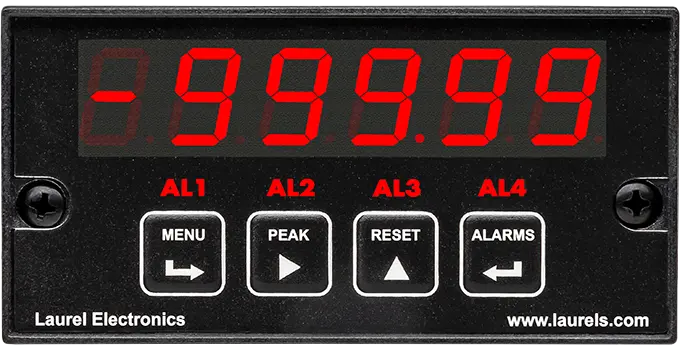
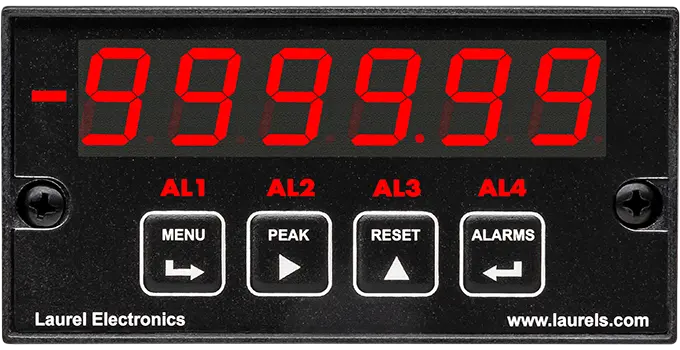
Programmable Panel Meter, Electronic Counters, and Industrial Timers
How Does a 1/8 DIN Panel Meter Work?
- Input Signal Measurement:
The primary function of a 1/8 DIN Panel Meter is to measure the DC voltage input signal. This is done by connecting the meter's input terminals to the circuit from which the voltage is to be measured. The meter is calibrated to accurately convert the input voltage into a readable digital output.
- Analog-to-Digital Conversion:
Once the DC voltage is applied, the panel meter uses an internal analog-to-digital converter (ADC) to transform the analog voltage signal into a digital value. This conversion is essential as it allows the voltage level to be displayed on the digital screen.
- Display of Measurement:
The converted digital value is then processed and displayed on the panel meter's screen. The display typically consists of an LED or LCD screen, which shows the voltage reading in real-time. This allows operators to monitor the voltage easily and make informed decisions based on the reading.
- Additional Features:
Many 1/8 DIN Panel Meter models include additional features like alarms, data logging, or communication capabilities (e.g., RS-232, RS-485) for integration into more extensive monitoring and control systems. These features enhance the functionality of the panel meter, making it versatile in various applications.
Where Would a 1/8 DIN Panel Meter for DC Voltage Input Signals Be Used?
A 1/8 DIN Panel Meter for DC voltage input signals is widely used in numerous industrial and commercial applications due to its reliability and ease of use. Some of the common areas where this meter is employed include:
- Industrial Automation and Control Systems
In industrial automation, maintaining precise control over electrical systems is critical to ensuring the safe and efficient operation of machinery. A Panel Meter is used to monitor DC voltage levels in motors, actuators, and sensors. By providing accurate voltage readings, this meter helps prevent over-voltage or under-voltage conditions that could damage equipment or disrupt operations. Additionally, the meter is integrated into control panels and systems to facilitate remote monitoring and automation, streamlining the operation of complex machinery.
- Power Generation and Distribution
A Panel Meter is widely used in power generation and distribution facilities to monitor the voltage of various components, including generators, transformers, and power lines. In these settings, maintaining a stable voltage is essential to ensuring the reliability of power delivery and the protection of equipment. The meter allows operators to continuously monitor voltage levels, making real-time adjustments to prevent fluctuations that could lead to power outages or equipment failures.
- Renewable Energy Systems
The adoption of renewable energy sources, such as solar and wind power, has increased the demand for reliable voltage monitoring. A Panel Meter is employed in these systems to monitor the DC voltage generated by solar panels or wind turbines. Accurate monitoring is crucial for optimizing the performance of these systems and ensuring that the energy produced is efficiently converted and stored. In solar power installations, for example, the meter helps track the output of photovoltaic (PV) panels, ensuring they operate at peak efficiency and alerting operators to any issues that may arise.
- Automotive and Transportation Industry
In the automotive and transportation sectors, a Panel Meter is essential for monitoring the voltage levels of batteries and other DC-powered components. This meter is used in electric vehicles (EVs), trains, and other transportation systems to ensure that batteries are charged correctly and that the electrical systems are functioning properly. Monitoring voltage levels in real time helps prevent battery overcharging, which can lead to reduced battery life or even dangerous situations. Additionally, the meter is used in the development and testing of new automotive technologies, providing engineers with precise voltage data to fine-tune performance.
- Laboratories and Research Facilities
In laboratories and research environments, precise measurement is paramount. A Panel Meter for DC voltage input signals is used in experimental setups, test benches, and calibration processes to provide accurate voltage readings. Researchers rely on this meter to gather reliable data, which is critical for validating hypotheses, testing new materials, or developing new technologies. The accuracy and reliability of the meter make it an indispensable tool in scientific research, where even minor deviations in voltage can significantly impact results.
- HVAC and Building Automation
Heating, ventilation, and air conditioning (HVAC) systems and other building automation systems rely on consistent electrical performance to operate effectively. A Panel Meter is used in these systems to monitor the DC voltage supplied to various components, such as fans, pumps, and control systems. By ensuring that the correct voltage is maintained, the meter helps optimize the efficiency of HVAC systems, reducing energy consumption and extending the lifespan of equipment. In building automation, the meter can be integrated into larger systems to provide centralized monitoring and control of electrical systems throughout a facility.
- Marine and Aerospace Applications
In the marine and aerospace industries, where reliable electrical systems are critical for safety, a Panel Meter plays a vital role. On ships, aircraft, and spacecraft, this meter is used to monitor the voltage of onboard DC power systems, ensuring that essential systems remain operational. Whether powering navigation systems, communication equipment, or life support systems, maintaining stable voltage is essential in these environments. The meter provides real-time feedback, allowing operators to quickly identify and address any electrical issues before they escalate.
Conclusion
A Panel Meter for DC voltage input signals is a versatile instrument that finds applications across a wide range of industries. Its ability to provide accurate, real-time voltage monitoring makes it indispensable in settings where electrical performance is critical to safety, efficiency, and reliability. From industrial automation to renewable energy, transportation, and beyond, this meter plays a key role in ensuring that electrical systems operate within safe and optimal parameters. As technology continues to evolve, the demand for precise and reliable voltage monitoring will only increase, further solidifying the importance of the Panel Meter in modern industry.
Industrial Analog Panel Meter for DC Current Input Signal
What is a 1/8 DIN Panel Meter for DC Current Input Signal?
A 1/8 DIN Panel Meter is a specialized electronic device used for monitoring and displaying various electrical parameters, particularly direct current (DC) signals. The term "1/8 DIN" refers to the standardized size of the panel meter. DIN stands for "Deutsches Institut für Normung," a German standardization body, and in this context, it relates to the physical dimensions of the device. Specifically, a 1/8 DIN meter measures approximately 96 x 48 mm (3.78 x 1.89 inches), making it a compact and widely adaptable option for panel installations.
How Does a 1/8 DIN Panel Meter for DC Current Input Signal Work?
A 1/8 DIN Panel Meter designed for DC current input operates by directly interfacing with a DC electrical circuit to measure and display the current flowing through that circuit. Here's how it typically works:
- Current Sensing: The device is connected to the circuit where the DC current needs to be measured. This can be achieved through direct connections or via current transducers or shunts that convert high currents into a lower, measurable range suitable for the panel meter.
- Signal Conditioning: The input current signal often needs conditioning to make it suitable for measurement. This may involve scaling down large currents using shunts or amplifying small currents. The meter might also filter out noise and stabilize the signal to ensure accurate readings.
- Analog-to-Digital Conversion: Once the current is properly conditioned, the meter converts the analog signal (representing the DC current) into a digital value using an Analog-to-Digital Converter (ADC). This digital value is then processed by the meter's internal microcontroller.
- Display: The processed digital value is then shown on the panel meter's display, which is usually an LED or LCD screen. The displayed value is typically in amperes (A), milliamperes (mA), or other relevant units depending on the application.
- Additional Features: Many modern 1/8 DIN Panel Meter models come with additional functionalities such as alarms, relays, data logging, and communication interfaces like RS-485 for integration with supervisory control and data acquisition (SCADA) systems.
Where is a 1/8 DIN Panel Meter for DC Current Input Signal Used?
In various industrial, commercial, and scientific settings, monitoring electrical signals accurately is crucial for maintaining efficient and safe operations. One of the tools commonly employed for this purpose is the 1/8 DIN Panel Meter designed for DC current input signals. Despite its compact size, this device provides precise and reliable measurements, making it invaluable in a range of applications. Here's a closer look at where and why this meter is used.
- Industrial Automation
In industrial automation systems, a 1/8 DIN Panel Meter is employed to monitor and control current flows in machinery and equipment. This meter helps ensure that equipment operates within specified current ranges, preventing overcurrent conditions that could lead to equipment damage or failure. It is particularly useful in control panels and instrumentation setups where space is at a premium but accurate readings are essential.
- Power Distribution and Management
In power distribution networks, a panel meter is used to measure the current in electrical circuits. It is essential for monitoring the performance of transformers, circuit breakers, and other power distribution equipment. By providing real-time current readings, it helps operators detect and address issues such as overloading or irregular current fluctuations, thus ensuring the reliability and efficiency of the power distribution system.
- Laboratories and Research Facilities
In scientific research and laboratory environments, precise measurement of DC current is often required for experiments and equipment calibration. The compact size of a 1/8 DIN Panel Meter makes it ideal for use in laboratory setups where space is limited but accuracy is critical. Researchers use this meter to monitor current in experimental setups, ensuring that their results are accurate and reliable.
- Energy Management Systems
Energy management systems benefit from the integration of a 1/8 DIN Panel Meter, as it provides detailed insights into current consumption patterns. This meter is used to monitor energy usage in real time, allowing for better management of energy resources and identification of areas where energy efficiency can be improved. This can lead to significant cost savings and a reduction in energy consumption.
- HVAC Systems
Heating, ventilation, and air conditioning (HVAC) systems rely on accurate current measurements to ensure optimal performance. A 1/8 DIN Panel Meter is used to monitor the current in various components of HVAC systems, including motors and compressors. By tracking current levels, this meter helps in diagnosing issues and maintaining the efficiency and reliability of HVAC systems.
- Electric Vehicle Charging Stations
With the growth of electric vehicles, monitoring the current during charging is becoming increasingly important. A 1/8 DIN Panel Meter is used in electric vehicle (EV) charging stations to measure and display the current flowing into the vehicle. This helps ensure that the charging process is proceeding correctly and can assist in troubleshooting any issues that may arise.
- Marine and Aerospace Applications
In marine and aerospace applications, where reliability and precision are paramount, a 1/8 DIN Panel Meter provides crucial measurements of DC current. This meter is used in various onboard systems to monitor electrical currents and ensure the safe and efficient operation of equipment.
Conclusion
A 1/8 DIN Panel Meter for DC current input signals is a versatile tool used across a wide range of applications. Its compact size does not compromise its functionality, making it ideal for environments where space is limited but accurate measurement is essential. Whether in industrial automation, power distribution, laboratories, energy management, HVAC systems, EV charging stations, or high-stakes marine and aerospace applications, this meter provides reliable performance that supports safe and efficient operations.
Industrial Analog Panel Meter for Load Cell, Strain Gauge & Microvolt
What is a 1/8 DIN Panel Meter for Load Cell, Strain Gauge, and Microvolt Measurements?
In the world of precision measurement and data acquisition, a 1/8 DIN Panel Meter is a critical instrument used for displaying and monitoring various types of electrical signals. Specifically designed to interface with load cells, strain gauges, and measurements in the microvolt range, this device is indispensable in industrial, laboratory, and scientific applications.
Understanding the 1/8 DIN Panel Meter
The term "1/8 DIN" refers to the size of the panel meter, which is standardized to fit in a panel cutout that is 1/8th the size of a standard DIN (Deutsches Institut für Normung) enclosure. This compact size makes it an excellent choice for applications where space is limited but precise measurements are essential.
A Panel Meter of this size is designed for ease of use and accuracy. It converts analog signals from various sensors into a readable digital format, providing clear and precise measurements. Its compact design ensures it can be integrated into control panels or instrumentation setups without occupying too much space.
How Does a 1/8 DIN Panel Meter Work?
A 1/8 DIN Panel Meter operates by receiving an analog signal from a sensor or transducer, such as a load cell, strain gauge, or a microvolt signal source. Here's a step-by-step overview of how this meter functions:
- Signal Acquisition:
The panel meter receives an analog input signal from a connected sensor. Load cells, strain gauges, and other measuring devices output signals in varying ranges and formats.
- Signal Conditioning:
The analog signal is conditioned to ensure it is within the operating range of the meter. This may involve amplification, filtering, or conversion to ensure accuracy.
- Analog-to-Digital Conversion:
The conditioned analog signal is converted into a digital format using an Analog-to-Digital Converter (ADC). This step is crucial for achieving the high precision required in measurements.
- Display and Output:
The digital signal is processed by the meter's internal circuitry and displayed on the meter's digital screen. Many meters also offer additional output options, such as analog output, relay outputs, or communication interfaces for integration with other systems.
- Calibration and Configuration:
The meter can be calibrated to ensure accuracy and configured to suit specific measurement needs, including setting measurement ranges, units, and scaling factors.
Applications of a 1/8 DIN Panel Meter
- Load Cell Measurements:
In industrial and laboratory environments, load cells are used to measure force, weight, or pressure. A 1/8 DIN Panel Meter provides a compact yet highly accurate means to display and monitor these measurements, ensuring precise control and feedback.
- Strain Gauge Monitoring:
Strain gauges measure the amount of deformation or strain experienced by an object. A Panel Meter is used to monitor these measurements, which is critical in applications such as structural health monitoring, material testing, and mechanical systems analysis.
- Microvolt Measurements:
For applications requiring ultra-sensitive measurements, such as scientific research and precision instrumentation, a 1/8 DIN Panel Meter can measure signals in the microvolt range. This capability is essential for detecting and quantifying very small electrical signals with high precision.
- General Industrial Use:
Beyond specific sensors, this meter is widely used in various industrial settings for monitoring electrical signals, process control, and system diagnostics. Its compact size allows it to be integrated into tight spaces without compromising functionality.
Where Is a 1/8 DIN Panel Meter for Load Cells, Strain Gauges, and Microvolts Used?
A Panel Meter is crucial in various industries for monitoring and displaying measurements from different sensors. Among these, a 1/8 DIN Panel Meter is widely used due to its compact size and versatility. When paired with load cells, strain gauges, or microvolt sensors, this meter plays an essential role in many applications. This section explores the primary areas where a 1/8 DIN Panel Meter is used in conjunction with these sensors.
- Industrial Weighing Systems
One of the most common applications of a 1/8 DIN Panel Meter is in industrial weighing systems. Load cells, which convert a force into an electrical signal, are widely used in scales and weighing systems. The meter reads the low-level signal from the load cell, amplifies it, and displays the weight in real-time. This meter is found in a variety of industries, including manufacturing, agriculture, and logistics, where precise weight measurements are crucial for quality control, inventory management, and compliance with regulations.
- Material Testing and Research Laboratories
In research laboratories and material testing facilities, strain gauges are often used to measure the deformation or strain of a material under load. These sensors output a very low voltage signal, often in the microvolt range, which is where a 1/8 DIN Panel Meter excels. The meter accurately captures and displays these minute changes, allowing researchers to analyze material properties such as tensile strength, elasticity, and fatigue. This application is critical in developing new materials and ensuring that they meet stringent performance standards.
- Automation and Process Control
In automation and process control environments, precise measurement and feedback are essential for maintaining operational efficiency. Load cells and strain gauges are often integrated into automated systems to monitor forces, weights, and tensions in real-time. A 1/8 DIN Panel Meter is used in these systems to provide operators with clear, immediate feedback, enabling quick adjustments and ensuring that processes remain within desired parameters. This meter is especially valuable in industries like automotive manufacturing, where precision is key to product quality and safety.
- Aerospace and Defense
The aerospace and defense sectors demand high precision and reliability, particularly in testing and monitoring applications. Load cells and strain gauges are frequently used in these industries to test the structural integrity of components under various conditions, including extreme forces and temperatures. A 1/8 DIN Panel Meter is used to measure and display the outputs of these sensors, ensuring that data is accurate and readily available. This information is vital for validating the performance and safety of aircraft, spacecraft, and defense systems.
- Energy and Power Generation
In the energy sector, particularly in power generation and distribution, strain gauges and load cells are used to monitor the mechanical forces in turbines, generators, and other equipment. The signals generated by these sensors are typically in the microvolt range, making a 1/8 DIN Panel Meter ideal for capturing and displaying this data. Accurate measurement of these forces is crucial for maintaining equipment efficiency, preventing failures, and ensuring the continuous, reliable supply of energy.
- Medical Devices and Health Monitoring
Precision is also vital in medical devices and health monitoring systems, where load cells and strain gauges are used in applications such as patient monitoring equipment, prosthetics, and surgical instruments. A 1/8 DIN Panel Meter is employed to display the low-voltage signals from these sensors, providing healthcare professionals with accurate and immediate feedback. This application is critical for patient safety and the effective functioning of medical equipment.
Conclusion
A 1/8 DIN Panel Meter is a versatile and essential tool in various industries where load cells, strain gauges, and microvolt sensors are used. From industrial weighing systems and automation to aerospace and medical applications, this compact meter provides precise and reliable measurement, ensuring that critical processes and systems operate efficiently and safely.
Industrial Analog Panel Meter for Scale and Weighing Applications
What is a 1/8 DIN Panel Meter for Scale and Weighing Applications?
A 1/8 DIN Panel Meter is a measurement device that fits into a standard 1/8 DIN cutout, which typically measures 1.75 inches by 3.62 inches (44.5 mm by 92 mm). The term "DIN" refers to the Deutsches Institut für Normung, a German standards organization, and is used to define the standard sizes for various types of instrumentation, including Panel Meter. The 1/8 DIN size is one of the most common standards used for a panel meter due to its compact size, allowing it to fit into limited spaces while providing essential measurement capabilities.
Role in Scale and Weighing Applications
In scale and weighing applications, accuracy and reliability are paramount. The 1/8 DIN Panel Meter is designed to interface with load cells and other sensors to provide real-time weight measurements. This meter is often used in various industries, including manufacturing, food processing, logistics, and pharmaceuticals, where precise weight measurements are critical.
Key Functions:
Measurement Display: The primary function of a 1/8 DIN Panel Meter in weighing applications is to display the weight measured by the connected load cell. The display is typically large, bright, and easy to read, even in challenging environments.
Signal Conditioning: The panel meter often includes built-in signal conditioning features, such as amplification and filtering, to ensure accurate and stable weight readings. This is particularly important in environments where electrical noise or other interference could affect the measurement.
Tare and Zero Functions: This meter usually includes tare and zero functions, which are essential in weighing applications. The tare function allows the user to subtract the weight of a container or packaging, while the zero function ensures that the meter starts from a true zero, providing accurate weight measurements.
Data Output: Many 1/8 DIN Panel Meter models come equipped with data output capabilities, such as serial communication (RS-232/RS-485) or analog outputs. This allows the meter to interface with other systems, such as data loggers, PLCs, or remote displays, enabling further processing or recording of the weight data.
Alarms and Setpoints: In many weighing applications, there is a need to monitor weight against predefined limits. A 1/8 DIN Panel Meter often includes programmable alarms and setpoints, which can trigger alerts or control processes when specific weight thresholds are reached.
Where Is a 1/8 DIN Panel Meter Used in Scale and Weighing Applications?
A Panel Meter is essential in various industrial applications, providing precise and real-time data display. Among these, a 1/8 DIN Panel Meter is a popular choice, particularly in scale and weighing applications. A 1/8 DIN panel meter is a compact device, typically measuring 96 x 48 mm, making it ideal for various settings where space and functionality are key considerations.
1. Industrial Weighing Systems
In industrial environments, accurate weight measurement is crucial. A 1/8 DIN Panel Meter is commonly integrated into weighing systems used in manufacturing, material handling, and processing industries. This panel meter displays weight readings from load cells or other weighing sensors, ensuring that operators have precise control over the production process.
For example, in a manufacturing plant where raw materials are mixed in specific ratios, the 1/8 DIN Panel Meter ensures that each component is weighed accurately, maintaining product quality and consistency.
2. Laboratory Weighing Equipment
Precision is paramount in laboratory settings, where even the smallest measurement error can compromise the results of experiments and tests. A 1/8 DIN Panel Meter is often found in laboratory weighing equipment, providing researchers with accurate and reliable weight data. This meter can be used in conjunction with analytical balances, moisture analyzers, and other sensitive weighing instruments.
In pharmaceutical labs, where precise measurements of chemical compounds are required, the reliability of the 1/8 DIN Panel Meter is critical for ensuring the safety and efficacy of the products being developed.
3. Food and Beverage Industry
In the food and beverage industry, consistency and compliance with regulatory standards are vital. A 1/8 DIN Panel Meter is employed in weighing systems used for portion control, packaging, and quality assurance. This meter helps ensure that products are consistently packaged with the correct weight, which is essential for customer satisfaction and regulatory compliance.
For instance, in a food processing plant, a 1/8 DIN Panel Meter might be used to monitor the weight of ingredients being mixed to produce a final product, ensuring that the recipe is followed accurately every time.
4. Retail Weighing Scales
Retail environments, such as grocery stores and supermarkets, require accurate and user-friendly weighing scales. A 1/8 DIN Panel Meter is often used in these scales to display the weight of products being sold by weight, such as produce, meat, and bulk items. The clear and easy-to-read display provided by this meter helps ensure that customers are charged accurately for their purchases.
This panel meter is typically found in point-of-sale systems, integrated into the weighing scales that provide both the customer and the cashier with real-time weight information.
5. Transportation and Logistics
In the transportation and logistics sector, weight measurement is critical for safety, cost control, and regulatory compliance. A 1/8 DIN Panel Meter is used in vehicle weighing systems, such as truck scales, to ensure that vehicles are loaded within safe and legal weight limits. This meter provides accurate weight readings that are essential for preventing overloading and ensuring that transport operations are both safe and efficient.
For example, in a freight terminal, a 1/8 DIN Panel Meter might be used to monitor the weight of cargo being loaded onto trucks, ensuring that the total weight does not exceed legal limits and that the load is balanced correctly.
6. Agriculture and Livestock Weighing
In agriculture, accurate weight measurement is essential for managing livestock, dosing feed, and monitoring crop yields. A 1/8 DIN Panel Meter is often used in livestock scales, grain elevators, and other agricultural weighing systems. This meter provides farmers with the accurate data they need to make informed decisions about feeding, breeding, and harvesting.
For instance, in a livestock farm, a 1/8 DIN Panel Meter could be used to monitor the weight of animals, helping farmers track growth rates and adjust feeding regimens accordingly.
Conclusion
A 1/8 DIN Panel Meter is a versatile and reliable tool used in a wide range of scale and weighing applications across various industries. Its compact size, precise measurement capabilities, and ease of integration make it an ideal choice for environments where accurate weight data is essential. From industrial manufacturing to retail settings, this panel meter plays a critical role in ensuring accuracy, safety, and efficiency in weight measurement processes.
Industrial Analog Panel Meter for Serial Input 6-Digit Panel Meter & Remote Display
What is a 1/8 DIN Serial Input 6-Digit Panel Meter & Remote Display?
A 1/8 DIN Serial Input 6-Digit Panel Meter is a digital device used for displaying numerical data. The "6-Digit" part indicates that it can display values up to six digits, offering precision in measurement. The "Serial Input" aspect means that this panel meter can receive data via serial communication protocols such as RS-232, RS-485, or Modbus. This makes it highly versatile, allowing it to be connected to various sensors, controllers, or other devices that output data serially.
Key Features
Compact Size: The 1/8 DIN form factor makes it ideal for installations where space is limited.
High Precision: With the capability to display up to six digits, this panel meter can show detailed and accurate readings.
Serial Communication: The ability to receive data through serial inputs allows integration with a wide range of devices, including PLCs (Programmable Logic Controllers), computers, and other automation equipment.
Customizable Display: Many of these meters offer configurable display options, such as adjustable brightness, color, and digit height, making it easier to read in various lighting conditions.
Remote Display: Some models offer a remote display feature, allowing the numerical data to be shown at a different location from the main device. This is particularly useful in large or complex installations.
Applications of the 1/8 DIN Serial Input 6-Digit Panel Meter & Remote Display
Industrial Process Monitoring
- Temperature Control: In industries such as food processing, chemicals, and pharmaceuticals, precise temperature monitoring is crucial. The panel meter can display real-time temperature data received from thermocouples or RTDs (Resistance Temperature Detectors).
- Pressure Measurement: In applications where pressure needs to be monitored, such as in HVAC systems or hydraulic machines, the panel meter can display the pressure data with high accuracy, ensuring safe and efficient operation.
Manufacturing Automation
- Production Line Monitoring: In automated production lines, the panel meter can be used to monitor various parameters such as speed, count, and position. Its serial communication allows it to interface with other control systems to ensure that the production process is running smoothly.
- Quality Control: The panel meter can be used in quality control applications to measure dimensions, weight, or other critical parameters. The high precision of the 6-digit display ensures that even the smallest deviations are detected.
Energy Management
- Power Monitoring: In energy management systems, the panel meter can be used to monitor voltage, current, or power consumption. This data is critical for optimizing energy use and reducing costs in commercial and industrial buildings.
- Renewable Energy Systems: In renewable energy applications, such as solar or wind power, the panel meter can be used to monitor the performance of inverters, batteries, or other components, ensuring that the system is operating at peak efficiency.
Remote Monitoring and Control
- Hazardous Environments: In hazardous environments, such as oil refineries or chemical plants, it may be unsafe for personnel to be physically present to monitor equipment. The remote display capability allows for safe monitoring from a control room or other secure location.
- Large Facilities: In large industrial facilities, where equipment may be spread out over a wide area, the remote monitoring and control capabilities become essential for efficient operations and maintenance.
Less Information.