New Front Panel USB-C Port Coming Soon!
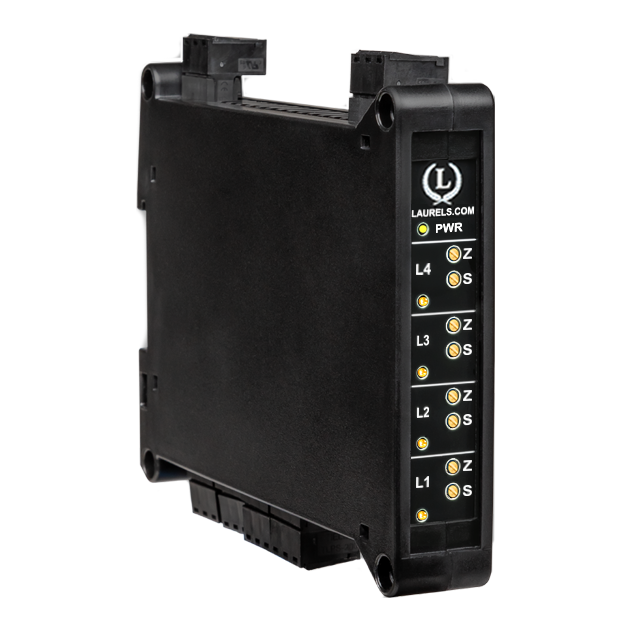
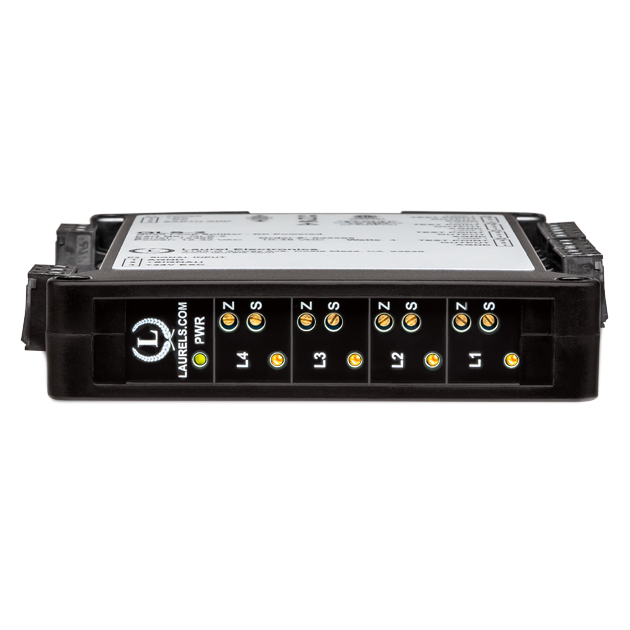
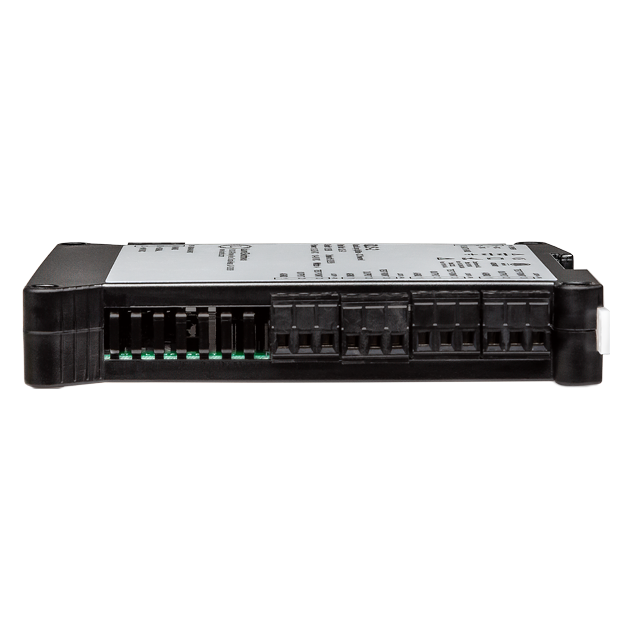
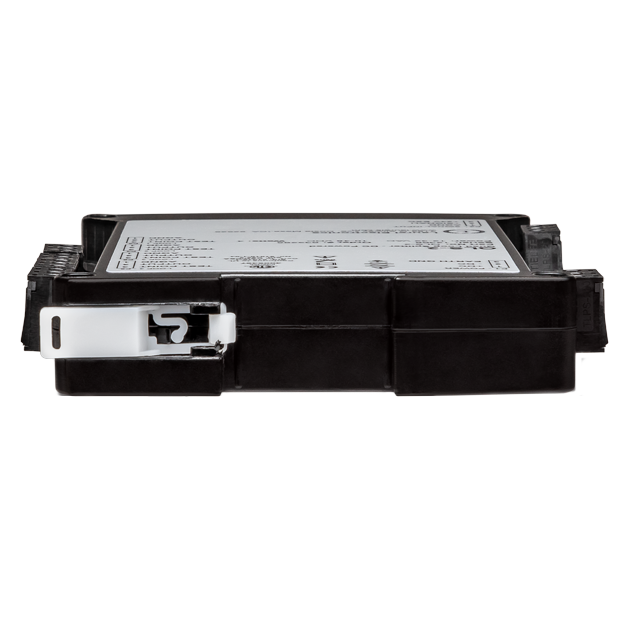
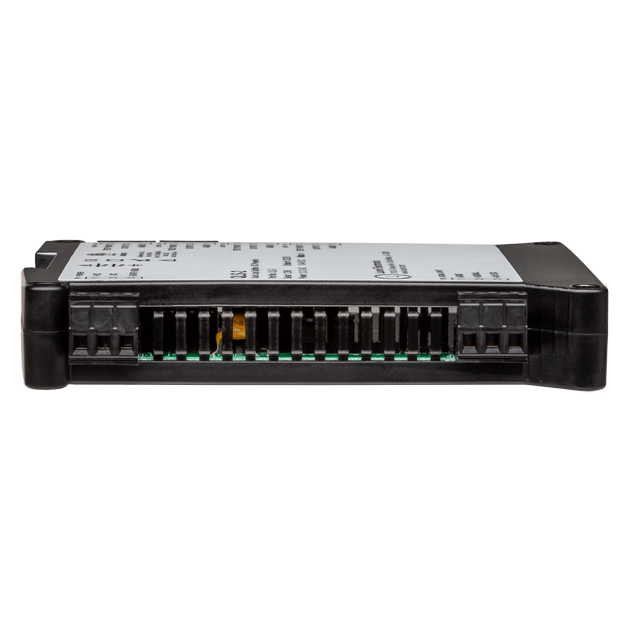
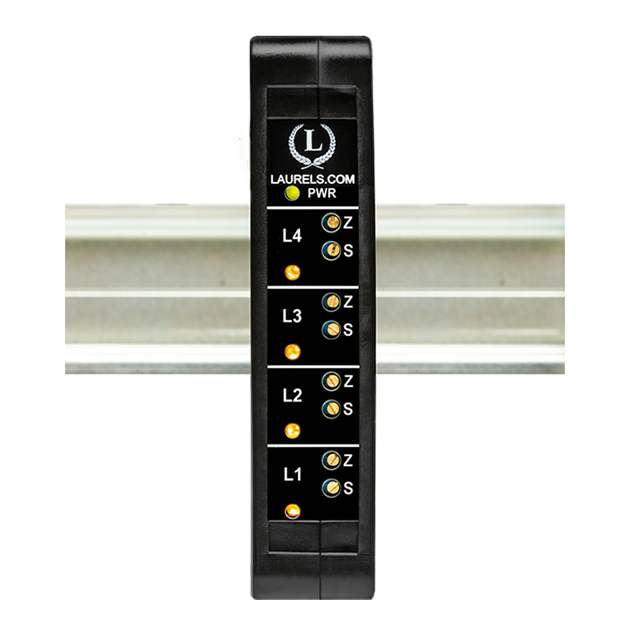
The DIN Rail Transmitter for Quad Current Loop Splitter accepts 4-20 mA, 1-5V, 0-5V, or 0-10V inputs and drives four independent 4-20 mA outputs with ±10V common mode isolation. It supports shared or ±10V differing grounds, with each loop featuring ±10% zero/span adjustments, a 200 mV = 20 mA test point, and an LED indicator. Powered by 10-48 Vdc/12-32 Vac, it powers 2- or 3-wire transmitters at 24 Vdc up to 30 mA. Housed in a 22.5 mm case for 35 mm DIN rail, it weighs 159 g and operates from -40°C to 70°C, with CE, RoHS3, and ETL certifications. The Quad Current Loop Splitter solves series loop issues by providing four adjustable outputs from one input, ensuring unaffected loops if one fails. It includes LED diagnostics and test points, enhancing reliability and ease of use.
The QLS-2 Quad Current Loop Splitter / Retransmitter is factory-calibrated. For optimal accuracy, factory recalibration is recommended annually. All Laurel Electronics instruments undergo factory calibration using the industry-leading Fluke calibrators, which are recalibrated yearly and certified traceable to national standards, ensuring the highest level of precision and reliability.

| Common Practice: | A single 4-20 mA loop from a sensor is connector to a panel meter, a control valve, a recorder and a PLC in series. If the loop opens, all devices in the loop fail. |
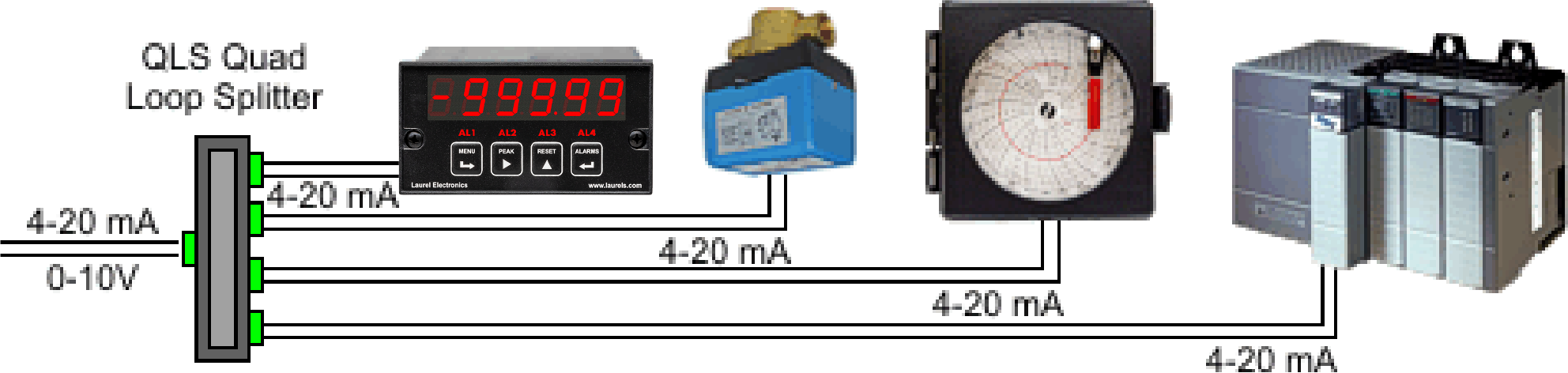
| Improved Practice: | Four independent 4-20 mA loops with ±10V common mode isolation. If any of the output loops opens, only a single device is affected. The output loops can share a common ground. |
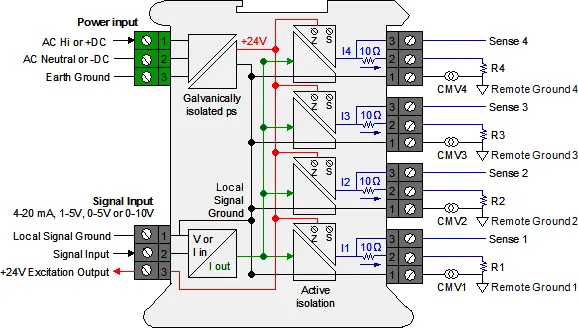
Galvanic & Active Isolation: A single input current loop is split into four independent output loops I1, I2, I3, and I4 by four current generators. The input and output signals are galvanically isolated from power and earth grounds by up to 264 Vac. Active circuitry allows a common mode voltage up to ±10V between Local Signal Ground (on pins 1) and the Remote Grounds. Each common mode voltages, labeled CMV1 to CMV4 in the diagram, reflects the actual voltage difference between Local Signal Ground and the Remote Ground. Such differences can be caused by current flows in the factory.
Floating loads: Any output load R that is floating (not connected to Earth Ground or a Local Ground) can be connected between current output (Pin 1) and current return (Pin 2). Current return is internally tied to Signal Ground, which can be floating or be connected to Earth Ground.
Grounded loads: Any output load R can be connected to a Local Ground instead of current return. The Remote Grounds can each be different, but can only differ from Signal Ground by a safe common mode voltage CMV. Signal Ground should be tied to Earth Ground to minimize noise pickup.
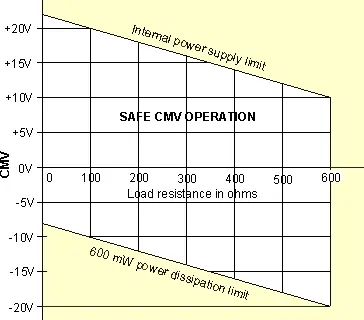
Input-output isolation: If a load R is grounded to a Local Ground, the available common mode voltage CMV is limited on the positive side by the unit's internal power supply and on the negative side by the 600 mW power dissipation limit of an output transistor. The above diagram shows allowable CMV as a function of output load resistance R. For example, with a 250Ω load, CMV can range from -13V to +17V. With a 500Ω load, CMV can range from -18V to +12V. The unit will not work correctly if CMV limits are exceeded or the load resistance is greater than 600Ω.
| Signal Input & Excitation | ||||
|---|---|---|---|---|
| Signal Type | 4-20 mA, 1-5V, 0-5V, 0-10V (jumper selectable) | |||
| Input Resistance | 50Ω for 4-20 mA, 412kΩ for 1-5V, 464kΩ for 0-5V, 935kΩ for 0-10V | |||
| Transducer Excitation | 24 Vdc output, 30 mA max | |||
| Signal Outputs | ||||
| Number of Outputs | 4 | |||
| Signal Type | 4-20 mA | |||
| Signal Ground | Same signal ground for input and outputs | |||
| Common Mode Voltage | Remote signal grounds can be up to ± 10V from local signal ground | |||
| Zero & Span Adjustments | ± 10% for each output with 25-turn potentiometers | |||
| Isolation Power to Signals | 264 Vac | |||
| Voltage Compliance | 12V (600Ω per loop at 20 mA) | |||
| Load Regulation | ± 0.005% of span from 0Ω to 600Ω | |||
| Accuracy | ± 0.02% max span error at 23°C | |||
| Zero Tempco | ± 0.1 µA/°C typical, ± 0.2 µA/°C max | |||
| Span Tempco | ± 10 ppm/°C (0.16 µA/°C) typical, ± 20 ppm/°C (0.32 µA/°C) max | |||
| AC Rejection | 90 dB from DC to 60 Hz | |||
| Response Speed | 2 ms risetime, 7 ms settling time to 0.1% of final value | |||
| Loop Current Sense | 10Ω ± 0.5% series resistor. Generates 200 mV at 20 mA | |||
| Loop Continuity Indication | Yellow LED lamp per loop, brightness proportional to current. | |||
| Power Input | ||||
| Model QLS-1 | 85-264 Vac or 90-300 Vdc | |||
| Model QLS-2 | 10-48 Vdc or 12-32 Vac | |||
| Power Frequency | DC or 47-63 Hz | |||
| Power Isolation | 250V AC working, 1.0 kV AC for 60 sec, 1.7 kV DC for 2 sec | |||
| Power Consumption | 3.5 W max, all loops delivering 20 mA | |||
| Power On Indication | Green LED lamp | |||
| Environmental | ||||
| Operating Temperature | -40°C to 70°C (-40°F to 158°F) | |||
| Storage Temperature | -40°C to 85°C (-40°F to 185°F) | |||
| Relative Humidity | 95% at 40°C, non-condensing | |||
| Cooling Required | Mount transmitters with ventilation holes at top and bottom. Leave 6 mm (1/4") between transmitters, or force air with a fan. | |||
| Mechanical | ||||
| Enclosure | Rugged black polycarbonate housing material | |||
| Mounting | 35 mm rail per DIN EN 50022 | |||
| Dimensions | 129 x 104 x 22.5 mm case | |||
| Connectors | Detachable screw clamp connectors meet VDE / IEC / UL / CSA standards. RJ45 jack for Ethernet | |||
| Tightening Torque | Screw terminal connectors: 5 lb-in (0.56 Nm) | |||
| Weight | Complete transmitter: 183 g (6.5 oz) | |||
| Replacement Case Screws | ||||
| Size | 6 | |||
| Thread Pitch | 6-19 | |||
| Length | 1/2" | |||
| Head Style | Pan Head | |||
| Drive Style | Phillips | |||
| Head Diameter | 0.256-0.270 | |||
| Head Height | 0.087-0.097 | |||
| Full/Partial Thread | Full | |||
| Drive Size | 2 | |||
| Material | Steel | |||
| Finished | Black Oxide | |||
| General | ||||
| Warranty | 3 years parts & labor | |||
| Recalibration: All ranges are calibrated at the factory. Recalibration is recommended every 12 months. | ||||
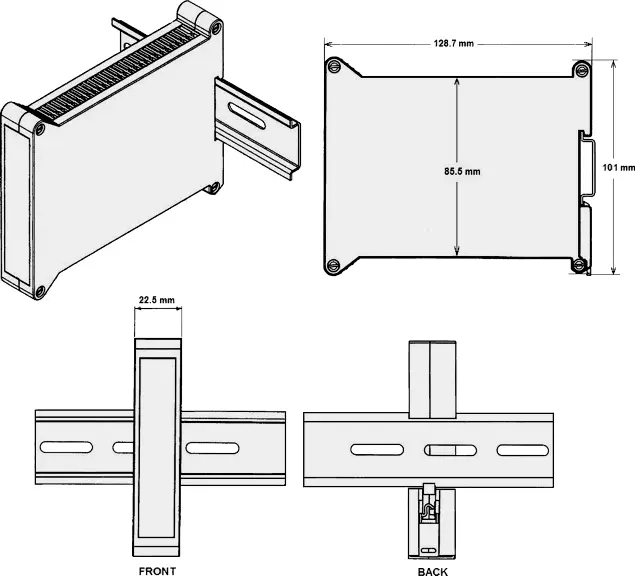
Dimensioned CAD assembly drawings in EPRT, STEP, x_t, .dwg, pdf file formats: Laureate-transmitter-case.zip (zipping prevents browser from opening CAD files as text files).
The Laureate QLS-2 is a DIN rail-mounted current loop splitter designed specifically for low-voltage DC and AC powered systems. It accepts a single 4-20 mA, 1-5V, 0-5V, or 0-10V input signal and produces four fully independent, isolated 4-20 mA output loops — powered by 10-48 Vdc or 12-32 Vac.
The QLS-2 is the right choice when panel power is 24 Vdc, a standard in building automation, process skids, battery-backed systems, solar installations, and modern low-voltage control panels. Where the QLS-1 is built for high-voltage AC environments, the QLS-2 is purpose-built for the growing number of facilities running on 24 Vdc distributed power.
Like all QLS models, it solves the fundamental problem of series current loop wiring — where a single fault takes down every device sharing that loop — by driving each output from an independent current generator. Opening one output loop has zero effect on the other three.
Both models are identical in signal performance. The decision comes down to available panel power:
The QLS-2's wide 10-48 Vdc input range is particularly useful in battery-backed or renewable energy applications where bus voltage may vary. A 24 Vdc nominal system can drop to 20V under load or rise above 28V on charge — the QLS-2 handles this range without issue.
The QLS-2 accepts 4-20 mA, 1-5V, 0-5V, or 0-10V input via onboard jumper selection, making it compatible with the full range of standard industrial transmitters and sensors without requiring additional signal conditioning.
Four independent current generator circuits each produce a 4-20 mA output proportional to the input. Each loop is galvanically isolated from the power supply. Output ground references can differ from local signal ground by up to ±10V through active common mode compensation — a critical feature in facilities where ground potential differences exist between field devices and control panels.
Each output loop includes a 25-turn potentiometer for ±10% zero and span adjustment, a 10Ω test point resistor (200 mV = 20 mA, readable with a standard multimeter without breaking the loop), and a yellow LED that glows proportionally to loop current. A green LED confirms power is present.
The QLS-2 includes a 24 Vdc excitation output rated at up to 30 mA to power a 2- or 3-wire upstream transmitter directly from the splitter. This eliminates the need for a separate loop power supply and simplifies panel wiring — particularly valuable when the QLS-2 itself is powered from the same 24 Vdc bus.
Building automation systems standardize on 24 Vdc panel power, making the QLS-2 the natural fit. Pressure differential transmitters, CO₂ sensors, humidity sensors, and airflow transmitters frequently need to feed both the BMS controller and local displays or actuators simultaneously. The QLS-2 distributes one sensor signal to all destinations independently, with per-loop calibration to match each device's input range.
Remote solar and wind installations run on DC bus voltages that vary with battery state and load. The QLS-2's 10-48 Vdc input range accommodates 12V, 24V, and 48V battery systems. Current signals from inverters, charge controllers, or energy meters can be distributed to local displays, dataloggers, and remote SCADA inputs simultaneously without series loop dependency.
Packaged process skids — pumping stations, chemical dosing systems, cooling skids — are commonly engineered with 24 Vdc control power to simplify wiring and meet area classification requirements. The QLS-2 fits directly into these panels, distributing transmitter signals to the skid PLC, the plant DCS, a local panel meter, and a data historian without series wiring.
Critical monitoring systems that must continue operating through power outages are often fed from 24 Vdc UPS outputs. The QLS-2 operates through the full UPS output range, ensuring that all four output loops remain active even when mains power is lost.
Pipeline monitoring stations, wellhead instrumentation, water quality monitoring systems, and environmental sensing arrays in remote locations often rely on solar or battery power. The QLS-2 provides multi-point signal distribution at these sites without requiring AC power infrastructure.
Machine builders standardizing on 24 Vdc control architecture can integrate the QLS-2 directly into their panel designs. The compact 22.5 mm DIN rail format, screw-clamp connectors, and wide operating temperature range (-40°C to 70°C) make it well suited for machine cabinets that may be installed in unheated environments.
The Laureate QLS-2 brings the full signal distribution and diagnostic capability of the QLS family to low-voltage DC and AC powered installations. Whether in a 24 Vdc building automation panel, a solar-powered remote monitoring station, or a skid-mounted process system, the QLS-2 provides four independent, calibrated, fault-tolerant 4-20 mA outputs from a single input — in a compact DIN rail package that runs directly from the panel's existing DC power bus.
As long as the bus stays within the 10-48 Vdc input range and the QLS-2's own 3.5W max consumption is accounted for in the panel's power budget, other equipment sharing the same 24 Vdc bus doesn't affect the splitter's operation — each output loop still runs from its own independent current generator regardless of what else is drawing from the supply.
Yes — its 10-48 Vdc input range covers 12V, 24V, and 48V nominal battery systems directly, including the voltage sag a 12V battery can see under load, without needing a separate DC-DC converter ahead of the unit.
Power consumption is rated at 3.5W max with all four loops delivering full 20 mA output, which is a small addition to most solar or battery system budgets, though it's still worth including in the overall load calculation for a tightly sized off-grid installation.
Yes — the QLS-2 is specifically built for that scenario, distributing one transmitter's signal to the skid PLC, plant DCS, a local panel meter, and a data historian directly off the skid's existing 24 Vdc control power without adding a separate AC supply to the package.
The unit operates through its full 10-48 Vdc input range, so brief sag within that range during a UPS transfer shouldn't interrupt loop operation; a genuine drop below 10 Vdc, even momentarily, would affect all four loops simultaneously since they share the same power input.
Yes for the DC side — the 10-48 Vdc input works globally without adjustment for machines standardized on 24 Vdc control architecture; the QLS-2's AC option (12-32 Vac) is a lower-voltage range than the QLS-1's, so confirm which AC voltage your target installations actually use.
Up to four — each of the four output loops is independent, so a single transmitter signal at a remote pipeline, wellhead, or environmental monitoring site can feed up to four separate instruments (local display, datalogger, SCADA input, etc.) simultaneously from one QLS-2.
It needs its own 10-48 Vdc or 12-32 Vac power input to operate, separate from the 24 Vdc excitation output it provides to power an upstream 2- or 3-wire transmitter; the excitation output is meant to power the connected transmitter, not to power the QLS-2 itself.
Below the rated 10-48 Vdc input range, the unit is outside its specified operating conditions and loop accuracy or operation can no longer be guaranteed; sizing the battery bank and load shedding priorities to keep the bus above 10 Vdc during expected outage durations is worth planning for in critical monitoring applications.
The QLS-2 itself is rated for -40°C to 70°C operating temperature, which covers most unheated outdoor enclosures used in remote monitoring or solar installations; it should still be mounted inside a weatherproof enclosure since the unit itself isn't sealed for direct outdoor exposure.
As long as the bus voltage stays within the 10-48 Vdc range, output accuracy (±0.02% of span at 23°C) isn't tied to where in that range the input voltage sits; if a loop's readings are drifting with the day/night voltage cycle, checking whether the voltage is briefly dipping below 10 Vdc during low-battery periods is the standard next step.
Adding a second unit adds another 3.5W max load to the shared bus; checking the total power draw of everything on that 24 Vdc circuit against the supply's rated capacity is the standard first step when adding any load causes bus sag.
Since all four output loops share the same power input, a genuine interruption to the skid's 24 Vdc control power will affect all four loops simultaneously; this is expected behavior rather than a fault, and confirming the skid's control power stayed within the 10-48 Vdc range during the blip is the standard check.
The unit's -40°C to 70°C operating temperature rating should cover most unheated outdoor enclosures, so cold alone is unlikely to be the cause of any issue; if something's off after a cold spell, condensation inside the enclosure from temperature cycling is a more common culprit worth checking first.
Confirming the input jumper is set to match the load cell's actual output type (4-20 mA, 1-5V, 0-5V, or 0-10V) is the standard first check, since the QLS-2 splits and reproduces whatever signal it's told to expect at its input, not whatever's physically connected.
Yes — the QLS-2 accepts either 10-48 Vdc or 12-32 Vac, so as long as the customer's supply falls within the 12-32 Vac range, no hardware change is needed; confirm which power type was ordered and jumpered before shipping, since it's set at build time.
If the UPS output drops below 10 Vdc even momentarily during the transfer, the QLS-2 will lose power along with anything else on that circuit; checking the UPS's transfer time and output characteristics during a battery transfer against the QLS-2's minimum input voltage is the standard troubleshooting step.
Since the yellow LED brightness is proportional to that loop's current, a dimmer LED on one loop while readings still check out normal likely reflects that loop simply running at a lower output current within its 4-20 mA range rather than a fault — comparing the actual loop current at the test point across all four loops confirms whether this is expected.