
Features
- 6-digit display of rate or totalized rate, totalizer flow meter, field scalable
- High accuracy: ±0.005% of span ±1 count
- 0-1 mA, 4-20 mA or 0-10 V analog signal to a frequency of 10 kHz to 110 kHz
- Converts signal input to a scaled rate or totalized rate
- Selectable square root for differential flow
- Output accuracy maintained for narrow or wide spans
- Extracts square root from differential pressure flow transducers & flow totalizer
- All input ranges are user selectable and factory calibrated
- Digital span adjustment: 0 to ±999,999; zero adjustment: -999,999 to +999,999
- Front panel scalable: 0 to ±999,999 for use with current shunts
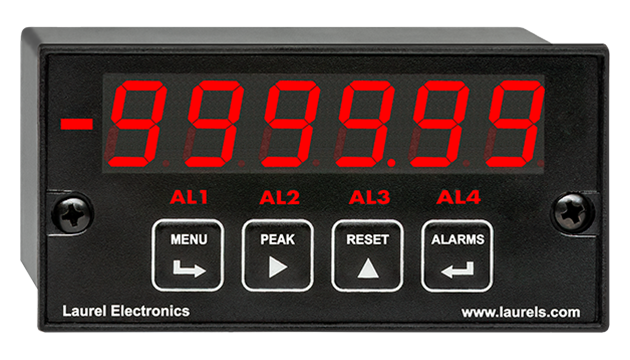
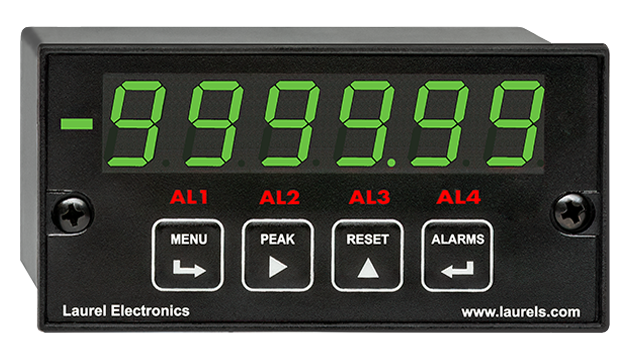
- 1/8 DIN size with bright red or green 0.56" (14.2mm), high LED digits
- Transducer excitation output, 5, 10, 12, or 24 Vdc (isolated)
- Power 85-264 Vac / 90-300 Vdc or 10-48 Vdc / 12-32 Vac (isolated)
- Operating temperature from -40°C to 70°C (-40°F to 158°F)
- Wide choice of Plug-in-Play options:
- 2 or 4 relays, mechanical or solid state, for alarm or control (isolated)
- 1 or 2 Analog output, 4-20 mA, 0-20 mA, 0-10V, or -10V to +10V (isolated)
- Communications: Ethernet, WiFi, USB, RS232, RS485 (isolated)
- Extended DPM allows up to 180 data points for custom curve linearization,
Certificates of Compliance
The Laureate™ 1/8 DIN Digital Panel Meters is a six-digit display of rate or total at the push of a front panel key.
A Laureate with the Standard counter main board and a VF voltage-to-frequency signal conditioner board can be scaled to display rate or totalized rate to six digits for 0-1 mA, 4-20 mA or 0-10V analog process signals to a frequency of 10 kHz to 110 kHz. Special input ranges are available from the factory. For example, the display can be scaled to show flow rate in gallons/minute or liters/sec, or to show volume in gallons or liters from the 0-10V output of a flow transducer. Or the display can be scaled to display power consumption in kilowatts or total utilized energy in kilowatt-hours based on the 0-1 mA output of a watt transducer.- Square root extraction is selectable and can be applied to rate or total. This makes the VF Laureate ideal for use with differential pressure flow meters, which have a squared output. Totalized volume is based on linearized rate.
- Accuracy is one of the highest for digital panel meters: ±0.005% of span ±1 count.
Laureate Digital Panel Meters are easily programmed with Laurel’s free Instrument Setup Software, downloadable from our website and compatible with Windows PCs, requiring a data interface board for setup.
All signal conditioner board ranges are factory-calibrated, with calibration factors for each range securely stored in an onboard EEPROM. These factors can be scaled via software to accommodate external shunts, enabling field replacement of signal conditioner boards without necessitating recalibration of the associated digital panel meters. For optimal accuracy, factory recalibration is recommended annually. All Laurel Electronics instruments undergo factory calibration using the industry-leading Fluke calibrators, which are recalibrated yearly and certified traceable to national standards, ensuring the highest level of precision and reliability.
Extended DPM Counter Version
- Batch control based on linearized total. A Laureate VF meter with the Extended counter main board can totalize linearized flow from an analog rate signal, and also count up to a preset value, or count down to zero from a preset value for batch control. Operation as a batch controller requires the dual-relay output board option. One of the relays is dedicated to ON/OFF batch control. The other relay is available to slow down rate near the setpoint or to provide another alarm or control function based on rate or total.
- Custom Curve Linearization. For custom curve linearization, up to 180 data points can be input into a spreadsheet or text file by the user. The computer then calculates spline-fit segments, which are downloaded into the meter via RS232. The Extended VF meter can linearize and display analog inputs based on a custom curve, for instance to read out the volume of an irregularly shaped tank based on level or pressure, or to linearize a nonlinear transducer. Custom-linearized rates can also be totalized and be used for batch control.
- Time Based on Rate. The Extended VF meter can display a time inversely proportional to measured rate, such as the time that it will take a conveyor to traverse an oven. As the rate of the conveyor is increased, the displayed baking time is decreased.
Principles of V-to-F Operation
The V-to-F signal conditioner board converts the full-scale 0-1 mA, 4-20 mA or 0-10 V analog signal to a frequency of 10 kHz to 110 kHz. This frequency is determined by measuring period over a selected gate time (from 10 ms to 200 s) and taking the inverse of period. Selecting a short gate time provides a much higher update rate than conventional counting-type frequency meters. At the lowest frequency of 10 kHz and the minimum gate time of 10 ms, the meter is capable of 25 updates per second. Scaling to rate in engineering units and totalizing are done mathematically. Totals are calculated as the product of rate and time in seconds regardless of the selected gate time. Totals are stored in nonvolatile memory in case of power loss.
High Resolution Display
The display of rate or total may be scaled to ±999,999. The two least-significant digits may be set to display zero with rounding or be active digits. Noise in rate readings can be reduced by selecting a longer gate time. In addition, an adaptive digital filter can reduce variations due to noise while rapidly responding to actual changes in signal level.
Digital signal filtering modes can be selected to ensure stable readings in electrically noisy environments.
- An unfiltered selection provides true peak and valley readings and aids in control applications.
- A batch average filter selection averages each 16 conversions.
- An adaptive moving average filter selection provides a choice of 8 time constants from 80 ms to 9.6 seconds. When a significant change in signal level occurs, the filter adapts by briefly switching to the shortest time to follow the change, then reverts back to its selected time constant. An Auto setting selects the time constant selection based on signal noise.
Peak and valley values are automatically captured. These may be displayed via a front panel pushbutton command or control signal at the rear connector, or be transmitted as serial data.
Two rear panel control Inputs (CMOS/TTL levels, logic 0 = tied to digital ground, logic 1 = open) or dry contacts that can be set to control / activate 14 meter commands.
An (isolated) 5, 10, 12, or 24 Vdc excitation output is standard to power transducers or two-wire transmitters. Ratiometric operation, which automatically compensates for changes in the applied excitation, is jumper selectable for applications, such as bridges, where the signal to be measured is proportional to the excitation level.
Modular Design for Maximum Flexibility at Minimum Cost
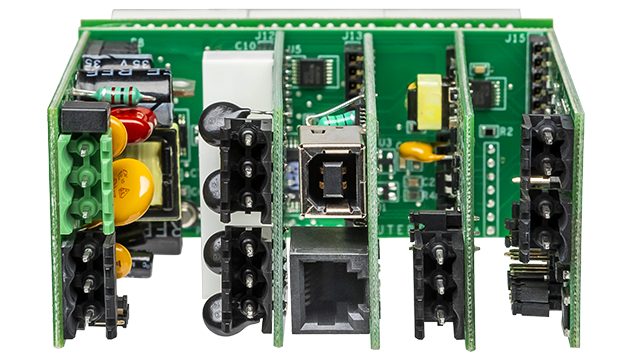
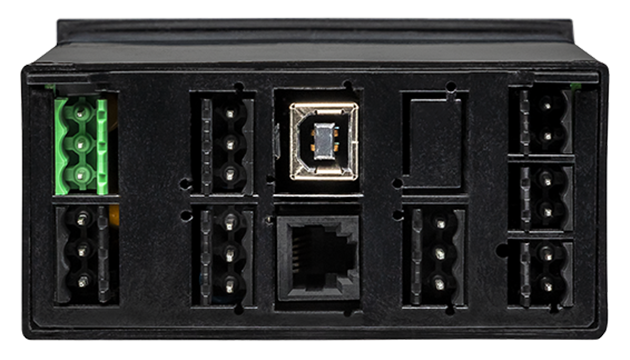
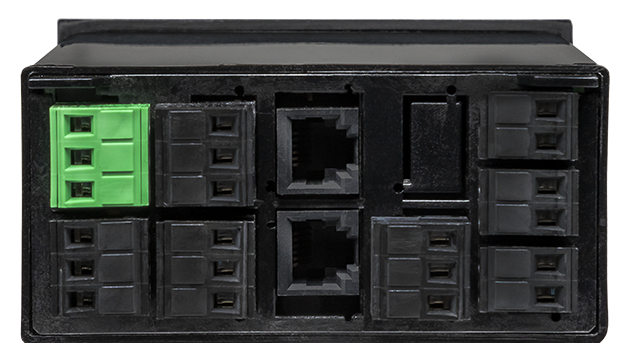
All boards are isolated from meter and power grounds. Optional Plug-in-Play boards for communications and control include Ethernet, WiFi, serial communication boards, dual or quad relay boards, and an analog output board. Laureates may be powered from 85-264 Vac or optionally from 12-32 Vac or 10-48 Vdc. The display is available with bright red or green 0.56" (14.2mm) high LED digits. The 1/8 DIN case meets NEMA 4X (IP65) specifications from the front when panel mounted. Any setup functions and front panel keys can be locked out for simplified usage and security. A built-in 5, 10, 12, or 24 Vdc excitation supply can power transducers, eliminating the need for an external power supply. All power and signal connections are via UL / VDE / CSA rated screw clamp plugs.
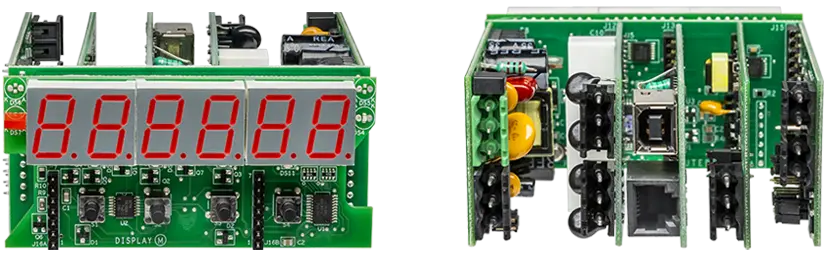
The Laureate™ Series features modular design with up to 7 isolated plug-in boards, applicable to all Laureate 1/8 DIN Digital Panel Meters.
Modular Hardware
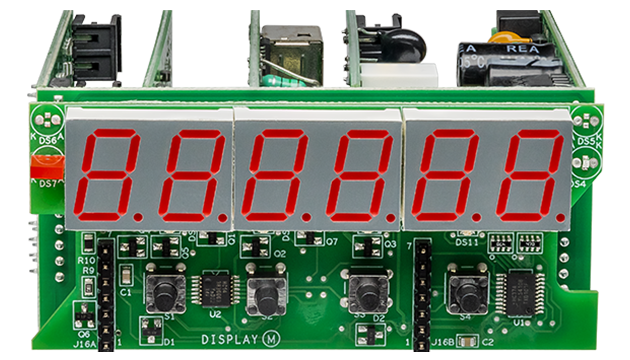
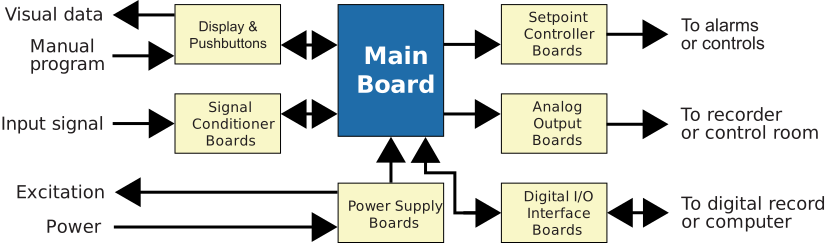
The design of the Laureate™ Series is modular for maximum flexibility at minimum cost. All boards are isolated from meter and power grounds. The base configuration for a panel meter or counter consists of a main module (with computer and plug-in display boards), a power supply board, and a signal conditioner board. Optional plug-in-play boards include an isolated setpoint controller board, an isolated analog output board, and an isolated digital interface board. Modular design and a choice of plug-in options allow the Laureate to be customized for a broad range of applications from simple monitoring to control and computer interface. There can be up to five plug-in boards in a 1/8 DIN Laureate.
Connecting Laureate Digital Panel Meters to a Local Area Network (LAN)
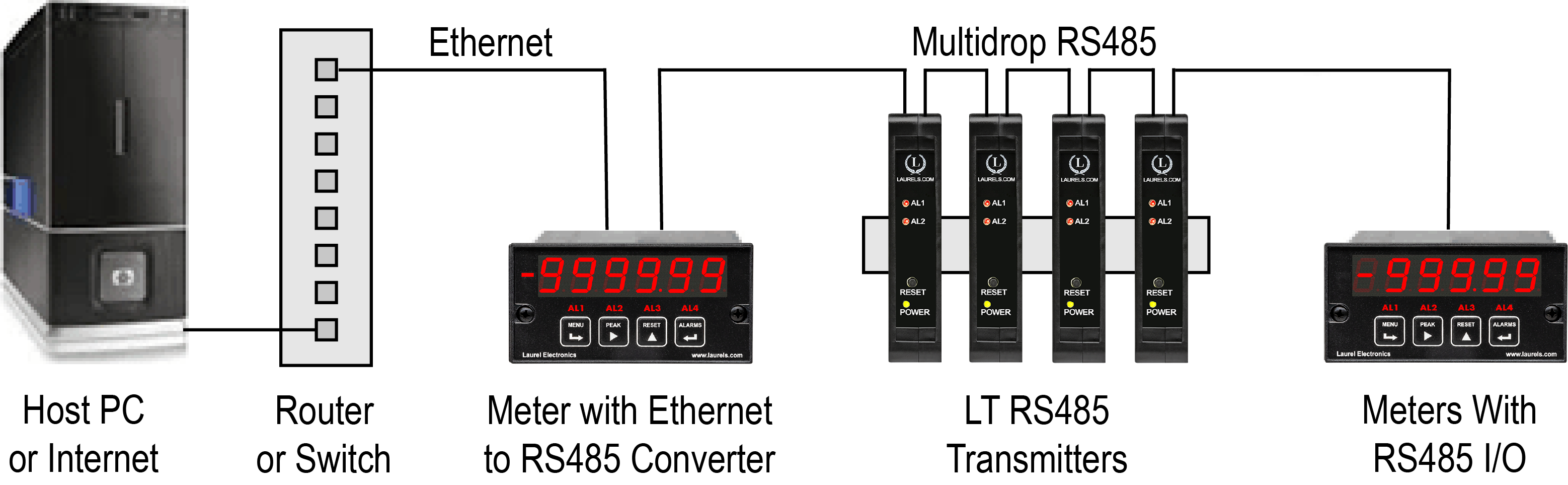
Up to 30 Laureate Digital Panel Meters and/or LT Transmitters can be configured for RS485 and daisy-chained to an LT Transmitter using Laurel’s High Speed Ethernet-to-RS485 converter board for seamless LAN integration. Alternatively, Laurel LTE series Ethernet transmitters can connect directly to a LAN via an Ethernet cable. Setup for both configurations is streamlined using Laurel’s free Instrument Setup Software, which simplifies node discovery and transmitter configuration.
Flexible Communication Options for Digital Panel Meters
Laureate Digital Panel Meters can be equipped with Laurel communication boards to support various interfaces and protocols. These include serial interfaces with ASCII or Modbus RTU protocols, and Ethernet interfaces with web access, ASCII, or Modbus TCP/IP protocols, ensuring versatile connectivity for your commercial applications.
| Display | |
|---|---|
| Readout | 6 LED digits, 7-segment, 14.2 mm (.56") |
| Color | Red or green LED |
| Range | -999,999 to +999,999 |
| Indicators | Four LED lamps |
| Inputs | |
| Standard signal levels | 4-20 mA, 0-1 mA, 0-10V (jumper selectable) |
| Input resistance | 50Ω at 4-20 mA, 1.00 kΩ at 0-1 mA, 1.01 MΩ at 0-10V |
| Other signal levels | Consult factory |
| Recalibration: All ranges are calibrated at the factory. Recalibration is recommended every 12 months. | |
| Conversion | |
| Frequency Technique | Inverse period |
| Update Rate | Gate time + 30 ms (max) |
| Gate Time | Selectable 10 ms to 199.99 s |
| Accuracy | |
| Span tempco | ±0.003% reading/°C |
| Zero tempco | ±0.003% FS/°C |
| Accuracy at 25°C | ±0.01% FS ± 1 count |
| Power Supply Boards (one required) | |
| Voltage, standard | 85-264 Vac or 90-300 Vdc |
| Voltage, optional | 12-32 Vac or 10-48 Vdc |
| Frequency | DC or 47-63 Hz |
| Power consumption (typical, base meter) | 1.2W @ 120 Vac, 1.5W @ 240 Vac, 1.3W @ 10 Vdc, 1.4W @ 20 Vdc, 1.55W @ 30 Vdc, 1.8W @ 40 Vdc, 2.15W @ 48 Vdc |
| Power Isolation | 250V rms working, 2.3 kV rms per 1 min test |
| Excitation Output (standard) | |
| 5 Vdc | 5 Vdc ± 5%, 100 mA (jumper selectable) |
| 10 Vdc | 10 Vdc ± 5%, 120 mA (jumper selectable) |
| 12 Vdc | 12 Vdc ± 5%, 100 mA (jumper selectable) |
| 24 Vdc | 24 Vdc ± 5%, 50 mA (jumper selectable) |
| Output Isolation | 50 Vdc from signal ground |
| Analog Output Boards (one optional) | |
| Output levels | 4-20 mA, 0-20 mA, 0-10V, -10 to +10V (single-output option) |
| 4-20 mA, 0-20 mA, 0-10V (dual-output option) | |
| Current compliance | 2 mA at 10V ( > 5 kΩ load) |
| Voltage compliance | 12V at 20 mA (< 600 Ω load) |
| Scaling | Zero and full scale adjustable from -99999 to +99999 |
| Resolution | 16 bits (0.0015% of full scale) |
| Isolation | 250V rms working, 2.3 kV rms per 1 min test |
| (dual analog outputs share the same ground) | |
| Relay Output Boards (one required for batch control) | |
| Dual magnetic relays | 2 Form C, 10A max, 440Vac or 125Vdc max, 2500VA or 300W |
| Quad magnetic relays | 4 Form A (NO), 10A max, 440Vac or 125Vdc max, 2500VA or 300W |
| Dual solid state relays | 2 Form A (NO), AC or DC, 0V - 400V, 120Ma, 35Ohms (max at On-State) |
| Quad solid state relays | 4 Form A (NO), AC or DC, 0V - 400V, 120Ma, 35Ohms (max at On-State) |
| Relay commons | Isolated commons for dual relays or each pair of quad relays |
| Relay isolation | 250V rms working, 2.3 kV rms per 1 minute test |
| Relay latching modes | Latching or non-latching |
| Relay active modes | Active on or off, active high or low |
| Hysteresis modes | QA passband mode, split hysteresis, span hysteresis |
| Communication Boards (one optional) | |
| Board selections | RS232, RS485 with dual RJ11 connectors, RS485 with dual RJ45 connectors, USB, Ethernet, USB-to-RS485 gateway, Ethernet-to-RS485 gateway, WiFi with built-in antenna plus USB & RS485, WiFi with external antenna plus USB & RS485 |
| Protocols | Laurel Custom ASCII (serial), Modbus RTU (serial), Modbus TCP (Ethernet or WiFi) |
| Digital addresses | 247 (Modbus), 31 (Laurel ASCII), |
| Isolation | 250V rms working, 2.3 kV rms per 1 min test |
| Environmental | |
| Operating temperature | -40°C to 70°C (-40°F to 158°F) |
| Storage temperature. | -40°C to 85°C (-40°F to 185°F) |
| Relative humidity | 95% at 40°C, non-condensing |
| Protection | NEMA-4X (IP-65) when panel mounted |
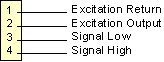
| Electrical Connections | |
 |
|
| Mechanical | |
| Enclosure | 1/8 DIN, high impact plastic, UL 94V-0, color: black |
| Mounting | 1/8 DIN panel cutout required: 3.622" x 1.772" (92 mm x 45 mm). |
| Dimensions | 4.68" x 2.45" x 5.64" (119 mm x 62 mm x 143 mm) (W x H x D) |
| Maximum panel thickness | 4.5 mm (0.18") |
| Tightening Torque - Connectors | Screw terminal connectors: 5 lb-in (0.56 Nm) |
| Tightening Torque - Pawls | Digital Panel Meter Case Pawls: 5 lb-in (0.56 Nm) |
| Weight of base meter | 210 g (7.4 oz) typical (DPM, counter, timer, 6-digit remote display) |
| Weight of option boards | 30 g (1.0 oz) typical per board (analog output, relay output, communications) |
| General | |
| Programming Methods | Four front panel buttons or via Laurel's free Instrument Setup Software, which runs on a PC under MS Windows. |
| Security | Lockout options include using the front panel buttons, the free Instrument Setup Software, or a hardware jumper. |
| Warranty | 3 years parts & labor |
| Recalibration: All ranges are calibrated at the factory. Recalibration is recommended every 12 months. | |
Free Instrument Setup Software for Series 2 Laureates
|
|
| 1/8 DIN Digital Panel Meters | DIN Rail Transmitters |
Free Downloadable Windows-based Instrument Setup (IS) software (Data Interface Board Required) for use with our programmable Digital Panel Meters, Scale Meters, Counters, Timers, Remote Displays, and Transmitters, are an easy method to set up Laureate 1/8 DIN digital panel meters, counters, timers, remote displays, and DIN-rail transmitters, as explained in the Instrument Setup Software Manual. Laureate 1/8 DIN instruments can also be set up from the front panel, as explained in their respective Owners Manuals. Instrument Setup software is of benefit whether or not the PC is connected to the instrument.
- When the PC is connected to the instrument, Instrument Setup software can retrieve the setup file from the instrument or open a default setup file or previously saved setup file from disk View Setup, then provides graphical user interface (GUI) screens with pull-down menus applicable to input, display, scaling, filtering, alarms, communications, analog output, and front panel lockouts. Fields that are not applicable to the instrument as configured are either left out or grayed out. Clicking on any item will bring up a detailed Help screen for that item. After editing, the setup file can be downloaded, uploaded to the instrument, or saved to a disk. The same setup file can then be downloaded into multiple instruments.
- When the PC is not connected to the instrument, the above GUI screens can be used to set up a virtual instrument. The setup file can then be saved to disk. Switching toView Menu then brings up a screen with the required front panel programming steps. This view can be printed out for use at the instrument site and to serve as a hard copy record.
Download Free Instrument Setup Software
Installation
Set User Account Control (UAC) of MS Windows to "Never notifiy me" so that Instrument Setup Software can create directories. The UAC change screen can be reached as follows:
- Under Windows 7, click on the Windows Start button in the lower left of the desktop and enter "UAC" in the search field.
- Under Windows 8, navigate to Control Panel, then to the "User Accounts and Family Safety" section, and click on "Change User Account Control Settings."
- Under Windows 10, click on the Windows Start button in the lower left of the desktop, then on "Settings", and enter "UAC" in the search field.
- Reboot your computer for the changed UAC setting to take effect.
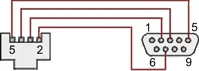
RJ11-to-DB9 cable with rear view of DB9 connector to PC
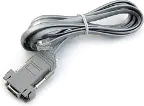
RS232 cable, meter to PC, P/N CBL01
Laureate 1/8 DIN Laureate instruments must be equipped with a serial communications board and be connected to the computer via a serial communications cable. The connection can be via RS232, RS485, USB or Ethernet. Following setup, the serial communications board may be removed from the instrument if desired. The wiring of the RS232 cable is illustrated above with end views of the two connectors.
Laureate LT Series transmitters come standard with a 3-wire serial interface, which can be jumpered for RS232 or RS485.
Laureate LTE Series transmitters come standard with an Ethernet interface.
Meter Setup Screens
Click on any of the reduced screens below for a full-size screen view, then click on the Back button of your browser to return to this page. The screens examples below are for a fully-loaded Series 2 Digital Panel Meter (DPM), which is connected to the PC via RS232. If the meter is a Series 1 meter (pre-2007), this is sensed by the software, and somewhat different screens are brought up. Please see Series 1 setup screens.

Welcome Screen
From the computer desktop, click on Start > Programs > IS2 > IS2. Or click on the IS icon on your desktop. This splash screen will be displayed for three seconds. The software revision number is in the lower right.


Communications Selection Screen
Specify your desired communication protocol and the serial communications bus type, which should match the jumper setup of the instrument. Select None if the PC is not connected to the instrument.

Establish Communications Screen
If you selected RS-232, you will be asked to specify the PC Com Port and Baud Rate, which should match the jumper setup of the instrument. Click on Establish. With the right settings, the Communications Established field will light up in green, and the Meter Type will be recognized. If so, click onMain Menu.

Main Menu Screen
Click on File > Default Setup to retrieve the default setup file from disk for your type of meter. Click on File > Open Setupto retrieve a previously saved setup file from disk or on File > Save Setup to save your edited setup file to disk. Click onDPM > Get Setup to retrieve the setup file from your meter or on DPM > Put Setup to download your edited setup file into the meter.

DPM Input + Display Setup Screen
From the Main Menu, click on View > Setup, then on theInput+Display tab. You can now specify the meter hardware, signal type, display mode, and functions of control inputs A and B. Clicking on any item brings up a pull-down menu with the available choices.

DPM Scaling Setup Screen
Click on the Scaling tab, which provides three scaling methods to relate the signal to the displayed reading: 1) Scale and Offset method, 2) Coordinates of two points method, and 3) Reading Coordinates of Two Points method. The last method uses actual high and low signals, and the computer will prompt you.

DPM Filter Setup Screen
Click on the Filter tab, which allows you to specify the digital filter time constant (if any), the adaptive filter threshold, and whether Peak / Valley values are filtered or unfiltered. As for all setup screens, clicking on the F1 key while an item is highlighted brings up a Help screen for that item, as illustrated.

DPM Relay Alarms Setup Screen
Click on the Relay Alarms tab, which allows you to set up Alarms 1 and 2 for the optional dual relay output board. Clicking on any of the four numeric fields changes these to green and brings up a special field to enter the desired numeric value, which is tied to the displayed reading.

DPM Communications Setup Screen
Click on the Communications tab so set up serial communications. In particular, you can special the Serial Protocol and the meter address if multiple meters are to be addressed on the same serial data line.

DPM Analog Output Setup Screen
Click on the Analog Out tab so set up the optional analog output board. Three output ranges are selectable, the endpoints of which can be tied to user-specified High and Low readings.

DPM Lockouts Setup Screen
Click on the Lockouts tab to check off menu items which will no longer be accessible from the front panel of the meter. This will simplify meter operation and prevent unintended setup changes.
Meter Setup Utilities

DPM Front Panel Setup Screen
As an aid to programming the meter from the front panel when a serial connection is not available, you can return to the Main Menu and click on View > Menu. The required sequence of front panel screens will then be displayed. Click on any step in the sequence for the meaning of each digit, as illustrated for the FILtEr step. For a hardcopy, simply press on Print.

DPM Jumper Setup Screen
Specify your desired communication protocol and the serial communications bus type, which should match the jumper setup of the instrument. Select None if the PC is not connected to the instrument.

DPM Jumper Setup Screens
Click on any of the displayed plug-in boards, and you will be presented with the jumper positions and electrical connections for your selected board. This minimizes the need to refer to the printed manual.

DPM Commands Screen
This page allows you set up external input, serial communications, an analog output proportional to the display (optional), and lockouts for Laureate digital counters. The grayed out area at the top right of the screen applies to Laureate remote displays.


Graphical Output Screens (not available with Ethernet)
From the Main Menu, click on Readings if your PC is connected to the meter. A pull-down menu then offers three choices: List, Plot and Graph.
- List presents the latest readings in a 20-row by 10-column table. Press Pause at any time to freeze the display. This is one method to capture peak readings.
- Plot generates a plot of readings vs. time in seconds. It effectively turns the DPM-PC combination into a printing digital oscilloscope.
- Graph generates a histogram where the horizontal axis is the reading and the vertical axis is the number of occurrences of readings. The display continually resizes itself as the number of readings increases.

DPM Calibration Screens
Click on the Scaling tab, which provides three scalClick on the Scaling tab, which provides three scaling methods to relate the signal to the displayed reading: 1) Scale and Offset method, 2) Coordinates of two points method, and 3) Reading Coordinates of Two Points method. The last method uses actual high and low signals, and the computer will prompt you.

Frequency Meter Calibration Screen
Calibration of the quartz crystal of the Laureate frequency meter requires the input of a known frequency from a calibrator. Apply the frequency, then enter the frequency in Hertz. Calibration will be automatic, with storage of the calibration factor stored in non-volatile memory.
Laureate™ 1/8 DIN Case For Laureate Digital Panel Meters, Counters, Timers & Remote Displays
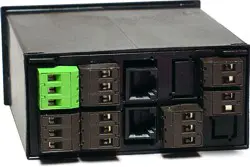
Key Features
- Meets 1/8 DIN Standard.
- Installs from front of panel.
- Short depth behind the panel: only 4" (102 mm) plus connectors.
- Understated 0.157" (4 mm) thick bezel.
- Meets NEMA 4X (IP-65) for high-pressure wawshdon when panel mounted.
- Screw clamps connectors meet VDE / IEC / UL / CSA safety standards.
- Rugged GE Lexan® housing material.
- Safety certified per EN 61010-1.


Dimensions
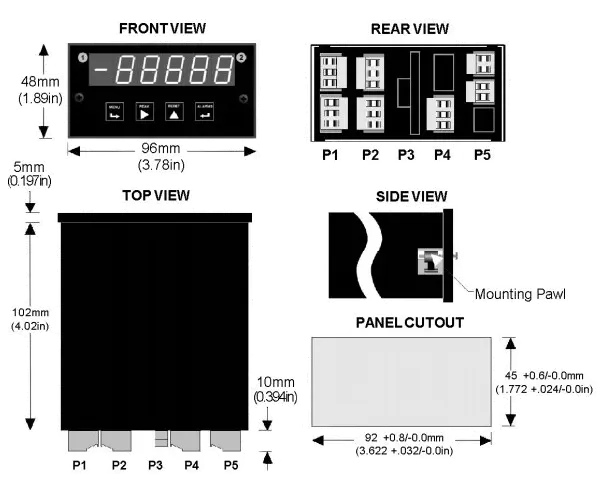
Maximum panel thickness: 4.5 mm (0.18")
Weight of base meter: 210 g (7.4 oz) typical (DPM, counter, timer, 6-digit remote display)
Weight of option boards: 30 g (1.0 oz) typical per board (analog output, relay output, communications)
Tightening Torque - Connectors: Screw terminal connectors: 5 lb-in (0.56 Nm)
Tightening Torque - Pawls: Digital Panel Meter Case Pawls: 5 lb-in (0.56 Nm)
Dimensioned CAD assembly drawings in EPRT, STEP, x_t. dwg, pdf file formats: Laureate-meter-case.zip (zipping prevents browser from opening CAD files as text files).
Panel Mounting
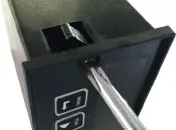 Slide the meter into a 45 x 92 mm 1/8 DIN panel cutout. Ensure that the provided gasket is in place between the front of the panel and the back of the meter bezel.
The meter is secured by two pawls, each held by a screw, as illustrated. Turning each screw counterclockwise extends the pawl outward from the case and behind the panel. Turning each screw clockwise further tightens it against the panel to secure the meter.
Slide the meter into a 45 x 92 mm 1/8 DIN panel cutout. Ensure that the provided gasket is in place between the front of the panel and the back of the meter bezel.
The meter is secured by two pawls, each held by a screw, as illustrated. Turning each screw counterclockwise extends the pawl outward from the case and behind the panel. Turning each screw clockwise further tightens it against the panel to secure the meter.
Turning each screw counterclockwise loosens the pawl and retracts it into its well. This position allows installed meter to be removed from their panel, or new meters to be installed in a panel. Do not remove the screws from their pawls. Doing so would cause the screw and pawl to fall off and likely get lost. Do not overtighten so as not to damage the plastic parts.


| Flow from a Differential Pressure Transducer | |
|---|---|
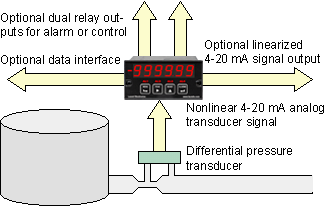 |
An ideal application for the Standard Laureate VF meter: readout of flow based on the 4-20 mA analog signal from a differential pressure transducer. Options include dual relays for alarm or control, isolated analog output to turn the meter into a transmitter, and RS232/485 data communications.s |
| Up- or Down-Counting Batch Controller | |
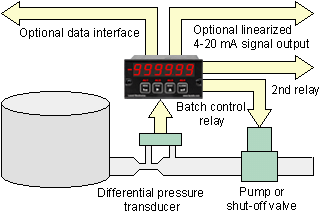 |
An ideal application for the Extended Laureate VF meter: up- or down-counting batch controller. The dual-relay card is required. One relay is dedicated to batch control, the other relay is available to alarm the rate or total. The signal input can be linear or nonlinear. The display can be toggled between rate and total. |
| Volume of an Irregularly-Shaped Tank | |
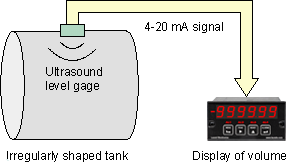 |
The Extended Laureate VF meter can linearize analog signals for display and alarm using custom curve linearization with multiple nonlinear segments. As illustrated, tank level is measured by an ultrasound detector, which transmits a 4-20 mA signal. This signal is then converted to a highly accurate volume reading. Linearized readings can also be totalized. |
| Process Time from an Analog Rate Signal | |
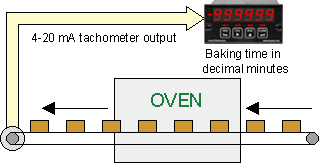 |
A unique application of the Extended Laureate VF meter is displaying process time based on the 4-20 mA or 0-10 V signal from a rate meter. In this example, a tachometer transmits the speed of a conveyer belt through an oven. The meter displays baking time in the oven using the mathematical relationship time = distance / speed. |
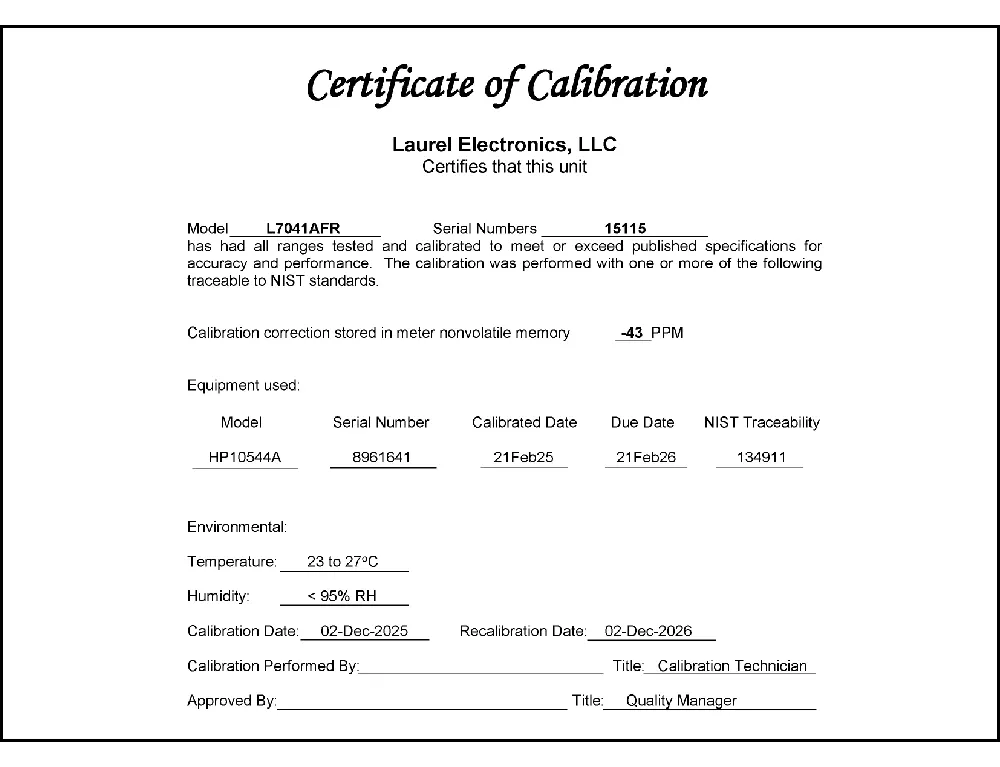
CAL-Digital
Certificate of Calibration
$65.00
DLS-XLOG2
XLog2 Data logging Software
$495.00
IPC
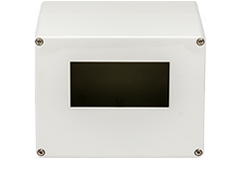
Splashproof Cover
$55.00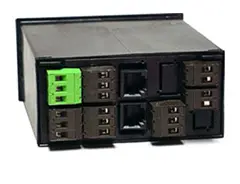

CON01
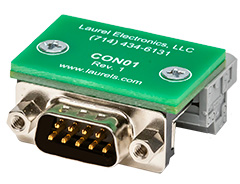
CON01 Connector
$75.00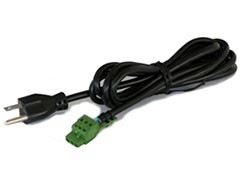
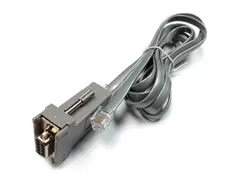
CBL01
RS232 Cable for Meters
$35.00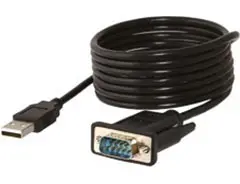
CBL02
USB-to-RS232 Adapter Cable
$47.00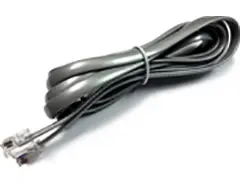
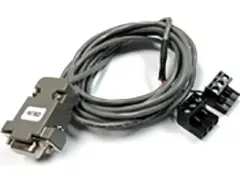
CBL04
RS232 Cable for LT Transmitters
$47.00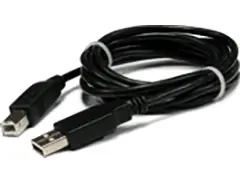
CBL05
USB Data Cable for Meters
$47.00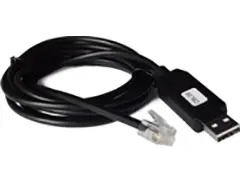
CBL06
USB-to-RS485 Adapter Cable
$47.00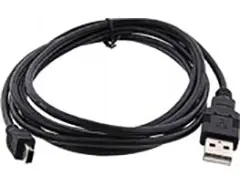
CBL07
USB Programming & Data Cable
$47.00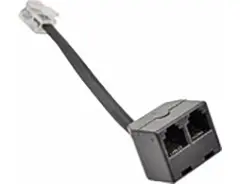
CBL08
RS485 Splitter Cable
$33.00CBL6
6-foot Power Cable
$41.00CBL12
12-foot Power Cable
$47.00Understanding 1/8 DIN Digital Panel Meters for 6-Digit Analog Input Totalizer & Process Measurement
In the realm of industrial automation and process control, precision measurement is crucial. Whether you're monitoring temperature, pressure, flow rate, or other vital parameters, accurate data ensures optimal performance and safety. One of the key devices used in these applications are the 1/8 DIN Digital Panel Meters for 6-Digit Analog Input Totalizer & Process Measurement. These specialized devices are engineered to offer versatile and accurate ways to measure, display, and totalize analog input signals in various industrial environments.
What Are 1/8 DIN Digital Panel Meters?
1/8 DIN Digital Panel Meters refers to the size and standard dimensions of the devices. "DIN" stands for Deutsches Institut für Normung, a German standards organization that has set specific sizing standards for industrial devices. The 1/8 DIN size typically measures around 96 mm x 48 mm, making them compact yet sufficiently large for clear displays and easy integration into control panels.
6-Digit Display
The 6-digit displays on these Digital Panel Meters are crucial for applications that require precise measurement and readability. With six digits, the Digital Panel Meters can display numbers up to 999,999, offering high levels of precision and making them suitable for processes where detailed measurement is essential.
Analog Input Totalizer
An analog input totalizer is a feature that allows the Digital Panel Meters to sum the values of analog signals over time. This is particularly useful in applications where cumulative measurement is important, such as tracking total flow in a pipeline or total energy consumption in a facility. The totalizer function can work with various analog input signals, including current (mA) or voltage (V) inputs, allowing for flexibility in monitoring different parameters.
Process Measurement
As process measurement devices, these Digital Panel Meters can measure and display a wide range of process variables. Process measurement Digital Panel Meters are commonly used to monitor parameters such as temperature, pressure, flow, and more. 1/8 DIN Digital Panel Meters are equipped with the capability to handle analog inputs and convert these signals into meaningful data that can be displayed in real-time.
Key Features and Benefits
- High Precision: The 6-digit displays ensure that even the smallest changes in the analog inputs are captured and displayed accurately.
- Versatility: These Digital Panel Meters can be used in various industries, including manufacturing, energy, water treatment, and more. They support multiple types of analog inputs, making them adaptable to different applications.
- Compact Size: The 1/8 DIN standard size allows for easy integration into existing control panels without taking up too much space.
- Totalization Functionality: The built-in totalizers are ideal for applications requiring the accumulation of analog input values over time, providing valuable data for analysis and reporting.
- User-Friendly Interface: With clear and intuitive displays, operators can easily monitor and understand the process data, leading to more efficient decision-making.
Applications
1/8 DIN Digital Panel Meters for 6-Digit Analog Input Totalizer & Process Measurement are used across a variety of industries:
- Manufacturing: For monitoring and controlling production processes, ensuring quality and efficiency.
- Energy: In power plants and distribution systems, for tracking energy usage and system performance.
- Water Treatment: For monitoring flow rates, chemical levels, and other critical parameters in water processing facilities.
- HVAC: In heating, ventilation, and air conditioning systems, for precise control of environmental conditions.
Conclusion
1/8 DIN Digital Panel Meters for 6-Digit Analog Input Totalizer & Process Measurement are vital tools in the industrial and process control sector. Their ability to provide precise, real-time data, coupled with their compact size and versatility, makes them indispensable components in many applications. Whether you need to monitor, totalize, or display process variables, these Digital Panel Meters are designed to deliver reliable and accurate performance.
6-Digit Analog Input Totalizer Digital Panel Meter Frequently Asked Questions
How does an analog input totalizer accumulate a total from a continuous signal like 4-20 mA?
The meter samples the scaled analog reading at regular intervals and adds each sample's contribution to a running total, effectively integrating the rate signal over time into a cumulative value — for example, converting an instantaneous flow rate into accumulated volume.
What resolution does the 6-digit display provide compared to a 5-digit meter?
A 6-digit display can show values up to 999,999 rather than 99,999, giving an extra order of magnitude of resolution before the display rolls over or requires rescaling — useful for high-volume totals like long-term flow accumulation or energy consumption tracking.
Can the totalizer be reset without losing a longer-term running total?
Many models support a resettable batch total alongside a separate non-resettable grand total, so a daily or per-batch reset doesn't erase the cumulative lifetime value, which is useful for combining routine reporting with longer-term auditing.
What analog input signals can this meter accept for totalizing?
These meters typically accept standard process signals such as 4-20 mA and 0-10V, with the input scaled to real engineering units (such as flow rate) before that rate is integrated into the totalized value.
Does the totalizer account for a "live zero" so it doesn't accumulate falsely at zero flow?
Yes, properly configured totalizers zero-reference against the signal's live zero point (typically 4 mA), so a correctly calibrated meter shouldn't accumulate a false total when the actual process value is zero. Confirming this zero calibration is accurate is important, since even a small offset at the zero point can accumulate into a meaningful error over a long totalizing period.
What outputs are available for alarming based on the totalized value?
These meters commonly support programmable high/low alarm relays tied to either the rate or the totalized value, an isolated analog output, and serial communications such as RS-232 or RS-485, so the accumulated total can trigger a local alarm or feed a PLC or SCADA system.
How accurate is an analog-input totalizer compared to a pulse-input totalizer?
A pulse-input totalizer is generally considered more inherently accurate, since it counts discrete events rather than integrating a continuous signal. An analog-input totalizer is an approximation based on periodic sampling, and its accuracy depends on how frequently the meter samples relative to how quickly the process rate changes.
Can this meter display both an instantaneous rate and the accumulated total at the same time?
Yes, many models can show rate and total simultaneously, or allow toggling between the two via the front panel, so operators can monitor both current process speed and cumulative volume from the same display.
Is the totalized value retained if the meter loses power?
Yes, the accumulated total is typically stored in non-volatile memory, so it's retained through a power interruption rather than resetting to zero when the meter powers back up.
Can this meter be scaled for process variables other than flow, such as energy or production count?
Yes. Since the totalizer works by integrating any scaled analog input over time, it can be applied to any process variable presented as a rate — energy consumption, production throughput, or similar cumulative process measurements — not just liquid or gas flow.
Analog Input Totalizer Questions From the Field
Why does my analog-input totalized volume always drift away from the reading on the flow meter's own built-in totalizer?
This is a well-documented and expected discrepancy, not necessarily a fault — a totalizer built into a flow instrument itself typically uses a more direct counting method, while a separate device totalizing from the analog 4-20 mA signal is approximating the total through periodic sampling. The two totals are calculated differently, so some drift between them over time is normal rather than indicating either device is broken.
Why does my totalized value read low even though my instantaneous rate reading looks correct?
This is frequently traced to accumulator precision and rounding rather than a sensor issue — using a lower-precision data type (such as single-precision floating point or a fixed integer) for the running total accumulator can introduce small rounding errors on every sample that compound over a long totalizing period, silently pulling the total below the true value even though each individual rate reading looks correct.
How often does the totalizer need to sample the analog signal to stay accurate?
Field guidance generally emphasizes that sampling needs to be frequent relative to how quickly the actual process rate changes — a totalizer sampling once per second is generally accurate for a stable, slowly-varying flow, but for highly variable flow, a slower sample rate can miss short spikes or dips, introducing error that shortening the sample interval would reduce.
Should I account for sensor zero drift when totalizing from an analog signal?
Yes — field guidance specifically calls this out as an easy-to-miss error source: if a flow signal doesn't return to exactly its live-zero value when there's genuinely no flow (for example, due to sensor drift or a pump being off), an analog totalizer that isn't corrected for that live zero will keep slowly accumulating "phantom" volume even when nothing is actually flowing. Periodically checking and correcting for the true zero point avoids this class of long-term error.
Would I get a more accurate total by using a pulse output instead of totalizing the 4-20 mA signal?
This is a very commonly recommended alternative in field discussions — where the source instrument offers a scaled pulse output in addition to its analog signal, totalizing from that pulse output (by simply counting discrete pulses) is generally considered inherently more accurate than integrating a continuous analog rate signal, since it avoids the sampling and rounding approximations analog totalizing requires.
Why does my totalizer reset to zero unexpectedly at a certain accumulated value?
This is commonly the totalizer's configured maximum digit capacity being reached — a 6-digit totalizer that isn't configured to roll over gracefully, or that has a fixed reset threshold set too low for actual process volumes, can reset or roll over sooner than expected during high-throughput periods. Reviewing and adjusting the configured maximum/reset value against actual expected volumes resolves this.
Does scan time or update interval variability on a PLC or meter affect totalizing accuracy?
Yes — field guidance strongly recommends using a genuinely fixed, hardware-based timing interval for accumulation rather than conditional or scan-dependent logic, since variability in how often the accumulation step actually runs directly translates into totalizing error, particularly during periods of rapidly changing flow.
My total looks reasonable most of the time but seems to accumulate slightly differently depending on how variable the flow is — is that expected?
Yes, this is an inherent characteristic of analog-signal totalizing rather than a defect — since the method assumes the rate is roughly constant between samples, periods of highly variable flow introduce more approximation error than periods of steady flow. This is one of the main reasons field guidance consistently favors a pulse-based totalizing method over analog integration wherever the source instrument supports it.
