New Front Panel USB-C Port Coming Soon!
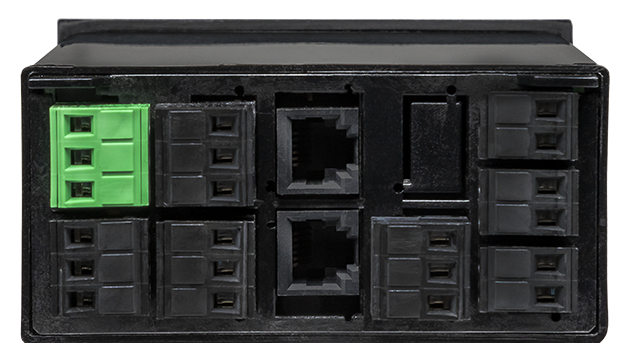
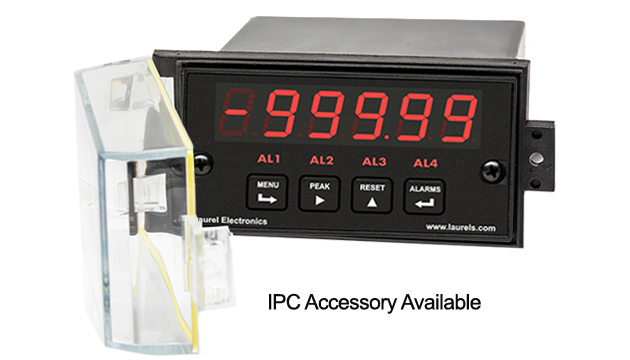
RTD connections can be via 2, 3 or 4 wires. With 3 or 4-wire connections, the meter automatically compensates for changes in lead resistance to the sensor. With 2-wire connection, the meter can measure and then subtract the lead wire resistance.
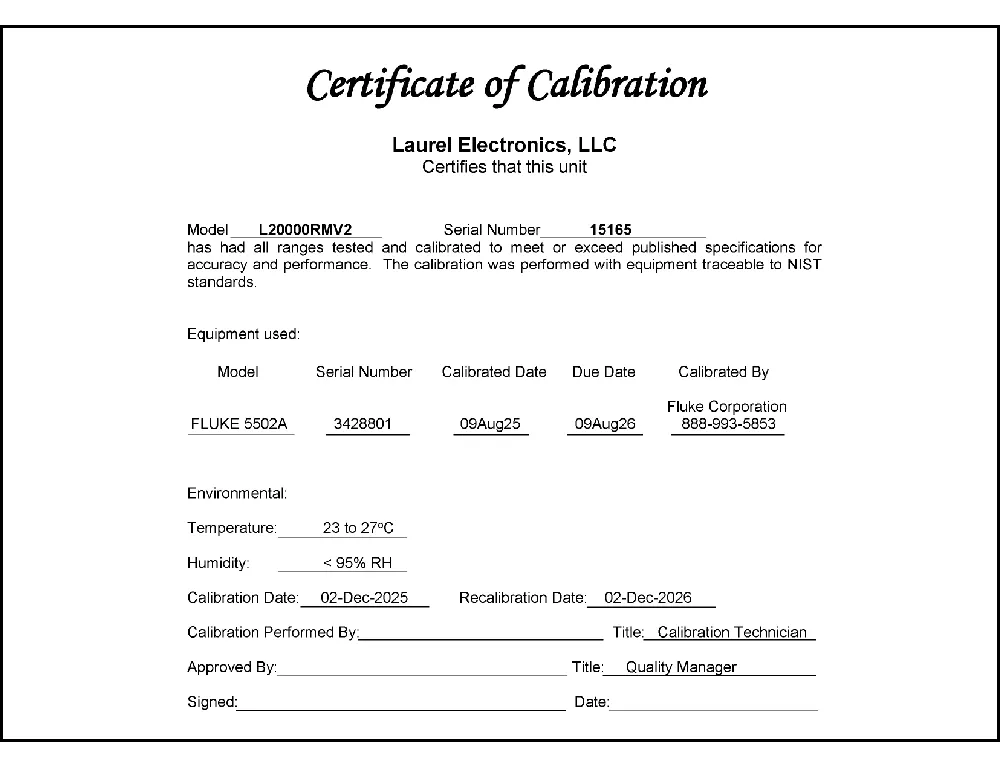
All RTD types are factory-calibrated, with calibration factors for each range securely stored in an onboard EEPROM. These factors can be scaled via software to accommodate external shunts, enabling field replacement of signal conditioner boards without necessitating recalibration of the associated digital panel meters. For optimal accuracy, factory recalibration is recommended annually. All Laurel Electronics instruments undergo factory calibration using the industry-leading Fluke calibrators, which are recalibrated yearly and certified traceable to national standards, ensuring the highest level of precision and reliability.
Laureate Digital Panel Meters are easily programmed with Laurel’s free Instrument Setup Software, downloadable from our website and compatible with Windows PCs, requiring a data interface board for setup.
High read rate of up to 50 or 60 conversions per second, the Laureate™ Digital Panel Meters use a Concurrent Slope (US Pat. 5,262,780) analog-to-digital conversion to integrate signals over a full power line cycle (50 Hz or 60 Hz). This read rate enables peak and valley capture, real-time computer interfacing, and control applications. Peak and valley values are automatically captured and can be viewed using Laurel’s free Instrument Setup Software (compatible with Windows PCs) or transmitted as serial data.
Two tare functions: auto-tare and manual tare. In auto-tare, an input line is grounded by an external pushbutton. In manual tare, the tare value can be entered manually via a control input pushbutton or using Laurel's free Instrument Setup Software.
Peak and valley values are automatically captured. These may be displayed via a front panel pushbutton command or control signal at the rear connector, or be transmitted as serial data.
Two rear panel control Inputs (CMOS/TTL levels, logic 0 = tied to digital ground, logic 1 = open) or dry contacts that can be set to control / activate 14 meter commands.
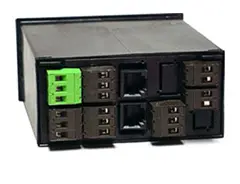
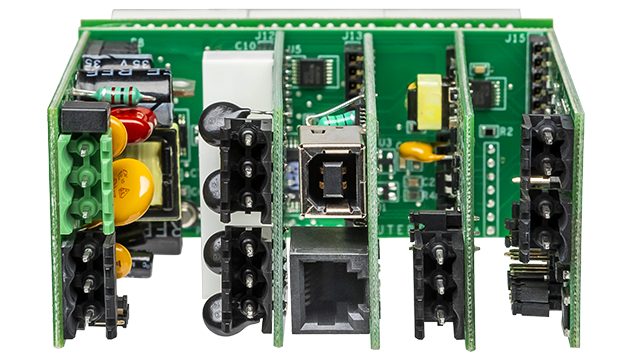
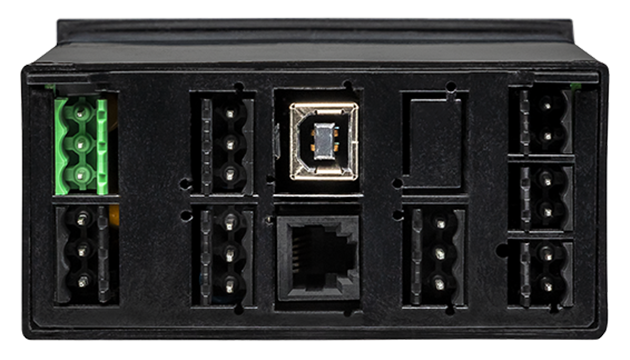
RTD hookup can be via 2, 3 or 4 wires to the J5 connector. The meter applies an excitation current of 256 µA (Pt100 and Ni120) or 5 mA (Cu10).
 |
In 4-wire hookup, different pairs of leads are used to apply the excitation current and sense the voltage drop across the RTD for ratiometric operation, so that the IR drop across the excitation leads is not a factor. |
 |
In 3-wire hookup, the meter senses the combined voltage drop across the RTD plus two excitation leads. It also senses the voltage drop across one excitation lead, and then subtracts twice this voltage from the combined total. This technique effectively subtracts all lead resistance and compensates for ambient temperature changes if the two excitation leads are identical. |
 |
In 2-wire hookup, the meter senses the combined voltage drop across the RTD and both lead wires. The voltage drop across the lead wires can be measured by shorting out the RTD during meter setup, and this voltage is then automatically subtracted from the combined total. However, changing resistance of the lead wires due to ambient temperature changes will not be compensated. |
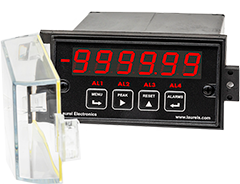
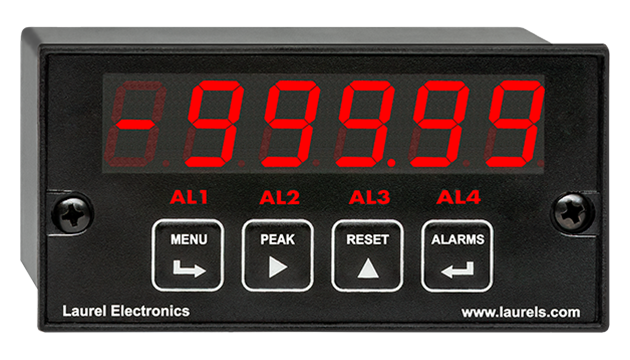
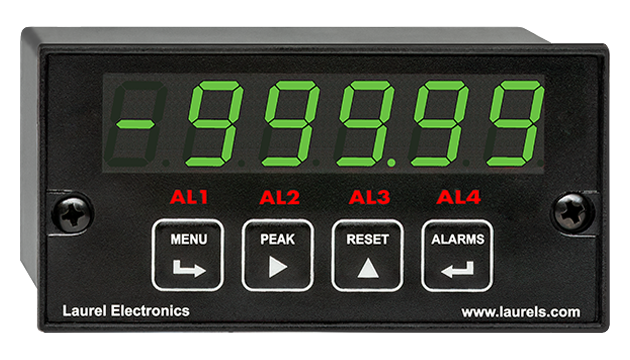
All boards are isolated from meter and power grounds. Optional Plug-in-Play boards for communications and control include Ethernet, WiFi, serial communication boards, dual or quad relay boards, and an analog output board. Laureates may be powered from 85-264 Vac or optionally from 12-32 Vac or 10-48 Vdc. The display is available with bright red or green 0.56" (14.2mm) high LED digits. The 1/8 DIN case meets NEMA 4X (IP65) specifications from the front when panel mounted. Any setup functions and front panel keys can be locked out for simplified usage and security. A built-in 5, 10, 12, or 24 Vdc excitation supply can power transducers, eliminating the need for an external power supply. All power and signal connections are via UL / VDE / CSA rated screw clamp plugs.
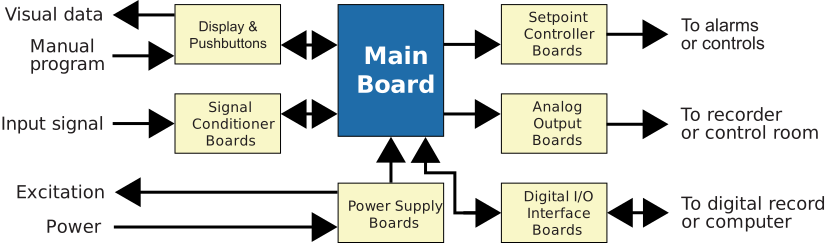
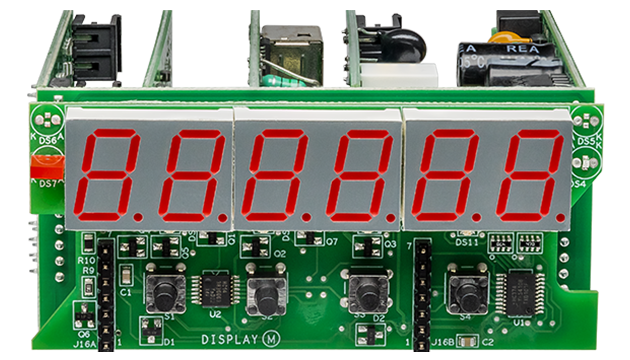
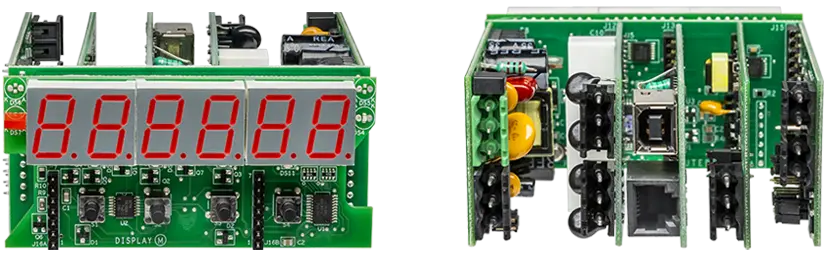
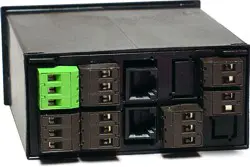
The design of the Laureate™ Series is modular for maximum flexibility at minimum cost. All boards are isolated from meter and power grounds. The base configuration for a panel meter or counter consists of a main module (with computer and plug-in display boards), a power supply board, and a signal conditioner board. Optional plug-in-play boards include an isolated setpoint controller board, an isolated analog output board, and an isolated digital interface board. Modular design and a choice of plug-in options allow the Laureate to be customized for a broad range of applications from simple monitoring to control and computer interface. There can be up to five plug-in boards in a 1/8 DIN Laureate.
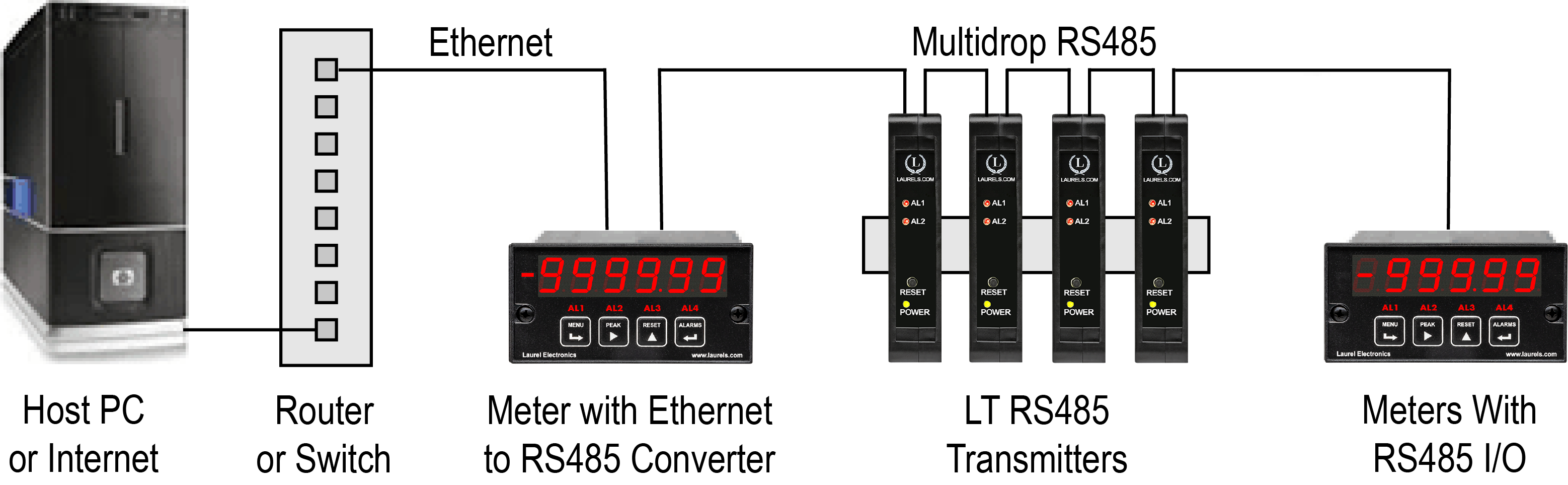
Up to 30 Laureate Digital Panel Meters and/or LT Transmitters can be configured for RS485 and daisy-chained to an LT Transmitter using Laurel’s High Speed Ethernet-to-RS485 converter board for seamless LAN integration. Alternatively, Laurel LTE series Ethernet transmitters can connect directly to a LAN via an Ethernet cable. Setup for both configurations is streamlined using Laurel’s free Instrument Setup Software, which simplifies node discovery and transmitter configuration.
Laureate Digital Panel Meters can be equipped with Laurel communication boards to support various interfaces and protocols. These include serial interfaces with ASCII or Modbus RTU protocols, and Ethernet interfaces with web access, ASCII, or Modbus TCP/IP protocols, ensuring versatile connectivity for your commercial applications.
| RTD Metal |
Alpha | R at 0°C |
R at top of range |
Excitation Current* |
Range | Max Error |
|---|---|---|---|---|---|---|
| Platinum Pt100 |
0.003850 (DIN) |
100Ω | 390.48Ω at 850°C |
196 µA | -202°C to +850°C -331°F to +1562°F |
±0.03°C ±0.01% of rdg ±0.05°F ±0.01% of rdg |
| Platinum Pt100 |
0.003902 (ANSI) |
100Ω | 394.36Ω at 850°C |
196 µA | -202°C to +631°C -331°F to +1168°F |
±0.04°C ±0.01% of rdg ±0.07°F ±0.01% of rdg |
| Nickel Ni120 |
0.00672 | 120Ω | 380.31Ω at 260°C |
196 µA | -80°C to +260°C -112°F to +500°F |
±0.05°C ±0.01% of rdg ±0.09°F ±0.01% of rdg |
| Copper Cu10 |
0.00427 | 9.035Ω | 19.116Ω at 260°C |
5.0 mA | -100°C to +260°C -148°F to +500°F |
±0.05°C ±0.01% of rdg ±0.09°F ±0.01% of rdg |
| * The applied excitation current is sensed by the meter, which operates in a ratiometric mode and automatically compensates for any changes in excitation. | ||||||
| Recalibration: All ranges are calibrated at the factory. Recalibration is recommended every 12 months. | ||||||
| Display | |
|---|---|
| Readout | 5 LED digits, 7-segment, 14.2 mm (.56") |
| Color | Red or green LED |
| Indicators | Minus sign, 2 red LED lamps |
| Accuracy | |
| Calibration, Pt 100 DIN | Per IEC 751 (ITS-90) |
| Calibration, Pt 100 ANSI | NIST Monograph 126 |
| Calibration, Ni 120 | DIN 43760 |
| Max error at 25°C, Pt100 | ±0.04°C (±0.07°F) ±0.01% of reading |
| Span tempco | ±0.003% of reading/°C |
| Zero tempco | ±0.03 deg/deg |
| Provision for user calibration | Multiplier of RTD resistance plus offset in degrees |
| Electrical | |
| Connection | 2, 3 or 4-wire |
| Overvoltage protection | 125 Vac |
| Open sensor indication | Flashes full-scale |
| Sensor lead resistance | 2-wire, 10 mdeg/Ω/deg up to 10Ω |
| Tempco per conductor | 3 & 4-wire, 10 mdeg/Ω/deg up to 100Ω |
| A-to-D Conversion | |
| Technique | Concurrent Slope™ (Pat 5,262,780) |
| A-to-D rate | 60/s at 60 Hz, 50/s at 50 Hz |
| Output update rate | 56/s at 60 Hz, 47/s at 50 Hz |
| Display update rate | 3.5/s at 60 Hz, 3/s at 50 Hz |
| Power Supply Boards (one required) | |
| Voltage, standard | 85-264 Vac or 90-300 Vdc |
| Voltage, optional | 12-32 Vac or 10-48 Vdc |
| Frequency | DC or 47-63 Hz |
| Power consumption (typ. base meter) | 1.2W @ 120Vac, 1.5W @ 240Vac, 1.3W @ 10Vdc, 1.4W @ 20Vdc, 1.55W @ 30Vdc, 1.8W @ 40Vdc, 2.15W @ 48Vdc |
| Power Isolation | 250V rms working, 2.3 kV rms per 1 min test |
| Ratiometric operation | Automatically compensates for changes in excitation level. |
| Analog Output Board (one optional) | |
| Output levels | 4-20 mA, 0-20 mA, 0-10V, -10 to +10V (jumper selectable) |
| Current compliance | 2 mA at 10V ( > 5 kΩ load) |
| Voltage compliance | 12V at 20 mA (< 600 Ω load) |
| Scaling | Zero and full scale adjustable from -99999 to +99999 |
| Resolution | 16 bits (0.0015% of full scale) |
| Step function response | 80 ms to 99% of final value (typ) |
| Isolation | 250V rms working, 2.3 kV rms per 1 min test |
| Relay Output Boards (one optional) | |
| Dual magnetic relays | 2 Form C, 10A max, 440Vac or 125Vdc max, 2500VA or 300W |
| Quad magnetic relays | 4 Form A (NO), 10A max, 440Vac or 125Vdc max, 2500VA or 300W |
| Dual solid state relays | 2 Form A (NO), AC or DC, 0V - 400V, 120Ma, 35Ohms (max at On-State) |
| Quad solid state relays | 4 Form A (NO), AC or DC, 0V - 400V, 120Ma, 35Ohms (max at On-State) |
| Relay commons | Isolated commons for dual relays or each pair of quad relays |
| Relay isolation | 250V rms working, 2.3 kV rms per 1 minute test |
| Step function response | 30 ms (typ) for contact relays, 25 ms (typ) for solid state relays |
| Relay latching modes | Latching or non-latching |
| Relay active modes | Active on or off, active high or low |
| Hysteresis modes | QA passband mode, split hysteresis, span hysteresis |
| Communication Boards (one optional) | |
| Board selections | RS232, RS485 with dual RJ11 connectors, RS485 with dual RJ45 connectors, USB, Ethernet, USB-to-RS485 gateway, Ethernet-to-RS485 gateway, WiFi with built-in antenna plus USB & RS485, WiFi with external antenna plus USB & RS485 |
| Protocols | Laurel Custom ASCII (serial), Modbus RTU (serial), Modbus TCP (Ethernet or WiFi) |
| Digital addresses | 247 (Modbus), 31 (Laurel ASCII), |
| Isolation | 250V rms working, 2.3 kV rms per 1 min test |
| Environmental | |
| Operating temperature | -40°C to 70°C (-40°F to 158°F) |
| Storage temperature. | -40°C to 85°C (-40°F to 185°F) |
| Relative humidity | 95% at 40°C, non-condensing |
| Protection | NEMA-4X (IP-65) when panel mounted |
| Mechanical | |
| Enclosure | 1/8 DIN, high impact plastic, UL 94V-0, color: black |
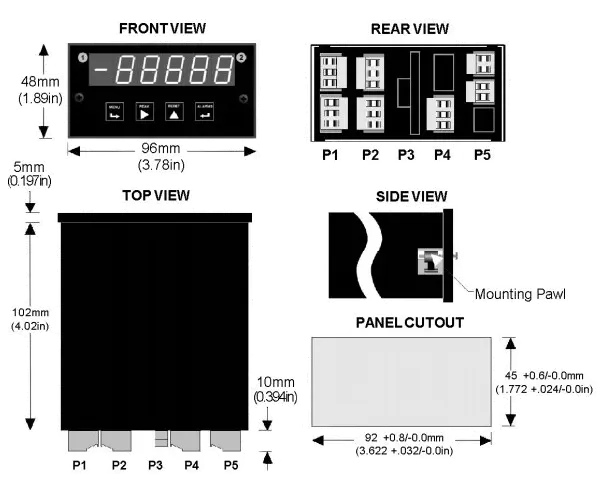
| Mounting | 1/8 DIN panel cutout required: 3.622" x 1.772" (92 mm x 45 mm). |
| Dimensions | 4.68" x 2.45" x 5.64" (119 mm x 62 mm x 143 mm) (W x H x D) |
| Maximum panel thickness | 4.5 mm (0.18") |
| Tightening Torque - Connectors | Screw terminal connectors: 5 lb-in (0.56 Nm) |
| Tightening Torque - Pawls | Digital Panel Meter Case Pawls: 5 lb-in (0.56 Nm) |
| Weight of base meter | 210 g (7.4 oz) typical (DPM, counter, timer, 6-digit remote display) |
| Weight of option boards | 30 g (1.0 oz) typical per board (analog output, relay output, communications) |
| General | |
| Programming Methods | Four front panel buttons or via Laurel's free Instrument Setup Software, which runs on a PC under MS Windows. |
| Security | Lockout options include using the front panel buttons, the free Instrument Setup Software, or a hardware jumper. |
| Warranty | 3 years parts & labor |
| Recalibration: All ranges are calibrated at the factory. Recalibration is recommended every 12 months. | |
|
|
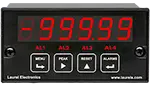
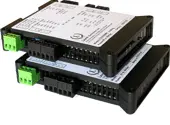
| 1/8 DIN Digital Panel Meters | DIN Rail Transmitters |
Free Downloadable Windows-based Instrument Setup (IS) software (Data Interface Board Required) for use with our programmable Digital Panel Meters, Scale Meters, Counters, Timers, Remote Displays, and Transmitters, are an easy method to set up Laureate 1/8 DIN digital panel meters, counters, timers, remote displays, and DIN-rail transmitters, as explained in the Instrument Setup Software Manual. Laureate 1/8 DIN instruments can also be set up from the front panel, as explained in their respective Owners Manuals. Instrument Setup software is of benefit whether or not the PC is connected to the instrument.
Set User Account Control (UAC) of MS Windows to "Never notifiy me" so that Instrument Setup Software can create directories. The UAC change screen can be reached as follows:
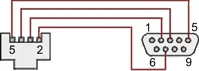
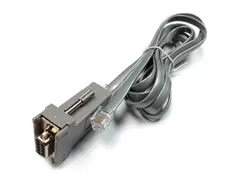
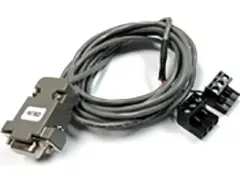
RJ11-to-DB9 cable with rear view of DB9 connector to PC
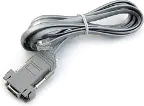
RS232 cable, meter to PC, P/N CBL01
Laureate 1/8 DIN Laureate instruments must be equipped with a serial communications board and be connected to the computer via a serial communications cable. The connection can be via RS232, RS485, USB or Ethernet. Following setup, the serial communications board may be removed from the instrument if desired. The wiring of the RS232 cable is illustrated above with end views of the two connectors.
Laureate LT Series transmitters come standard with a 3-wire serial interface, which can be jumpered for RS232 or RS485.
Laureate LTE Series transmitters come standard with an Ethernet interface.
Click on any of the reduced screens below for a full-size screen view, then click on the Back button of your browser to return to this page. The screens examples below are for a fully-loaded Series 2 Digital Panel Meter (DPM), which is connected to the PC via RS232. If the meter is a Series 1 meter (pre-2007), this is sensed by the software, and somewhat different screens are brought up. Please see Series 1 setup screens.


From the Main Menu, click on Readings if your PC is connected to the meter. A pull-down menu then offers three choices: List, Plot and Graph.




Maximum panel thickness: 4.5 mm (0.18")
Weight of base meter: 210 g (7.4 oz) typical (DPM, counter, timer, 6-digit remote display)
Weight of option boards: 30 g (1.0 oz) typical per board (analog output, relay output, communications)
Tightening Torque - Connectors: Screw terminal connectors: 5 lb-in (0.56 Nm)
Tightening Torque - Pawls: Digital Panel Meter Case Pawls: 5 lb-in (0.56 Nm)
Dimensioned CAD assembly drawings in EPRT, STEP, x_t. dwg, pdf file formats: Laureate-meter-case.zip (zipping prevents browser from opening CAD files as text files).
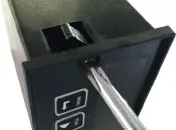 Slide the meter into a 45 x 92 mm 1/8 DIN panel cutout. Ensure that the provided gasket is in place between the front of the panel and the back of the meter bezel.
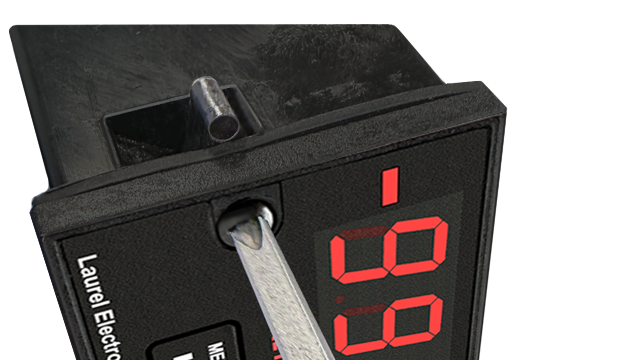
The meter is secured by two pawls, each held by a screw, as illustrated. Turning each screw counterclockwise extends the pawl outward from the case and behind the panel. Turning each screw clockwise further tightens it against the panel to secure the meter.
Slide the meter into a 45 x 92 mm 1/8 DIN panel cutout. Ensure that the provided gasket is in place between the front of the panel and the back of the meter bezel.
The meter is secured by two pawls, each held by a screw, as illustrated. Turning each screw counterclockwise extends the pawl outward from the case and behind the panel. Turning each screw clockwise further tightens it against the panel to secure the meter.
Turning each screw counterclockwise loosens the pawl and retracts it into its well. This position allows installed meter to be removed from their panel, or new meters to be installed in a panel. Do not remove the screws from their pawls. Doing so would cause the screw and pawl to fall off and likely get lost. Do not overtighten so as not to damage the plastic parts.

With the optional analog output board, Laureate RTD temperature meters can serve as superb, isolated 4-20 mA transmitters. The analog output is scaled to the display, which is linearized to °C or °F and is exceptionally accurate. The analog output further tracks the high read rate of the meter, at up to 60 readings per second at 60 Hz power. Fast update rates are beneficial in many closed-loop and PID control applications.
 |
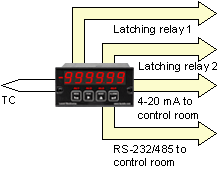 |
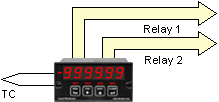
By using the optional dual contact relay or dual solid state relay output options, Laureate temperature meters can monitor processes and provide alarms or shutoffs when these processes exceed normal limits. A band deviation operating mode can be selected for each relay, where an alarm is generated whenever the reading is a selected number of counts above or below the setpoint. Relay operation can be selected as latching or non-latching. When an alarm or shutdown condition is reached, a latched output will remain in the alarm condition until it is reset by a front panel pushbutton, via the serial interface, or via the rear connector.
CAL-Analog
Certificate of Calibration
$65.00DLS-XLOG2
XLog2 Data logging Software
$495.00IPC
Digital Panel Meter Splashproof Cover
$55.00CASE1
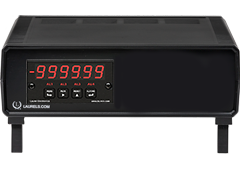
Digital Panel Meter Benchtop Case1
$150.00CASE2
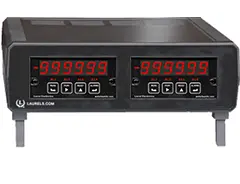
Digital Panel Meter Benchtop Case2
$150.00BOX1
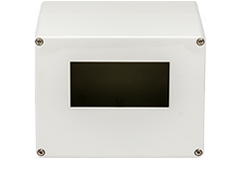
DPM Enclosure Nema-4x Box1
$180.00BOX2
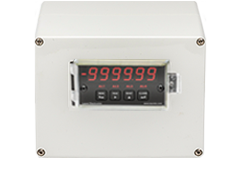
DPM Enclosure Nema-4x BOX2
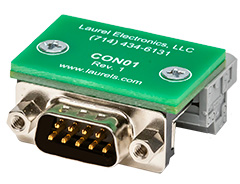
$230.00CON01
CON01 Connector
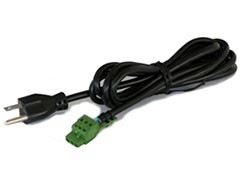
$75.00CBL6
6-foot Power Cable
$41.00CBL12
12-foot Power Cable
$47.00CBL01
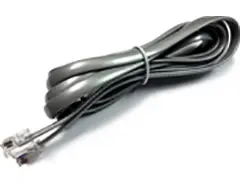
RS232 Cable for Meters
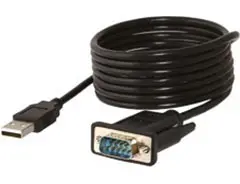
$35.00CBL02
USB-to-RS232 Adapter Cable
$47.00CBL04
RS232 Cable for LT Transmitters
$47.00CBL05
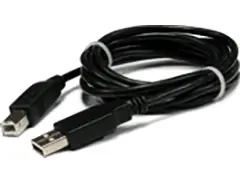
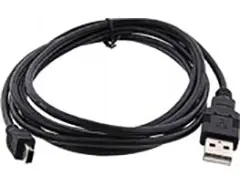
USB Data Cable for Meters
$47.00CBL06
USB-to-RS485 Adapter Cable
$47.00CBL07
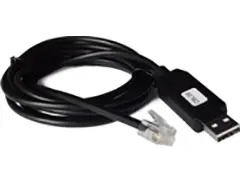
USB Programming & Data Cable
$47.00CBL08
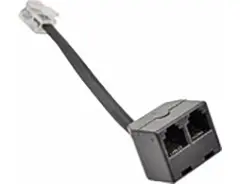
RS485 Splitter Cable
$33.00In various industrial and laboratory settings, precise temperature measurement and control are critical. 1/8 DIN Digital Panel Meters for RTD (Resistance Temperature Detector) temperature are specialized instruments designed to deliver accurate temperature readings from RTD sensors. This section provides an overview of what 1/8 DIN Digital Panel Meters are, how they work, and their applications in temperature measurement.
The term "1/8 DIN" refers to the physical size of the Digital Panel Meters, based on the Deutsches Institut für Normung (DIN) standard. The DIN standard is a set of guidelines used in Europe for designing and manufacturing panels and controls. 1/8 DIN Digital Panel Meters typically have a front panel size of about 96 x 48 mm, making them suitable for small or crowded panel spaces.
These Digital Panel Meters display numerical values digitally, which provides clear and precise readings compared to analog meters. The digital format reduces the likelihood of reading errors and allows for quick and easy interpretation of the data.
RTDs are temperature sensors that measure temperature by correlating the resistance of the RTD element with temperature. Typically made from pure platinum, RTDs provide highly accurate and stable temperature measurements over a wide range. The most common type of RTD is the PT100, which has a resistance of 100 ohms at 0°C.
As the temperature changes, the electrical resistance of the RTD element also changes. This resistance change is measured and converted into a temperature reading. RTDs are known for their precision and are often used in applications where accuracy is paramount.
1/8 DIN Digital Panel Meters for RTD temperature are designed to interface directly with RTD sensors. They process the resistance signal from the RTD and convert it into readable temperature values. The Digital Panel Meters' electronics handle the signal conditioning, amplification, and conversion necessary to provide accurate digital readouts.
These Digital Panel Meters come with digital displays that show the temperature in various units such as Celsius or Fahrenheit. Many models also offer features like programmable alarms, analog output signals, and communication interfaces for integration with other control systems.
To ensure accurate readings, these Digital Panel Meters need to be calibrated. Many models allow for calibration adjustments to account for sensor deviations and environmental factors. The accuracy of 1/8 DIN Digital Panel Meters is typically high, making them suitable for precision applications.
In the world of industrial automation and control systems, accurate temperature measurement and monitoring are critical. 1/8 DIN Digital Panel Meters for RTD temperature are specialized instruments designed to meet these needs. Compact and efficient, they are widely used across various industries.
1/8 DIN Digital Panel Meters for RTD temperature are versatile instruments with applications spanning across multiple industries. Their compact size, accuracy, and reliability make them ideal choices for monitoring and controlling temperature in a wide range of environments. Whether it's in manufacturing, HVAC, food processing, laboratories, energy management, automotive, or aerospace, these devices play crucial roles in ensuring operational efficiency and safety.
A 2-wire connection is the simplest but least accurate, since the resistance of the lead wires themselves adds directly to the measured resistance and is read as extra temperature. A 3-wire connection uses a third lead to let the meter measure and subtract most of the lead wire resistance, which is the standard choice for industrial process work. A 4-wire connection separates the excitation current path from the voltage-sensing path entirely, effectively eliminating lead resistance error regardless of cable length, and is used where the highest accuracy is required.
A PT100 is a platinum RTD with a resistance of exactly 100 ohms at 0°C, and its resistance changes by a well-defined, standardized amount per degree of temperature change. Because platinum RTDs are highly stable and repeatable, and the PT100 curve is standardized (per IEC 60751), it's the most widely supported RTD type across meters, transmitters, and controllers.
Many 1/8 DIN RTD meters are programmable for multiple RTD types and curves, including PT100, PT1000, and other resistance values, with the correct type selected in software or via the front panel to match the sensor actually connected.
Yes, particularly on 2-wire and, to a lesser extent, 3-wire connections. Since a PT100 changes only a fraction of an ohm per degree of temperature, even a modest amount of lead wire resistance from a long cable run can introduce a noticeable false temperature reading if not properly compensated for by a 3- or 4-wire configuration.
These meters commonly support programmable high/low alarm relays, an isolated analog retransmission output, and serial communications such as RS-232 or RS-485, allowing a temperature reading to trigger a local alarm and also feed a PLC, recorder, or SCADA system.
Accuracy depends on both the meter and the wiring configuration used, since 2-wire connections inherently introduce more error than 3- or 4-wire connections regardless of the meter's own precision. The meter's contribution to overall accuracy is typically specified separately from the RTD sensor's own tolerance class.
Yes, most RTD Digital Panel Meters allow the display units to be switched between °C and °F, which is useful when the same meter platform is deployed across facilities or regions with different unit conventions.
Isolated input and output configurations are commonly available and help protect the RTD measurement from noise introduced by relays, analog outputs, or communication boards operating elsewhere in the same meter or panel.
This has been documented in real troubleshooting cases, and the root cause is usually a mismatch in resistance between the three lead wires rather than a failure of the compensation itself — the compensation math assumes all three leads have equal resistance, and if one wire is a different gauge, length, or has a poor connection, the assumption breaks down and a residual error remains even with 3-wire wiring in place.
Field guidance on this is specific: paralleling an unused wire onto one of the active leads changes that leg's effective resistance relative to the others, which violates the equal-lead-resistance assumption the 3-wire compensation depends on and introduces a false offset. The safer practice, when a 4th wire is present but not being used for true 4-wire measurement, is grounding it at one end only, similar to a cable shield/drain.
This is a commonly reported puzzle, and shielded, twisted-lead cable is one of the first things checked, since inadequate shielding or untwisted conductors allow electrical noise to couple onto the signal even when the sensor's own resistance is correct. Confirming the cable is genuinely twisted-pair and properly shielded and grounded resolves many of these cases without any change to the sensor itself.
Not without consequence — because 3-wire compensation relies on all three leads being equal in resistance, a longer or thinner extension wire increases the resistance on all three legs (which 3-wire compensation still handles correctly, since they change together), but any error in matching gauge or length between the leads directly translates into measurement error. As a rule of thumb, a modest length of mismatched wire gauge is often the actual root cause when a "properly wired" 3-wire RTD still shows a small but consistent offset.
This pattern is frequently traced to a wiring or configuration mismatch rather than a failed sensor — for example, wiring a 3-wire RTD into a device or terminal expecting a different configuration, or a poor/incomplete connection at one of the leads, can produce a reading far outside any plausible real-world temperature. Checking actual measured resistance at the sensor terminals directly against the expected RTD table value is the standard first diagnostic step.
Field experience generally holds that even short 2-wire runs introduce some offset error, since the wire resistance is added directly to the sensor's own resistance with no way for the meter to separate the two. For rough or non-critical measurements a 2-wire connection may be acceptable, but for serious process or calibration work, 3-wire (or 4-wire where maximum accuracy matters) is the standard recommendation regardless of how short the run is.
Yes — this is frequently cited in field troubleshooting guidance as an easy-to-overlook cause of unreliable or intermittent readings, particularly in humid or wash-down environments. Inspecting terminals for corrosion, cleaning them, and applying a corrosion-resistant compound is a standard maintenance step recommended before assuming the sensor or meter has failed.
You can use a 4-wire RTD in a 3-wire connection by tying the two same-color leads together at the meter's terminal, but doing so means giving up the full accuracy benefit of true 4-wire measurement — the resistance of that shared extension wiring is then added back into the reading, causing a small positive temperature offset that true 4-wire wiring would have eliminated entirely.